
Add us as your preferred source on Google to see more of our content in Search.
 Add to Preferred Sources
The Under-Secretary-General for Humanitarian Affairs and Emergency Relief Coordinator (ERC), Martin Griffiths, completed a four-day visit to Mali, his first to Central Sahel since his appointment as UN humanitarian chief a year ago. Mr. Griffiths traveled to Bamako and Mopti to hear first-hand from people affected by the crisis, to better understand the humanitarian situation and response, and to raise international awareness of the deteriorating humanitarian situation and challenges impacting the region.
In Mopti, Mr. Griffiths met with internally displaced persons in Socoura village.
“Incredibly resilient women shared with me the difficulties they face,” he said. “Some had lost their husbands to violence and had to flee their homes at great risk. With the help of local communities, authorities, and humanitarian partners, some are now able to get back on their feet, for example by running small businesses. I was impressed by the work done by humanitarians in close partnership with local actors to address humanitarian needs while also helping people regain their livelihoods. But more is needed.”
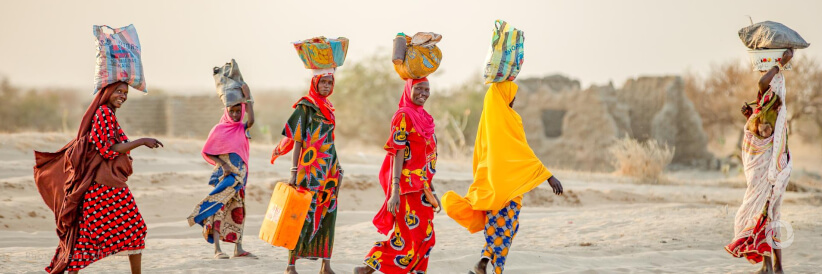
As in many other parts of the world, women and children bear the brunt of the conflict and displacement.
“Women and girls are the silent victims of this crisis, facing sexual violence, early marriages, and denial of access to basic services on a daily basis,” said Mr. Griffiths. “They need special attention, and we need more resources for this crucial work.”
In Bamako, Mr. Griffiths met with Prime Minister Dr. Choguel Kokalla Maïga and members of the transitional Government. They exchanged views on the need for an inclusive approach to provide protection and basic services. Mr. Griffiths expressed specific concern for the situation in Ménaka, where civilians face a threat of increased violence, prompting displacement and a spike in humanitarian needs.
Mr. Griffiths also saw the extent to which humanitarian needs are outpacing available resources.
He added: “Without sufficient and timely financial resources, humanitarian assistance will not be able to further expand. The time to act is now. Adequate resources are needed to scale up the response so humanitarian partners can provide life-saving services and build communities’ resilience.”
People in Mali are reeling from the impact of years of conflict, deep poverty, climate shocks, and mounting insecurity. In 2021, humanitarian partners reached 2.8 million people in the country.
7.5 million people need humanitarian assistance. One Malian out of four (4.8 million people) is currently food insecure because of insecurity and the impacts of climate change. During this year’s lean season (June to August), a staggering 1.8 million people will be acutely food insecure. However, the Humanitarian Response Plan for Mali is currently funded at only 11 per cent. The crisis in Central Sahel is rapidly deteriorating. Over 13 million people need humanitarian assistance in Burkina Faso, Mali, and Niger.
“I leave Mali and the Sahel today with a lot of concern about the outlook for where this devastating crisis is heading, and the impact it has on millions of people,” said Mr. Griffiths. “But there is also hope. Hope for turning this around, for building on the huge potential of youth, the traditional way of mediating conflicts through dialogue and bringing peace to Malians across the country.”