
Add us as your preferred source on Google to see more of our content in Search.
 Add to Preferred Sources
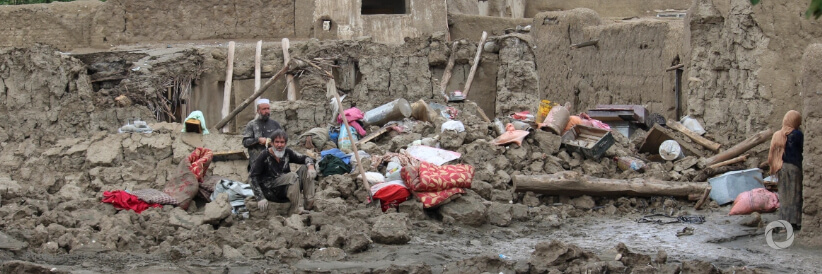
Scores of people have lost their lives and thousands have been forced to flee their homes as flash floods devastated parts of Afghanistan. Nearly 100 people have been killed according to media reports citing Afghan authorities. The floods have affected 10 provinces across 10 days, with Logar, Nangarhar, and Kabul provinces suffering the most severe damage.
Hundreds of people have also been reported injured in the floods, which come as Afghanistan grapples with several major emergencies.
Families in Wadana district, Nangarhar province were awoken at 2am on Monday by sirens warning of the coming flood, Ajmal Majboor, Islamic Relief’s humanitarian program coordinator in Afghanistan said.
“The flood was so huge that it crossed a 1.3-metre-tall protection wall towards houses. Though the residents could evacuate in time, the houses were soon full of water from the flash flood.
“Within minutes, walls of nearby houses were collapsing. Livestock, along with other belongings from houses were floating in flood water. Within minutes, the whole village of 500 residents was full of water and it was difficult to look for belongings in the houses still standing.”
A fresh crisis
Afghanistan is enduring a major humanitarian and economic crisis, and some provinces are still recovering from a deadly earthquake in June.
The economy is on the verge of collapse, with many unable to afford everyday items and food. The situation has caused a hunger crisis, with families resorting to desperate measures to feed their children.
Neighbouring Pakistan has also seen heavy flooding in recent weeks, with more than 800 people killed, according to officials.
Afghan authorities have limited capacity to respond to the flooding and have requested assistance, with the government calling on aid organizations and the United Nations to provide emergency food, shelter, and medicine, as well as longer-term support.
Islamic Relief’s response
Islamic Relief is on the ground in Nangahar and Kabul provinces, working with other agencies to assess the damage. The organization plan to distribute food packs, shelter, and other essential items to affected people as part of an emergency response.