

Add us as your preferred source on Google to see more of our content in Search.
 Add to Preferred Sources
244M children won’t start the new school year, almost 2 million people were displaced amid the worst food crisis and the window of opportunity to prevent famine in Somalia is closing. Here is what you missed from last week’s headlines in the international development sector.
244M children won’t start the new school year
As the new school year begins in many parts of the world, new UNESCO data shows that 244 million children and youth between the ages of 6 and 18 worldwide are still out of school. Audrey Azoulay, Director-General, calls for collective mobilization to ensure that the right of every child to access quality education is respected.
”A new school year is starting in many parts of the world. This news should bring us joy, but it also reminds us that deep inequalities persist in access to education: 244 million children are still out of school. No one can accept this situation. Education is a right and we must do everything to ensure that this right is respected for every child”, UNESCO Director-General Audrey Azoulay.
The new estimates show that sub-Saharan Africa remains the region with the most children and youth out of school, with a total of 98 million children. It is also the only region where this number is increasing: out-of-school rates are falling more slowly than the rate at which the school-age population is growing. The region with the second highest out-of-school population is Central and Southern Asia, with 85 million.
Burkina Faso: Almost 2 million people displaced amid worst food crisis in a decade
Nearly one in 10 people in Burkina Faso have been displaced by conflict. Most worryingly, the rate of severe food insecurity has nearly doubled compared to last year, with over 600,000 people in emergency hunger levels during this lean season, warns 28 international aid organisations operating in the country. An urgent increase in funding for humanitarian assistance is required to respond to the current situation.
“Too often, displacement and hunger come as a one-two punch,” said Hassane Hamadou, Country Director of the Norwegian Refugee Council. “People forced to move have left behind their fields and livestock. Many displaced families report being down to one meal a day in order to allow children to eat twice. Recent waves of displacement only heighten the urgency to act.”
The multiplication of violent attacks has driven more people to flee between January and July 2022 than during the entire year of 2021. Meanwhile, large displacement shocks are becoming more frequent. Four years after its start, the displacement crisis in Burkina Faso remains one of the three fastest growing in the world.
Window of opportunity to prevent famine in Somalia is closing
Somalia has reached a tipping point. The lives of hundreds of thousands of people are at immediate risk, according to the latest food security and nutrition analysis. Famine is unfolding in two areas in the Bay region (Baidoa and Burhakaba districts) in South-Central Somalia, and will likely last until March 2023 if humanitarian aid is not significantly and immediately scaled up.
Millions more face extreme levels of acute hunger. Women, particularly pregnant and lactating women, and children under the age of five are among the most vulnerable. They require urgent assistance to avert a worst-case scenario.
Starvation and death are likely already occurring. During the 2011 famine, about 50 percent of the more than 250,000 people who died, did so before the official declaration. At least half were children.
In total, across the Horn of Africa, 20.5 million people are facing a dire and entirely avoidable hunger crisis. This is unacceptable.
DevelopmentAid Editorials
The magnitude of the energy crisis in Europe
Russia, the world’s second-largest natural gas producer, has significantly decreased the amount of gas supplied to Europe and threatened to cut supplies completely. Should this happen, Italy and Germany risk losing 4% and 3% of their GDP, respectively.
Ten countries produce around 73% of the world’s natural gas and Russia, after the United States, is the second-largest producer with a 17.4% market share and 37 trillion cubic meters of natural gas reserves. Russia’s war against Ukraine has placed those countries that import natural gas from Russia at serious risk. Following the sanctions introduced by Western states, Russia shut down the Yamal pipeline that delivered gas to the EU through Belarus and Poland, and by mid-June had also decreased the level of gas supplied through Nord Stream 1. In July, Russia completely shut down gas supplies for 10 days, citing maintenance work as the reason for this. The EU believes the disruptions to supplies are “politically motivated.” After resuming supply, Russia halved the levels available with the risk of another total shutdown remaining high.
Europe’s worst drought affects agriculture, economy and livelihoods
The expanding and worsening crisis fuelled by prolonged periods of intense heat is raising concerns about the disaster recovery situation. Experts have sounded the alarm on the large-scale economic damage caused by Europe’s worst drought in 500 years. Climate change dynamics and its modelling tendencies are increasing the risk of droughts, placing additional burden on producers, contributing to food price inflation for consumers, and impacting people’s livelihoods
Fig.1. Drought in Europe. August 2022

Countries encountering modern slavery in 2022
For the past few months with every visit to the grocery store, each stop at the gas station, and every paid bill, our wallets became emptier at an alarming rate. Inflation is the word on everybody’s lips these days, currently being one of the biggest international development challenges. In May, the price index rose again mainly because of surging energy and food prices, partly due to the impact of the war in Ukraine. Russia’s invasion of its neighboring country continues to weigh on the world economy by disrupting trade leading to shortages of materials and contributing to high energy and commodity prices. The problem is clear but… what are the solutions?
Here’s what else has happened
Queen Elizabeth II: Secretary-General António Guterres expressed his deep sadness at the passing of Her Majesty Queen Elizabeth II, the Queen of the United Kingdom of Great Britain and Northern Ireland.
Global Fund: The Global Fund to Fight AIDS, Tuberculosis and Malaria praises Germany for its extraordinary leadership in global health with an early pledge announcement of €1.3 billion to help the world get back on track to end the three diseases by 2030, reduce health inequities, and build stronger systems for health that will reinforce pandemic preparedness.
Women and girls: Women and girls make up the majority of migrants in the East and Horn of Africa at 50.4 percent compared to men and boys, a phenomenon and migration trend unique to the region according to a new report by the International Organization for Migration’s (IOM) Regional Data Hub.
United States: Administrator Samantha Power announced that the United States, through the U.S. Agency for International Development (USAID), is providing an additional $20 million in humanitarian assistance to support the people affected by severe flooding in Pakistan resulting from heavy monsoon rains, as well as landslides and glacial lake outbursts, that have been ongoing since June.
European Commission: The European Commission has proposed a further €5 billion in macro-financial assistance (MFA) loans to Ukraine as the second part of the exceptional MFA package of up to €9 billion announced in the Commission’s communication of 18 May 2022 and endorsed by the European Council of 23-24 June 2022. The Commission disbursed the first €1 billion of this MFA package in early August. The remaining up to €3 billion will be provided as soon as possible.
Reports
Achieving full gender equality is still centuries away, warns the United Nations in a new report
At the current rate of progress, it may take close to 300 years to achieve full gender equality, the “Progress on the Sustainable Development Goals (SDG): The Gender Snapshot 2022” shows. Global challenges, such as the COVID-19 pandemic and its aftermath, violent conflict, climate change, and the backlash against women’s sexual and reproductive health and rights are further exacerbating gender disparities. The new report, launched by UN Women and the UN Department of Economic and Social Affairs (UN DESA), highlights that, at the current pace of progress, SDG 5—achieving gender equality—will not be met by 2030.
Further facts and figures highlighted in the report include:
- In 2020, school and preschool closures required 672 billion hours of additional unpaid childcare globally. Assuming the gender divide in care work remained the same as before the pandemic, women would have shouldered 512 billion of those hours.
- Globally, women lost an estimated USD 800 billion in income in 2020 due to the pandemic, and despite a rebound, their participation in labour markets is projected to be lower in 2022 than it was pre-pandemic (50.8 percent, compared to 51.8 percent in 2019).
- There are now more women and girls who are forcibly displaced than ever before: some 44 million women and girls by the end of 2021.
- Today, over 1.2 billion women and girls of reproductive age (15–49) live in countries and areas with some restriction on access to safe abortion.
Half of region’s workforce poor or on brink of poverty, finds new UN report
The working-age population of Asia and the Pacific is under pressure; denied decent work opportunities and highly vulnerable to systemic shocks such as pandemics or economic downturns, finds a new report by the United Nations Economic and Social Commission for Asia and the Pacific (ESCAP).
According to the 2022 Social Outlook for Asia and the Pacific: The Workforce We Need, although progress has been made since 2015, the region’s workforce remains ill-equipped to respond to the ongoing and emerging megatrends of climate change, ageing societies, and digitalization. Two-thirds of the workforce or 1.4 billion people are employed informally and as a result, half are surviving on less than $5.50 a day.
Ten recommendations on how to better protect cultural heritage from the impact of climate change
Coinciding with the European Heritage Days 2022, which this year revolve around the topic of sustainability, the Commission publishes a report on strengthening cultural heritage resilience to protect it from the effects of climate change. The information gathered by a group of experts is alarming, as climate change is, directly and indirectly, threatening all forms of cultural heritage, among others through severe precipitation, long heatwaves, droughts, strong winds, and sea-level rise – all of which are expected to increase in the future. In the report, the expert group put forward a set of ten recommendations aimed at helping to strengthen cultural heritage resilience to climate change.
Events
Development2030 | Beyond Aid
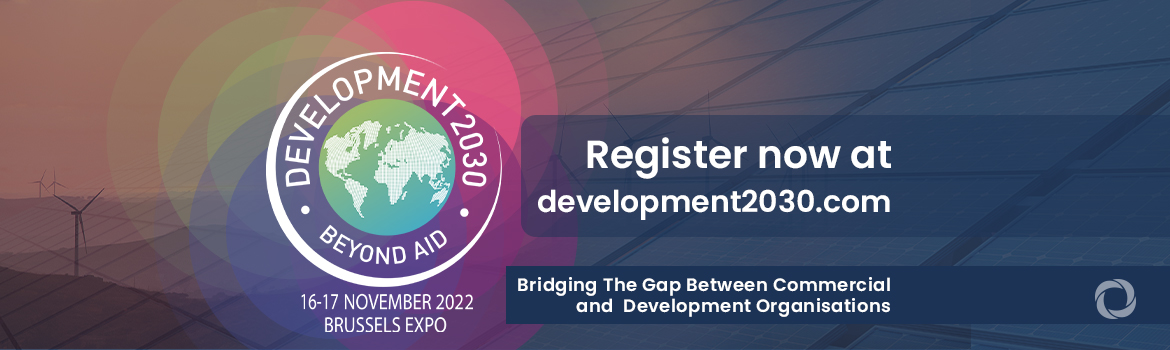
📅 16-17 November 2022
Brussels Expo
With an ever-increasing pressure to ensure the global public and governments worldwide continue to support overseas development assistance, it is imperative for the international community to adapt to the changing landscape if we are to achieve the Sustainable Development Goals.
The Development2030 event will consider how best we can do this, through identifying the key existing and emerging players, and analysing their role in creating long-term impact for low- and middle income countries. It is THE place for the overseas development community to build meaningful relationships, get inspired and meet like-minded individuals committed to achieving the 2030 goals.
IATA World Financial Symposium

📅 19-22 September 2022
Doha, Qatar
After two years, IATA World Financial Symposium is back with a full agenda.
The industry has faced unprecedented pressure, the pandemic disrupted the operations like no crisis before. As travel starts picking up and showing signs of recovery, challenges remain and must be addressed for the industry’s future and financial sustainability.