

Add us as your preferred source on Google to see more of our content in Search.
 Add to Preferred Sources
More plastic than fish by 2050, supporting investment promotion in the least developed countries and UN chief calls for an end to ‘nuclear blackmail’ and risk of ‘humanitarian Armageddon’. Here is what you missed from last week’s headlines in the international development sector.
More plastic than fish by 2050
Plastic pollution has become one of the major global environmental challenges of the century; projections show that by 2050 the oceans may have more plastic than fish. Nuclear technology has emerged as one innovative solution to this growing problem.
By harnessing nuclear technologies, IAEA can address the challenges of plastic pollution both on land and in the ocean to tackle this global problem. This was the message brought by experts at a meeting held on the sidelines of the IAEA’s 66th General Conference. The event highlighted the impact of the IAEA’s initiative on Nuclear Technology for Controlling Plastic Pollution – NUTEC Plastics.
“Plastic pollution threatens sustainable development and our own well-being. We must work together to address it using science to inform smart policies,” IAEA Director General Rafael Mariano Grossi told attendees. “The application of nuclear science and technologies for the monitoring of plastics in the marine environment and for recycling and creation of biodegradable plastics gives it an indispensable role in meeting our environmental challenges.”
Supporting investment promotion in least developed countries
UNCTAD and its partners are building the capacity of over 60 officials from 20 least developed countries (LDCs) in investment facilitation and promotion for greater sustainable development impact.
The officials are drawn from Bangladesh, Chad, Djibouti, Ethiopia, Gambia, Haiti, Kiribati, Lesotho, Liberia, Madagascar, Malawi, Mozambique, Rwanda, Sao Tomé and Principe, Somalia, South Sudan, Timor Leste, Togo, Tuvalu, and Uganda. They commenced the four-month online training program on 20 September.
Despite growth in sustainable finance, investment flows are concentrated in developed and emerging economies, bypassing LDCs. Developing countries received $372 billion in Sustainable Development Goals (SDGs) investment in 2021, with LDCs getting only 15% of it, a decline from 19% in 2020.
UN chief calls for an end to ‘nuclear blackmail’ and risk of ‘humanitarian Armageddon’
In an era of “nuclear blackmail”, UN Secretary-General António Guterres urged countries to step back from the threat of potential global catastrophe and recommit to peace. The UN chief was speaking at an event to commemorate the International Day for the Total Elimination of Nuclear Weapons, held as the annual debate in the General Assembly Hall draws to a close.
“Nuclear weapons are the most destructive power ever created. They offer no security — just carnage and chaos. Their elimination would be the greatest gift we could bestow on future generations,” he said.
DevelopmentAid Editorials
How can developing countries confront biopiracy? | Experts’ Opinions
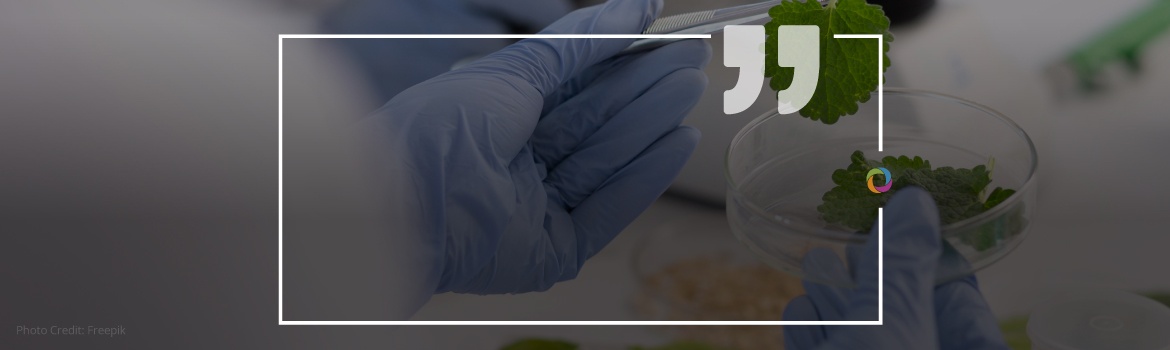
Biopiracy is an abominable practice that continues to grow, largely on the backs of developing countries. It involves the gaining of exclusive rights over the biological resources of a country by individuals, institutions or companies from other countries, that ultimately leads to the denial of the rights of the country of origin. The direct results of such practices are the extinction of endemic living organisms, the depletion of bio diversity and the privatization of the bio treasures of the victim-country leading to direct consequences for its economy. Can developing countries confront biopiracy? Let’s see what solutions are suggested by worldwide law and intellectual property experts.
Reports on nuclear weapons of mass destruction

Data published by the United Nations shows that today nuclear weapons are in the hands of nine countries with the total number reaching 13,400 units (other sources state this to be 13,080). These nations are China, France, India, Israel, North Korea, Pakistan, Russia, the United Kingdom and the United States.
Which countries have nuclear weapons?

Women still earn less than men and COVID-19 has made things worse

Today the gender gap in employment is still clearly visible, despite this issue being high on the agenda of many countries and making headlines across the globe. Women around the world, even in developed nations, have less opportunity to earn money than men do – only a little more than half of all women are part of the labor force as opposed to 80% of men.
Furthermore, women are also less likely to hold formal jobs and have fewer prospects for professional advancement or business growth. To make things worse, evidence from the latest household surveys shows that the COVID-19 lockdowns have also taken their toll.
Here’s what else has happened
Iran: Authorities in Iran must fully respect the rights of protestors calling for justice for Mahsa Amini, the young woman who died in custody after being arrested for allegedly violating strict dress codes, the UN human rights office, OHCHR, said.
ADB: The Asian Development Bank (ADB) approved $3.8 million to support the restoration, conservation, and management of coral reefs in four countries in Southeast Asia and the Pacific.
WHO: In a 2019 vector alert, WHO identified the spread of Anopheles stephensi as a significant threat to malaria control and elimination – particularly in Africa, where the disease hits hardest. A new WHO initiative, launched, aims to stop the further spread of this invasive mosquito species in the region.
United States: The U.S. government, through the U.S. Agency for International Development (USAID), announced an additional $44 million of support for Niger to protect vulnerable populations from the impacts of food insecurity and strengthen resilience in the country.
Moldova: The European Investment Bank (EIB) and the Ministry of Health of Moldova have signed a €498 000 grant agreement funded by the EIB-managed EPTATF. These funds will cover the establishment of a project implementation unit in the Ministry of Health to assist it in the preparation of feasibility studies, the functional plan, the preliminary design, and tender documents for the planned construction of the two new regional hospitals in Cahul and Bălți. Swedfund has provided a SEK 10 million (almost €1 million) grant to cover the cost of the feasibility study and design of the Cahul hospital.
Bill and Melinda Gates Foundation: The Bill & Melinda Gates Foundation announced grants totalling nearly US$128 million to support the development and accessibility of maternal vaccines for Group B Streptococcus (GBS) and Respiratory Syncytial Virus (RSV), two of the leading causes of death for newborns and young infants in lower-income countries.
Reports
WMO strengthens maritime safety commitments
The importance of marine meteorology to ensure safety at sea is showcased in a new publication on Maritime Forecasting, Meteorology and WMO: History and Evolution which traces nearly 150 years of dedicated commitment. WMO released the document on World Maritime Day 2022. The publication and a new outreach video highlight the role of WMO, national meteorological services, and partners such as the International Maritime Organisation (IMO) in providing forecasts and early warnings to save lives.
The key outcomes in this meeting included:
- consideration of contingency plans and awareness of METAREA and NAVAREA
- improved understanding of roles and responsibilities, particularly towards providing services and assistance to coastal states within each Area
- working together in the country, and with neighboring ones.
- progress the Joint IMO, IHO, and WMO Manual on Maritime Safety Information,
- focus on emergency response responsibilities (eg in response to volcanic hazards), especially given the multiple hazards including tsunamis that ships at sea can face on a voyage.
Solar PV employs more women than any renewables
The International Renewable Energy Agency (IRENA)’s new report, Solar PV: A Gender Perspective finds that women fare best in solar PV manufacturing, representing 47% of the workforce. Service providers and developers follow with 39% and 37%, respectively, while solar PV installers perform the least, with barely 12% of the segment’s workforce.
Global Innovation Index 2022: Switzerland, the U.S., and Sweden lead the Global Innovation Ranking
Switzerland, the United States, Sweden, the United Kingdom, and the Netherlands are the world’s most-innovative economies, according to WIPO’s 2022 Global Innovation Index (GII), with China on the threshold of the top 10. Other emerging economies are also showing consistently strong performance, including India and Türkiye, both of which enter the top 40 for the first time.
The report shows that research and development (R&D) and other investments that drive worldwide innovative activity continued to boom in 2021 despite the COVID-19 pandemic, but challenges are emerging in translating innovation investments into impact.
Reduced gas supplies and inflation to slow growth further in EBRD regions
The new Regional Economic Prospects report, entitled A cold winter ahead?, paints a stark portrait of the impact of the war on the EBRD regions’ energy markets, inflation and economies.
Events
The list of major upcoming events in the development sector in October 2022

Keep up-to-date on key events about emerging funding strategies, environmental policies, climate change, technological development, labor standards, and energy issues in the development sector via our compiled list.
Track events hosted by reputable international organisations, donors, NGO’s and IFIs that bring together the biggest change-makers and stakeholders in international development cooperation.
Save the date to register and attend the upcoming events in October 2022.
Download the comprehensive schedule of major online events.
Doing Business with JICA: Procurement Framework and Best Practices | Invitation to a Webinar

📅 6 October 2022
The Japan International Cooperation Agency (JICA) is a bilateral aid agency responsible for administering the country’s Official Development Assistance (ODA) and supporting the implementation of the national government’s strategy for underdeveloped nations. It operates in more than 150 countries and regions across the world. As of 2021, the agency has allocated more than US$ 12.8 billion for ODA purposes.
DevelopmentAid, in collaboration with JICA, invites suppliers, contractors, and consultants interested in discovering business collaboration opportunities with the agency to join the webinar “Doing Business with JICA: Procurement Framework and Best Practices”. During the webinar, our guest speakers will introduce JICA, its ODA loan policy, procurement guidelines, eligibility rules, and bidding procedures.
Founded in August 1974, JICA’s vision for sustainable development involves ‘taking the lead in forging bonds of trust across the world, aspiring for a free, peaceful and prosperous world where people can hope for a better future and explore their diverse potentials’.
As one of the world’s largest bilateral ODA organizations, JICA operates across multiple sectors across public, private, and environmental dimensions. JICA’s aid policy is governed by an unbiased, broad perspective that extends beyond the traditional assistance schemes, including technical cooperation, grants, and finance and investment cooperation.
Key takeaways
- Get to know JICA and its ODA Loan Operation;
- Learn more about Procurement under JICA’s ODA Loan policy;
- Discover the specific particularities of Procurement Guidelines and Standard Bidding Documents;
- Learn about the eligibility criteria to participate in projects funded by JICA.
Development2030 | Beyond Aid
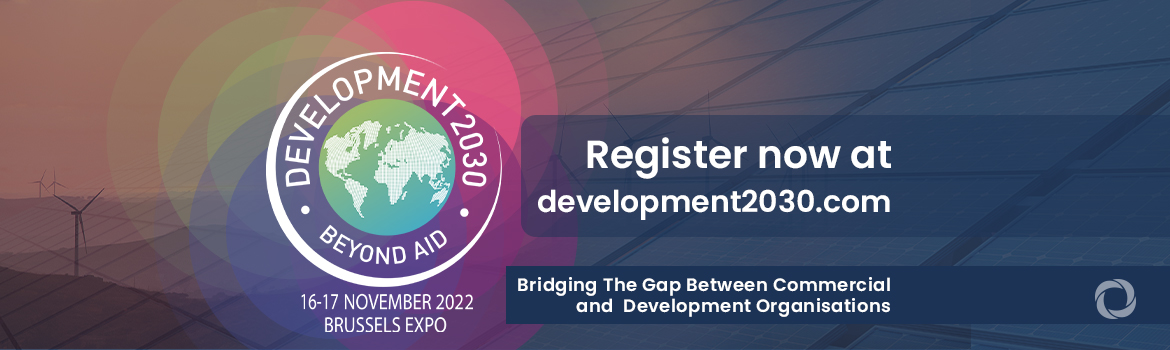
📅 16-17 November 2022
Brussels Expo
With an ever-increasing pressure to ensure the global public and governments worldwide continue to support overseas development assistance, it is imperative for the international community to adapt to the changing landscape if we are to achieve the Sustainable Development Goals.
The Development2030 event will consider how best we can do this, through identifying the key existing and emerging players, and analysing their role in creating long-term impact for low- and middle income countries. It is THE place for the overseas development community to build meaningful relationships, get inspired and meet like-minded individuals committed to achieving the 2030 goals.