
Add us as your preferred source on Google to see more of our content in Search.
 Add to Preferred Sources
Food security in Kenya has deteriorated significantly since the end of 2016. UNICEF reports a significant increase in severe acute malnutrition. Nearly 110,000 children under-five need treatment, up from 75,300 in August 2016.
A malnutrition emergency
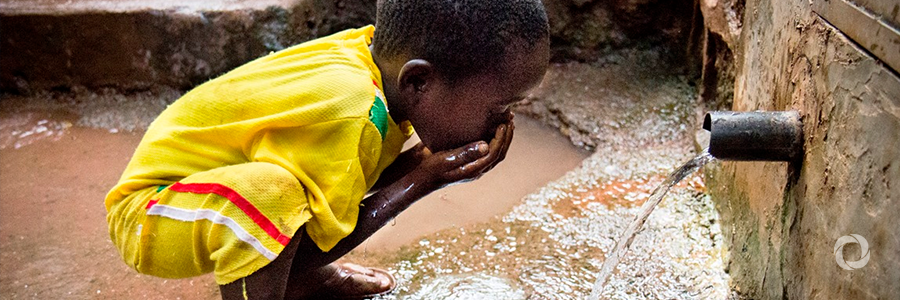
Waterholes and rivers have dried up, leading to widespread crop failure and livestock depletion. At the height of the drought, surface water in most counties had either dried up or its level dramatically reduced.
Consequently, within a year, the price of maize flour has risen by 31 per cent, milk by 12 and sugar by 21 per cent. These food price increases have driven inflation up from 9.04 per cent in February to 11.48 per cent in April. Many families are making do with just one meal in a day.
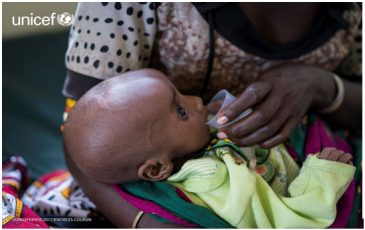
Conditions are dire in half of Kenya’s 47 counties. Livestock and milk production has declined, adversely affecting food consumption levels for communities, particularly women and children. Malnutrition is widespread among children. In the hardest-hit counties of Turkana, Marsabit and Mandera, a third of children under 5 are acutely malnourished – double the emergency threshold. High malnutrition, when combined with an outbreak of cholera or measles, can lead to a surge in deaths among children and other vulnerable groups.
Sustainable, not piecemeal
Climate scientists predict that weather patterns will continue to change. This will bring about more frequent, intense and widespread droughts and flash floods.
The vast majority of smallholders in sub-Saharan Africa are dependent on rain-fed agriculture for their livelihoods and are subject to the vagaries of the weather.
It’s necessary to create long-term solutions to alleviate the adverse impacts of climate change and unpredictable weather patterns, to build the resilience of communities and invest in agriculture and rural infrastructure. This includes turning away from dependency on rain-fed agriculture towards large-scale water harvesting and innovative irrigation systems.
Due to traditional farming practices, crop yields on the continent have about one-tenth the average productivity of Western farms. Sub-Saharan Africa is the only region where per capita food production is sadly falling. Areas in Somalia and coastal Kenya affected by the current drought have registered crop failure of 70 to 100 percent.
In richer countries, drought-resistant crop varieties have been developed to cope with water scarcity and other climate-induced shocks, including varieties of maize, cowpea and sorghum. A major hindrance to their adoption in East Africa is the weak legislative framework for registration and the lack of appropriate technologies.
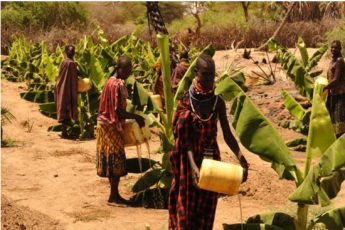
Soil moisture management is becoming an increasingly important aspect of crop production. In partnership with the EU, WFP, IFAD and the Government of Kenya, the Food and Agriculture Organization (FAO) has a developed programme to promote conservation agriculture, but this approach must be scaled up. UNDP has created capacities for food production in Turkana County, slowly building community resilience and food security through irrigation. This has the potential to reduce dependence on rain fed agriculture and create practical models for scaling up through the northern frontier development council in Marsabit, Mandera, Wajir, Lamu, Tana river, Garissa and Isiolo Counties.
The international community can contribute to these efforts by\supporting and partnering with policymakers, researchers and local communities on the effective uses of forecasting and early warning early response mechanisms.