

Add us as your preferred source on Google to see more of our content in Search.
 Add to Preferred Sources
Over 1 million people have returned to northeast Nigeria since October 2015, often to towns with no basic services, infrastructure or ability for people to rebuild their lives. The Norwegian Refugee Council (NRC) is concerned returns are increasing tensions within communities, and tipping the food crisis closer towards famine.
“Northeast Nigeria is ill-prepared for so many people returning back. We are seeing tensions rise in communities. People often return to discover their houses are occupied and they don’t have the means to rebuild their lives. They find themselves displaced once again,” Cheick Ba, NRC’s Country Director in Nigeria.
The Nigerian government launched a military operation in 2015 to push armed groups out of the northeast of the country. This resulted in people fleeing the region, with some fleeing further to neighbouring countries.
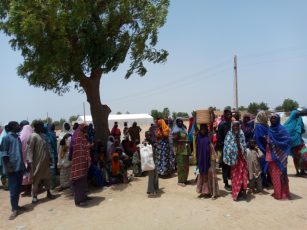
The signing of the tripartite agreement between the governments of Cameroon and Nigeria, and the UN Refugee Agency (UNHCR), to support voluntary returns, resulted in an upsurge of people returning from Cameroon at the end of 2016. Consequently, Nigeria is now struggling to support newly returned refugees, returnees from other areas and internally displaced people.
NRC is concerned that people are returning to areas that lack basic services, such as water, sanitation, housing and infrastructure.
“Families moving back to government-controlled areas, often find their homes occupied by other families. They are left homeless and extremely vulnerable, on top of the tension created between them and the new occupants of their homes. The ground is simply not set for this scale of return,” Cheick Ba, NRC’s Country Director in Nigeria.
The state urgently needs to strengthen the mechanisms to resolve land and property disputes caused by people returning. With rainy season due to start in July, farmers need access to land to grow food in the months ahead.
Shortages of basic services in areas of return are also causing tensions. In Dikwa town in Borno State, many of the 20,000 returnees queue for hours in sweltering 40-degree heat for water. Food is also scarce, with families there reduced to surviving on one meal a day.
Key figures:
- An estimated 8.5 million people need humanitarian assistance in Nigeria.
- An estimated 5.8 million people are severely food insecure in northeast Nigeria, about 5.1 million of whom are living in Adamawa, Borno and Yobe regions.
- Some 2 million people are suffering from acute malnutrition, including 450,000 children.
- For the eighth consecutive year, violence has led to over 1.8 million people being displaced from their homes in the six northeast states (Adamawa, Bauchi, Borno, Gombe, Taraba and Yobe).
- Borno states hosts most of the displaced people. Over half of the total displaced are children.
Source: ReliefWeb. Read full article.
16 May, 2017