
Add us as your preferred source on Google to see more of our content in Search.
 Add to Preferred Sources
To further strengthen emergency response, the EU is developing its own shelter reserves that can be deployed in the context of crises or disasters that overwhelm national response capacities. The EU is allocating €116.6 million to Croatia, Poland, Slovenia, Spain, Sweden, and Türkiye to procure and host new rescue shelter reserves able to accommodate thousands of people.
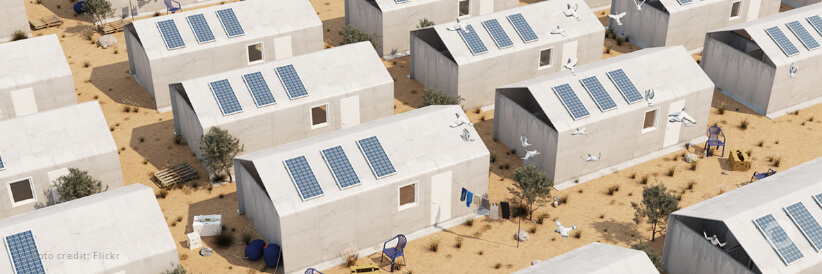
These reserves will consist of high-quality emergency shelters units such as light prefabricated structures, flat-pack containers, and emergency tents. The living units will be complemented by other facilities such as showers and toilets, industrial kitchens, laundry, and communal areas, with special attention paid to safe spaces for children and the most vulnerable. The reserves have been developed to provide a high degree of comfort in an emergency context while ensuring rapid deployment. Moreover, 20% of the units as well as the communal spaces have been designed for people with mobility problems or disabilities, to ensure accessibility for all.
The reserves ensure lower environmental impacts at all stages of the project. This is the case within the manufacturing process (reducing waste, minimizing transport with components produced in Europe, and choosing recycled or reusable materials) and deployment (with innovative designs that minimize cargo volume and with a geographical repartition that will minimize travel distances). Environmental aspects are also embraced when it comes to the use of shelter units (with water purification and atmospheric caption systems to reduce the usage of bottled water, solar panels, efficient generators in case electricity is not available, and recycling facilities).
The first shelter units will be available within the next year to support EU Member States or Participating States of the EU Civil Protection Mechanism in case of a need to rapidly host high numbers of people.