
Add us as your preferred source on Google to see more of our content in Search.
 Add to Preferred Sources
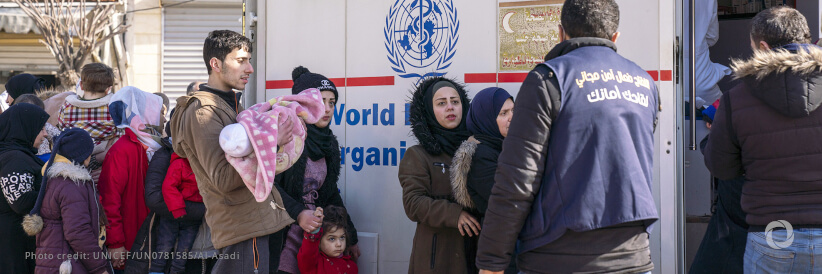
The World Health Organization (WHO) has carried out a month-long field mission to areas of northwest Syria devastated by the February earthquakes there, and in Türkiye, helping stem the risk of further disease outbreaks or full-blown epidemics.
“The focus of the mission was to enhance the capacity of the early warning alert and response network (EWARN) and ensure rapid detection, verification and response to communicable diseases alerts and outbreaks”, the WHO office for the Eastern Mediterranean said in a statement issued.
They identified areas in preparedness and response that needed strengthening, said WHO, and carried out several field visits, including to Maaret Tamsrin, one of the areas impacted by the earthquake, to assess the local hospital and the integration of reception centers as part of the wider early warning system review.
Two reception centers were also visited for water quality monitoring, and the drinking water was tested in coordination with a Syrian NGO, resulting in a recommendation to chlorinate the water supply at the centers.
Rapid response
Mission members also boosted capacity in the rapid response teams (RRTs) which have been set up for cholera and other epidemic-prone diseases. This included a two-day online RRT training course on how to establish teams at reception centers.
“RRTs are vital, as the members can rapidly investigate and respond to outbreaks and communicable diseases”, said Dr. Sherein Elnossery of the Infectious Hazard Prevention unit at the WHO Regional Office, who was part of the mission and delivered the training.
More than 150 participants attended training from surveillance, community health care, WASH, and medical teams. It included sessions on outbreak response, community engagement, and water and hygiene services. In addition, the psychological impact of community crises was addressed, and participants were instructed on providing psychological first aid.
Strengthening cholera response
During the mission, the WHO team worked to strengthen the coordination and leadership of the response to cholera and other epidemic-prone diseases. They also supervised the implementation of an oral cholera vaccination campaign targeting 1.7 million people in the Dana and Harim subdistricts.
Additionally, team members assessed the risk of the existing cholera outbreak expanding and, accordingly, 10 subdistricts in northwest Syria with a target population of 1.12 million people have been identified for oral cholera vaccine campaigns.
Dr Elnossery insisted that WHO “will continue to support the affected areas in northwest Syria to recover from the earthquake”.