
Add us as your preferred source on Google to see more of our content in Search.
 Add to Preferred Sources
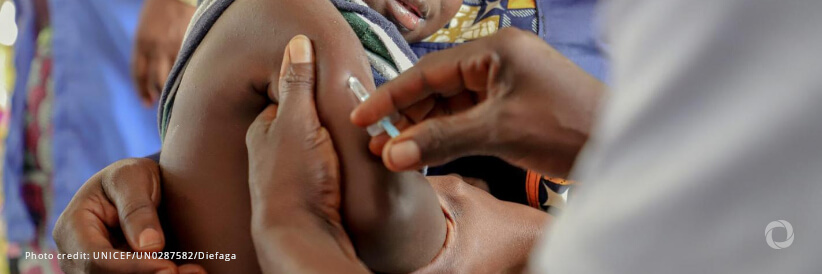
Millions of children living in some of the world’s hardest-to-reach communities are to get access to essential vaccines for the first time, thanks to funding from Gavi, the Vaccine Alliance’s Zero-Dose Immunization Programme (ZIP). The push to reach ‘zero-dose’ children – those who have not received a single routine vaccine shot – is focused on two regions, the Horn of Africa and the Sahel, and specifically in areas where children have traditionally been hard to reach through government programs.
For the first time, the Gavi funding is being channeled through two international civil society organizations, the International Rescue Committee (IRC) and World Vision (the Sahel) which will in turn build local partnerships and tailored approaches suitable for their respective regions.
“With millions of children systemically missing out on routine vaccines every year, these targeted investments will help us reach some of the hardest-to-reach children,” said Thabani Maphosa, Managing Director of Country Programmes Delivery at Gavi. “The Zero-Dose Immunization Programme is taking on our toughest challenges, working with new partners and new innovations to access communities in humanitarian settings.”
The funding will support a number of projects and pilot programs – and will also go towards the implementation of a learning agenda to identify and develop the best methods and practices to reach children living in fragile, conflict, and cross-border settings.
Some of the projects include:
- Permanent and mobile cross-border transit vaccination posts and outreach to insecure areas in Sudan to ensure that children living in areas outside government reach, as well as mobile populations and refugees in border regions, receive immunization services;
- Leveraging Care Groups in Mali, CAR, and Niger to empower communities to equitably reach every beneficiary household and boost demand for immunization;
- Fixed, mobile and extended outreach in Chad and Burkina Faso, complemented with a strategic Reach Every District/Community approach;
- Integration of the ZIP project into the national health system using technology information systems in Nigeria and Cameroon;
- Research in Somalia to better understand healthcare providers’ perceptions of vaccines and immunization and gender-related barriers to access;
- Engaging community and religious leaders in South Sudan on the importance of vaccination in hard-to-reach areas;
- Community dialogues with high-risk communities in Ethiopia, where there is a high prevalence of zero-dose children in remote rural areas, to help communicate and address barriers to immunization.
“Through the generous funding by Gavi, the Vaccine Alliance, the International Rescue Committee (IRC) lead for Reaching Every Child in Humanitarian Setting (REACH) Consortia has rolled-out immunization services in conflict, fragile, and cross-border settings in the Horn of Africa,” said Shife Demissie, Project Director of the Gavi REACH program, International Rescue Committee. “Already, 65,000 zero-dose and under-immunized children have received diphtheria, pertussis, tetanus-containing vaccine (DTP) and over 160,000 children receiving the measles-containing vaccine (MCV).
“The IRC is applying innovative approaches in these settings including optimizing immunization service points and context-tailored delivery approaches to increase access. These include the use of geo-spatial mapping, population data, and IOM’s Displacement Tracking Matrix; combining immunization with key health and socio-economic services; negotiating humanitarian access for immunization service provision; and utilizing civil society-led models for effective, inclusive vaccination programs.”
“World Vision has extensive experience providing immunization services to communities in humanitarian and fragile settings and plans to reach – through this project – children in hard-to-reach areas characterized by chronic armed conflict, climatic shocks, and mobile populations (IDPs, refugees, nomads),” said Chief of Party for Raise4Sahel, Dr Enrique Paz. “World Vision’s approach to reaching zero-dose children includes implementing emergency vaccination strategies, utilizing novel logistics equipment, and integrating Nutrition, WASH, Gender, Interfaith, and demand generation approaches. Led by World Vision, the Raise 4 Sahel Consortium partners will contribute their expertise to support innovative approaches to reaching zero-dose and under-immunized children.”
The World Health Organization (WHO), UNICEF, Gavi, and The Bill & Melinda Gates Foundation, along with other global and national health partners, announced ‘The Big Catch-up’, a targeted global effort to boost vaccination among children following a decline in vaccination coverage driven by the COVID-19 pandemic. ZIP will complement these efforts by targeting children that live outside of government reach and who continually miss out on immunization.
The International Rescue Committee is working closely with Flowminder, IOM, ThinkPlace, and various local organizations and CSOs in Ethiopia, Somalia, South Sudan, and Sudan. World Vision is collaborating with the Africa Christian Health Association (ACHAP), Cameroon Baptist Convention Health Services (CBCHS), Association Evangelique pour la Sante au Tchad (AEST), Christian Health Association of Nigeria (Chan), Food for the Hungry, Dimagi and Core Group alongside local partners, reaching 93 districts across Chad, Niger, Nigeria, CAR, Cameroon, Mali, and Burkina Faso.
Gavi disbursed US$ 9 million in 2022 to fund the inception phase of ZIP and this week is disbursing an additional US$ 28 million. The US$ 37 million funding is part of a total of US$ 100 million that Gavi has committed to the Zero-Dose Immunization Programme (ZIP). ZIP falls under Gavi’s US$ 500 million Equity Accelerator Fund, dedicated to reducing the zero-dose burden in lower-income countries by investing in targeted initiatives. The remaining US $400 million is currently being channeled to Gavi-implementing countries to sustainably reach zero-dose children with a full range of vaccines through national immunization programs.
Reaching zero-dose children and improving routine immunization coverage in underserved communities is critical as it can often be the first step towards comprehensive primary healthcare, allowing the most vulnerable populations to access essential health services.