
Add us as your preferred source on Google to see more of our content in Search.
 Add to Preferred Sources
Nearly 61 million new internal displacements, or movements, were registered in 2022, according to a newly released Internal Displacement Monitoring Centre (IDMC) report, a 60 percent increase compared to the previous year. This figure is the highest ever reported and shows the volume of not just new displacements, but also repeated ones.
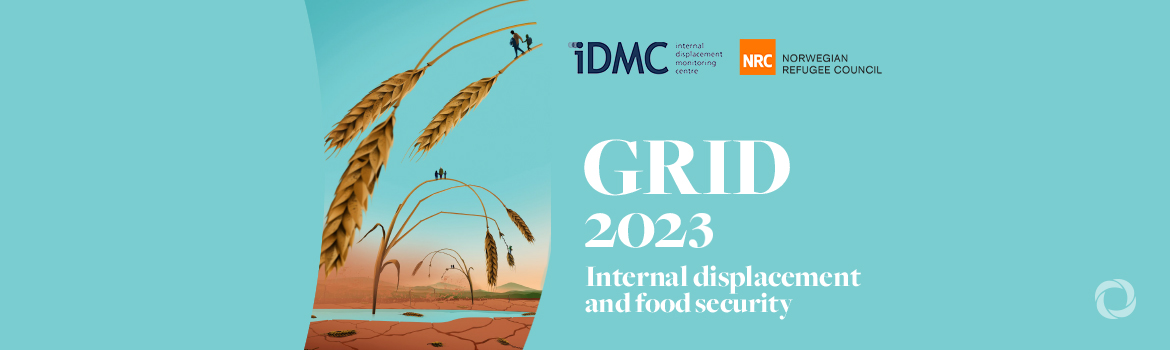
The Global Report on Internal Displacement (GRID) 2023 shows that conflict and violence triggered 28.3 million displacements, the highest figure in a decade, with Ukraine accounting for 60 per cent of the total.
The International Organization for Migration (IOM) is an IDMC GRID partner, providing reliable and accurate data through its Displacement Tracking Matrix (DTM), the world’s largest source of primary data on internal displacement.
➡️OUT NOW: 2023 Global Report on Internal Displacement
71.1 million people were living in #internaldisplacement worldwide at the end of 2022, the highest figure ever recorded.
-62,5m due to conflict & violence
-8,7m due to disastersRead #GRID2023 here: https://t.co/n7Fkyi51lZ pic.twitter.com/FTeCOWAGOn
— IDMC (@IDMC_Geneva) May 11, 2023
Every year, millions of people are displaced because of disasters. Last year, disasters including the floods in Pakistan and typhoon Noru in the Philippines led to 32.6 million internal displacements, the highest ever recorded. The number is expected to rise as the frequency, duration, and intensity of natural hazards worsen in the context of climate change. The World Bank has projected that as many as 216 million people could become internal climate migrants by 2050 if concerted climate action is not taken.
“We are seeing the continuing trend of unprecedented large-scale disasters causing significant loss of life, destruction of homes and livelihoods, and new levels of displacements. Enhancing our common efforts on climate action and investing in safe, regular, and orderly migration pathways is more important than ever Determining the needs of people who are forced to move because of conflict, violence, and disasters is crucial to ensure humanitarian assistance and essential services can reach people who need this support the most in a timely manner,” said IOM Director General, António Vitorino.
This year’s report highlights food insecurity as a driver, consequence, and potential barrier to solutions to internal displacement. Unprecedented, multi-dimensional crises are becoming the norm and the impact on human mobility is increasingly evident. Crises related to ongoing climate impacts, the lingering effects of the pandemic, economic instability, rising food prices, and the global reverberations of war in Europe resulted in record-high levels of food insecurity in large parts of the world in 2022.
Despite these daunting challenges, knowledge gaps remain in how the international community understands and addresses internal displacement in conflict and disaster contexts.
The IDMC GRID report is a clear warning that concrete action needs to be taken now to find sustainable solutions to internal displacement and is an invaluable tool for humanitarian and development partners, governments, and a range of diverse stakeholder groups as they work to prepare for and prevent future displacements.