
One year since devastating flooding in Pakistan, IRC calls for crisis-affected countries to be at the center of the global climate agenda
Add us as your preferred source on Google to see more of our content in Search.
 Add to Preferred Sources
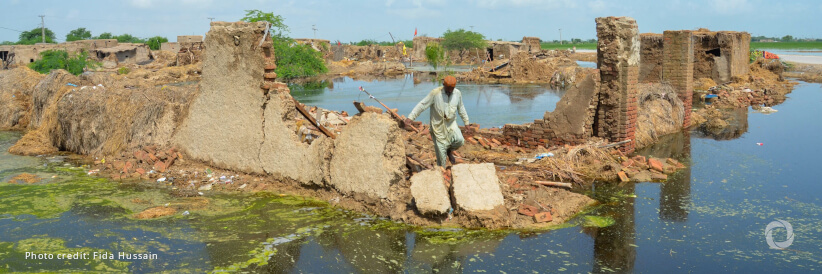
Just one year after severe flooding destroyed almost 10 million acres of land in Pakistan, the country’s economic losses and cost of damages are estimated to be over $30 billion. The continued fallout of this disaster is a reminder that the worst impacts of climate change are concentrated in a small handful of countries least prepared for its effects.
With COP28 approaching, the IRC is calling for these crisis-affected countries to be prioritized in the global climate agenda with concrete commitments to unlock more funding for adaptation and climate resilience, expand partnerships with local civil society groups, and invest in innovations like anticipatory action that can prevent the climate crisis from becoming a climate catastrophe.
With additional flooding predicted for this year, the International Rescue Committee (IRC) is warning that up to 9.1 million people could be pushed into poverty and solely reliant on humanitarian aid as a direct result of the floods. Meanwhile, 71% of households are food insecure, with this figure expected to rise as communities struggle to rebuild after the floods. Malnutrition among children is a major concern. Already associated with half of child deaths in Pakistan, malnutrition has increased by over 50% since the floods according to the World Food Programme. In response to surging child malnutrition around the world, the IRC has in recent years developed and advocated for a simplified protocol for treating the worst forms of child malnutrition which has proven to be effective in helping more than 90 percent of children treated with it recover.
Shabnam Baloch, IRC Pakistan Director, said: “The last year has been especially hard on the people of Sindh and Balochistan, where flood waters destroyed over 10 million acres of agricultural land that provided an income for millions of people. People are going hungry, and malnutrition continues to be a critical concern despite the best efforts of humanitarian organizations. Moreover, the damage to critical infrastructure, hospitals and clinics means that access to critical services were hampered, compounding an already dire situation. It is a tragedy that Pakistan is paying the price for climate change, which will only multiply existing humanitarian and economic challenges. In Pakistan, our hot seasons are getting hotter and our wet seasons are wetter. The country emits less than 1% of the world’s greenhouse gasses but suffers the consequences of high CO2 emissions by wealthy countries. Meanwhile, the pledges made by the international community in January to the tune of $10 billion have yet to materialize”.
The clock is ticking, and IRC is quickly running out of time to bolster Pakistan against additional damage that is likely this year. Millions of people in flood zones are at risk of having their homes washed away if further flooding occurs this year, with children most at risk of experiencing malnutrition as a result of food scarcity that could come with another flood emergency. Without the attention of world leaders, the outcome of another year of inaction could be catastrophic.