

Add us as your preferred source on Google to see more of our content in Search.
 Add to Preferred Sources
Crisis in global learning, 165 million people fell into poverty between 2020 to 2023 and one year of the Black Sea Initiative. Here is what you missed from last week’s headlines in the international development sector.
Crisis in global learning: a call for action to improve education access, quality, equity and inclusion
Education is one of the best investments societies can make to build a more sustainable and prosperous future. Improvements in learning opportunities contribute directly to the achievement of sustainable development and the promotion of human rights, gender equality, and the empowerment of women and girls. Realizing the right to education helps to eradicate poverty and makes individuals and communities more resilient in the face of natural disasters and climate change.
Nevertheless, progress towards achieving Sustainable Development Goal 4 (“Ensure inclusive and equitable quality education and promote lifelong learning opportunities for all”) is seriously off track. The education crisis the world is witnessing was exacerbated by the COVID-19 pandemic, with continuing devastating effects being felt by learners to this day.
At the end of 2019, more than half of children and young people in school were not meeting minimum proficiency standards in reading and numeracy. In 2021, 244 million children and youth were still out of school. The gender dimension of this crisis is particularly distressing. Nearly two-thirds of the world’s non-literate adults are women, and girls are more likely than boys to remain excluded from primary and lower secondary education.
165 million people fell into poverty between 2020 to 2023 as debt servicing crowded out social protection, health and education expenditures
Over the past three years, poverty rates in poor countries have surged, with the number of additional individuals living on less than $3.65-a-day reaching 165 million by 2023 according to a new policy brief from the United Nations Development Programme (UNDP), titled “The Human Cost of Inaction: Poverty, Social Protection and Debt Servicing, 2020–2023”.
The entirety of these additional poor live in low – and lower-middle-income economies, with the poorest 20% in low-income countries suffering the most with their incomes still below the pre-pandemic levels in 2023. In response to this crisis, the UNDP is calling for adaptive social protection and a “Debt-Poverty Pause” to redirect debt repayments toward critical social expenditures.
Achim Steiner, UNDP Administrator, said: “Countries that could invest in safety nets over the last three years have prevented a significant number of people from falling into poverty. In highly indebted countries, there is a correlation between high levels of debt, insufficient social spending, and an alarming increase in poverty rates. Today, 46 countries pay more than 10 percent of their general government revenue on net interest payments. Debt servicing is making it increasingly harder for countries to support their populations through investments in health, education, and social protection. There is a human cost of inaction in not restructuring developing countries’ sovereign debt. We need new mechanisms to anticipate and absorb shocks and make the financial architecture work for the most vulnerable”.
One year of the Black Sea Initiative: Key facts and figures
For almost a year, the UN-brokered Black Sea Initiative agreed by Russia, Türkiye, and Ukraine has allowed millions of tonnes of grain and other foodstuffs to leave Ukraine’s ports, playing an “indispensable role” in global food security, according to UN Secretary-General António Guterres.
Also known as the Black Sea Grain Initiative, it has been run by the Joint Coordination Centre (JCC) in Istanbul, staffed by Russia, Türkiye, Ukraine, and the UN.
DevelopmentAid Editorials
Deforestation in the Amazon drops 33,6% in six months. Good sign or too early to celebrate?
It’s a massive challenge. There are more than five million square kilometers of the Legal Amazon covering almost 60% of Brazilian territory and, in the last four years, the situation was not good at all as the biome registered a 59% increase in deforestation.
According to data from Brazil’s National Space Research Institute (INPE), between August 2019 and July 2022, during the presidential tenure of Jair Bolsonaro, the Amazon lost over 35,000 km2 to deforestation. Bolsonaro’s team earned the reputation of being “an ecocidal government” and “a forest-burning machine” cutting down 59% of “the lungs of the Earth”, as the Amazon is called since it produces 6-9% of the world’s oxygen.
When the new government came to power in Brazil in 2023, Luis Inacio Lula da Silva, in his third presidential tenure, promised to resume the environmental inspection policies that had been discontinued by the previous government.
Read the full article.
No biodiversity – no future for food, or why we need more nature in agriculture
Biodiversity is key to providing farmers with the services of nature such as pollination and water purification and also pest and disease control. However, the monoculture production system, which became widespread over the last century, has greatly contributed to the loss of the positive services offered by biodiversity. Nevertheless, farmers are becoming increasingly aware of the benefits of working with nature, and this awareness has also been reflected in recent political decisions and commitments. The Food and Agriculture Organisation of the United Nations is one of the key actors in reconciling the interconnected fields of biodiversity conservation, agriculture, and food production.
Read the full article.
How important is mental health for society and the global economy?
Poverty, natural or man-made catastrophes, conflicts and other disruptive factors can have a disastrous effect on the physical condition, mental health and psychological wellness of millions of people around the globe.
Read the full article.
Here’s what else has happened
Urban planning: With two-thirds of the world’s population likely living in urban areas by 2050, the UN’s High-Level Political Forum (HLPF) turned the spotlight on the sustainable development of cities.
Sudan: The Food and Agriculture Organization of the United Nations (FAO) has kicked off its emergency seeds distribution campaign to reach farmers in key regions, ensuring that they have the necessary resources to meet food production needs. This comes as a response to the urgency of the ongoing main crop production season (June – October 2023) in the country.
IOM, ILO: The International Organization for Migration (IOM) and the International Labour Organization (ILO) convened a workshop with key government stakeholders in Ukraine, including the Ministry of Economy, to build awareness and consensus on current and future labour market challenges in Ukraine, and the policies and capacities required to address them.
UNHCR: UNHCR, the UN Refugee Agency, has completed the disbursement of cash assistance to over 1 million registered Afghan refugees in Pakistan who were impacted by the prolonged difficult economic situation in the aftermath of the devastating floods of 2022.
Reports
UN warns of soaring global public debt: a record $92 Trillion in 2022
According to the report, 3.3 billion people live in countries where debt interest payments are greater than expenditures on health or education. This five-fold surge in public debt levels since 2000, demands immediate action to tackle the escalating crisis affecting developing countries in particular.
Global Health 50/50 report ranks Unitaid as a leader in gender equity
Unitaid is proud to announce its impressive performance in Global Health 50/50’s 6th annual Report, titled ‘Workplaces: worse for women’. Since 2020, Unitaid has been recognized as a Very High Performer, scoring very high on Global Health 50/50’s Gender and Health Index. The recognition demonstrates the persistent commitment to gender equality and diversity in the way we work.
Sustainability and collaboration drive UN procurement in 2022
A new report published by UNOPS on behalf of the UN system details how 31 UN organizations spent $29.6 billion on goods and services last year. The 2022 Annual Statistical Report on UN Procurement analyzes the combined annual UN spending on goods and services. It presents an analysis of key trends in UN procurement – breaking down procurement by UN organization, category of goods and services procured, and supplier country.
Events
Crowdfunding for Nonprofits | Webinar
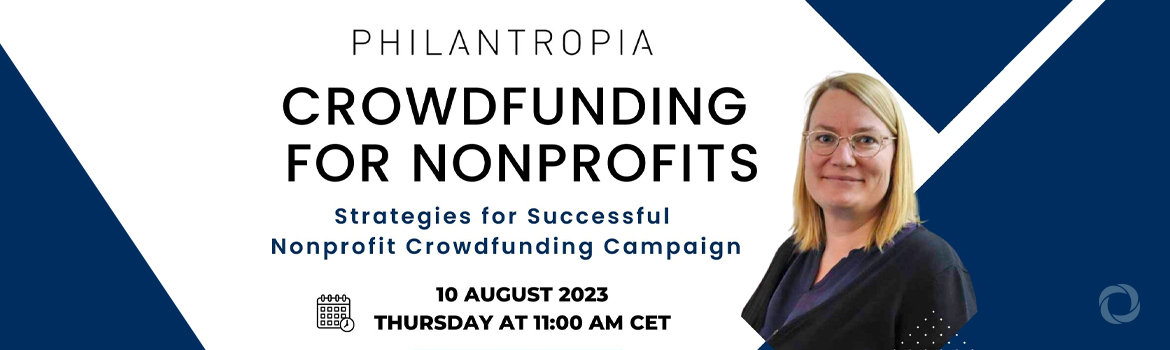
📅 10 August 2023 🕑 11:00 AM (CET)
Webinar
The term ‘Crowdfunding’ may have originated in the entrepreneurial world, but its power as a fundraising tool for nonprofits is undeniable. As the nonprofit sector continues to embrace innovative approaches, it’s crucial to explore how crowdfunding can propel your organization’s financial success. If you’re a nonprofit organization wondering whether crowdfunding is right for you, eager to learn what it entails, or seeking the perfect strategy to implement, this webinar is tailored to meet your needs.