
WWF: Funding for innovative and locally-tailored food system transformation is essential for a healthier, more sustainable planet
Add us as your preferred source on Google to see more of our content in Search.
 Add to Preferred Sources
Transforming the way food is produced and consumed is essential for reducing environmental damage, climate impacts and delivering on the UN’s Sustainable Development Goals (SDGs), but the solutions and innovative approaches needed to achieve this transformation currently lack the necessary investment. In a new study, WWF outlines how the additional $15.2 billion of food-based innovation funds needed annually can be focused on the solutions that will be most appropriate and impactful for local people and nature.
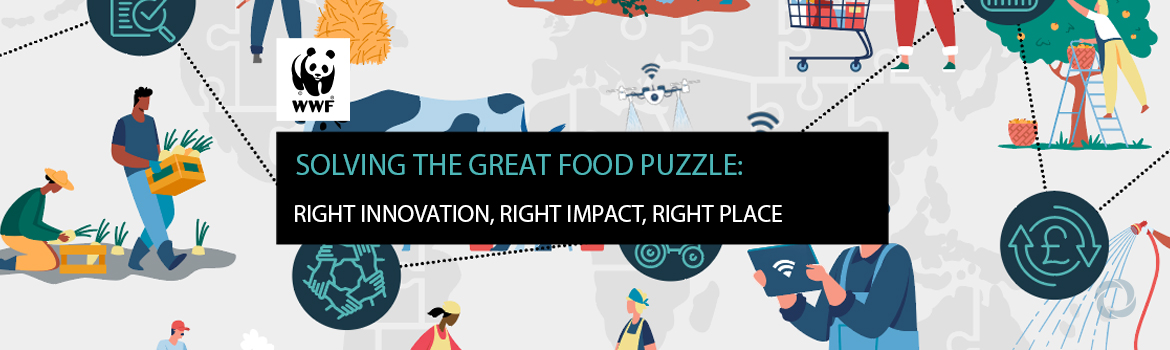
WWF’s Right Innovation, Right Impact, Right Place report dispels the notions that there are just a handful of innovations that could transform the whole global food system and that many innovations are yet to be developed, or rely on high-tech inputs that need further refinement. Rather, WWF argues that there is a suite of technological, social, legislative, business, and financial innovations that can be applied with varying impacts depending on the place and context in which they are applied. Ensuring funding is not concentrated on a narrow interpretation of food systems innovation is critical.
The report provides a framework for funding and implementing the most impactful food-based innovations, depending on where they will be applied and the level of transformation required. The framework provides decision-makers with the tools to direct finance to innovations that are most appropriate in countries around the world.
Some examples of locally tailored food system innovations highlighted in the report include:
- In Kenya, where a business innovation has seen a new marketplace for smallholder farmers in Lake Naivasha Basin cutting food loss and improving nature-positive production
- In the Democratic Republic of the Congo, where technological innovation has improved traceability and transparency in supply chains, ensuring farmers are paid a fair price for coffee beans, and that nature-positive practices are applied
- In Paraguay, where social innovations to champion community-led agroforestry and Indigenous food production have helped restore landscapes and improve livelihoods
In 2021, UN Secretary-General Antonio Guterres convened the UN Food Systems Summit to launch bold new actions to deliver progress on all SDGs. The Summit heralded major commitments to dramatically increase innovation funding. However, on the eve of the first biennial Stocktaking Moment (24-26 July), significant gaps remain in the ambition, finance, and implementation of many national-level plans for food systems transformation.
Brent Loken, Global Food Lead Scientist, at WWF said: “Innovations are essential for transforming food systems to end hunger and food insecurity and reverse the climate and environmental crises. But to deliver the best results in the shortest time possible, we need to find the right innovation, with the right impact, in the right place. In some places that means applying highly novel innovations, in others, it’s about being creative with solutions that are already available. Sometimes, smaller changes are all that is needed, while elsewhere major changes are needed to reorient people’s practices, habits, and goals. It’s time that the world steps up and delivers on the increased funding promised at the UN Food Systems Summit or the decade of action will turn into the decade of inaction.”
Elisa Vacherand, Global Finance Practice Leader, WWF said: “Like all conservation and climate finance, food systems innovation is underfunded – we need another $15.2 billion annually. Given the importance of food systems transformation for achieving the SDGs, the public sector must provide technical assistance and concessional finance, and support blended finance mechanisms that derisk and attract private investment for innovation. And innovators need to identify potential sources of funding very early on, and ideally create bankable projects so that investors can support the best innovations that deliver the biggest impact in the shortest time in any given place.”
On 24-26 July, national ministers will attend the UN Food Systems Summit Stocktaking Moment to update on their progress in implementing national pathways for food systems transformation that they committed to in 2021. The continued decline in biodiversity, threats to wildlife, and drastic impacts of global warming around the world show that urgent action is needed across the food sector and all other sectors. The outcomes of the Stocktaking Moment will be a key indicator of the potential success of the SDG Summit in September 2023.