
Add us as your preferred source on Google to see more of our content in Search.
 Add to Preferred Sources
As recurrent malnutrition crises continue to affect the Hadjer Lamis region in Chad, Médecins Sans Frontières (MSF) has evolved its emergency malnutrition response, launched in September 2021, into a long-term project to address people’s pressing needs.
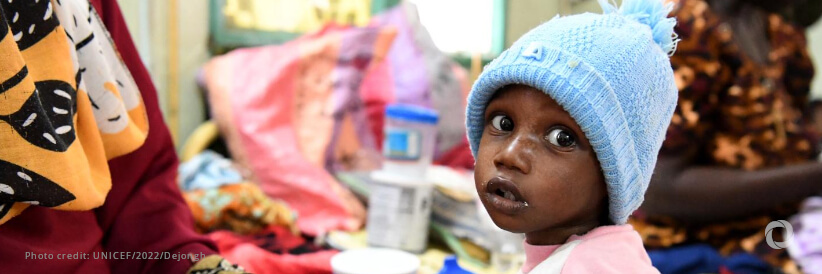
In a region where several other preventable childhood diseases, such as measles and malaria, aggravate malnutrition and contribute to morbidity and mortality, hundreds of mothers are forced to travel many kilometres to give their babies a chance of survival.
“There is a clear need for nutrition services in Massakory, but looking forward, we plan to strengthen our integrated community healthcare activities, which we hope will address some of the challenges in accessing healthcare. Other organisations are urgently needed to support water, sanitation and hygiene services to reduce diarrhoea, respiratory infections and other preventable illnesses, ” says Susanna Domeij, outgoing MSF project coordinator in Massakory.
“But people need a lot more help than we are currently able to provide to respond to hunger and malnutrition among children in Massakory. Other organisations are urgently needed to support water, sanitation and hygiene services to reduce diarrhoea, respiratory infections and other preventable illnesses, as well as agricultural and income generating activities to prevent malnutrition in the first place,” says Domeij.
Since May 2023, MSF has brought medical care closer to people through the integrated community healthcare (ICCM+) approach, managed by community members with MSF supervision. The teams also support the inpatient therapeutic feeding centre (ITFC) in Massakory Provincial Hospital and manage ambulatory therapeutic feeding centres (ATFC) in support of 12 health centres in the district.
The teams arrive at N’doukouri Health Centre to manage the ATFC in collaboration with the Ministry of Public Health and Prevention to treat cases of malnutrition in children under five years old.
Once there, teams set up for the day under a shaded area where they screen for and treat malnutrition, malaria and other common illnesses. MSF teams refer complicated cases of malnutrition to the provincial hospital in Massakory, where they run an ITFC with a capacity of up to 60 beds during the lean season. Early in the morning, around 200 women gather on mats spread out on the ground in the courtyard of the N’doukouri health centre, waiting with their children for the arrival of MSF teams.
“This is the second time he has fallen ill with malnutrition,” says Mariam Abdoulkarim, who gently holds her baby in her arms.
Mariam’s child had already been diagnosed with malnutrition and taken care of by the teams a few months ago. But in recent days, he has started having diarrhoea again and is struggling to breathe properly.
Some children are readmitted into the programme within six weeks of being discharged. This is because the conditions at home that led to malnutrition in the first place are unlikely to have changed.
In 2022, MSF received 17,620 admissions of acute malnutrition across the ATFCs in Massakory health district and 2,062 cases in the ITFC. By the end of July this year, MSF had already treated around 10,200 children with malnutrition in the ATFC, and 647 children in the ITFC.
“Poverty, the effects of climate change, difficulties in accessing healthcare, recurrent measles outbreaks, childhood diseases (malaria, diarrhoea and pneumonia) and the lack of access to good quality drinking water are all reasons that explain the persistence of acute malnutrition in the health district of Massakory. To this day, the food security and nutrition responses remain insufficient throughout the region of Hadjer Lamis,” says Dr Christian Mwemezi, MSF medical team leader in Massakory.
Care for the community, by the community
To access hard-to-reach areas, the teams have decided to launch ICCM+ activities, which bring healthcare closer to communities, treating the most common childhood illnesses such as malaria, respiratory infections, and acute watery diarrhoea, as well as malnutrition.
Patients in critical condition are referred to the nearest health centre, or to the hospital if necessary. Within the first two months of opening, 516 children have been treated across the four ICCM+ sites in Massakory.
In the village of Karkoure, located 20 kilometres from Massakory town, community health workers – chosen by the community itself and supported by MSF – ensure people’s access to vital health care. For Younous Hissen Ahmat, chief of the village of Karkoure, this activity has been invaluable.
“We have a lot of problems with child malnutrition, malaria and diarrhoea in the community. It is the role of the chief to take care of his people, so if MSF comes to help us in this task, we can only be very grateful,” he says.