
Global goals: Two in 5 children starting school won’t be able to read by age 10 unless world leaders take action
Add us as your preferred source on Google to see more of our content in Search.
 Add to Preferred Sources
The world is wildly off track to meet the 17 United Nations global goals by 2030, putting the lives and futures of millions of children at risk unless leaders make concrete plans to accelerate progress, Save the Children said as it launched a new data tool to highlight child inequality.
The Sustainable Development Goals (SDGs) – a blueprint of 17 goals agreed upon by all 193 United Nations (UN) Member States in 2015 to transform the world for the better – have reached their midpoint of implementation, yet barely one in 10 of their requirements are on track to be met by 2030.
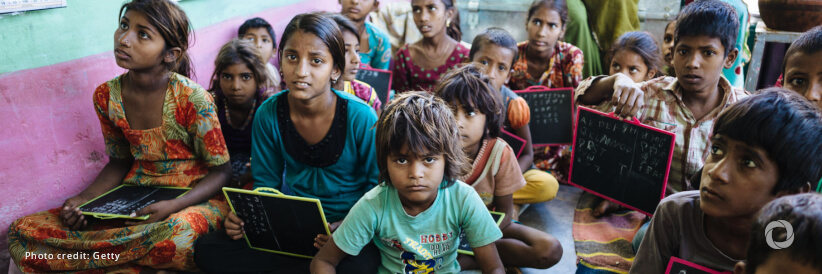
Data from the children’s rights agency’s new visualization tool, the Child Atlas – shows that 392 million of the 922 million children – or two in every five – starting school over the next seven years will not be able to read and understand a simple text by age 102. With Goal 4 focused on ensuring all children receive a quality education, this statistic reveals how the majority of the world’s children will continue to miss out unless leaders take drastic action to course correct.
Based on current rates of progress, Save the Children’s Child Atlas also projects that over the next 7 years – or the time left for the world to achieve the 17 SDGs –
- 31.6 million of the 942 million babies born between now and 2029 will not survive to celebrate their 5th birthday.
- Malnutrition will leave more than 1 in 5 babies born stunted.
- Of the 414 million girls who will finish primary school by 2030, 67 million will marry before turning 18.
- 2.6 billion – or 4 in 5 – children will experience at least one extreme climate event.
The Child Atlas, launched, can be used to generate new statistics measuring global progress against several of the goal indicators. The Child Atlas also allows users to explore the different ways inequality affects children’s lives, understand the relationship between different factors, and hear how children describe the problems they are facing.
In light of these devastating findings, Save the Children is urging world leaders to meet at the SDG Summit in New York on 18-19 September to generate renewed commitments supported by concrete plans to accelerate progress toward the SDGs. The agency is calling on leaders to turn promises into action, work both for and with children, unlock the finance needed to deliver the SDGs, and invest in services and systems that put the needs and rights of children first.
Inger Ashing, Save the Children International CEO, said: “If the Sustainable Development Goals are achieved, the world in 2030 will look markedly different to the one we live in now. There’d be no extreme poverty anywhere, gender equality achieved, inequality reduced, and urgent action taken to combat climate change. However, with less than seven years left, children are experiencing multiple, overlapping crises like we’ve never seen before. Hunger, conflict, inequality, poverty and the climate crises threaten children’s survival, protection and right to learn. The SDGs are the best framework we have for charting a way out of this moment of crisis to build a greener, fairer planet for all children”.
“Child participation is critical for successfully achieving the SDGs and ultimately children’s rights. It is also a child’s right to have their views heard and participate in public decision-making on issues that affect their lives. Data to understand the situation is crucial: it helps policymakers make better decisions and allocate resources effectively. By including disaggregated data on many key indicators, our new Child Atlas includes crucial data to allow world leaders and civil society to better understand why certain groups of children are falling behind, how the intersecting experiences of inequality and discrimination are impacting progress toward the SDGs, and to monitor rates of improvement.”
Save the Children helped shape the SDGs and the accompanying 2030 Agenda, which recognizes children as agents of change. The SDGs were adopted by all UN Member States in 2015 to provide a shared blueprint for peace and prosperity for people and the planet, now and into the future. At their heart was an urgent call for action by all countries – developed and developing – in a global partnership.