
With no let-up for war-affected Ukrainians, UN launches humanitarian and refugee plans to respond in 2024
Add us as your preferred source on Google to see more of our content in Search.
 Add to Preferred Sources
The United Nations and partners asked donors for a combined $4.2 billion to support war-affected communities in Ukraine and Ukrainian refugees and their host communities in the region throughout 2024.
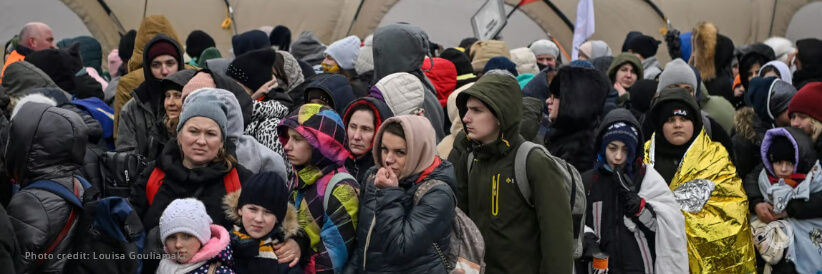
Nearly two years since the war’s rapid escalation, 14.6 million people need humanitarian assistance in Ukraine – a staggering 40 per cent of the population. Some 6.3 million people have fled the country and remain refugees, mostly across Europe.
A recent wave of attacks underscores the devastating civilian cost of the war, while a bitter winter is ratcheting up the urgent need for life-saving humanitarian aid.
In front-line towns and villages, people have exhausted their meager resources and rely on aid to survive. In the Donetsk and Kharkiv Regions, families shelter in damaged houses with no piped water, gas, or electricity. Constant bombardments force people to spend their days in basements. Children cannot play outside, let alone attend school.
The UN Office for the Coordination of Humanitarian Affairs (OCHA) coordinates the response inside Ukraine. This Humanitarian Needs and Response Plan requests $3.1 billion for 2024 and targets 8.5 million people. UNHCR, the UN Refugee Agency, coordinates the Regional Refugee Response Plan (RRP), which requests $1.1 billion and targets 2.3 million refugees and host communities.
In total, the two highly prioritized UN plans aim to support some 10.8 million people in Ukraine and the region.
“Hundreds of thousands of children live in communities on the front lines of the war, terrified, traumatized, and deprived of their basic needs. That fact alone should compel us to do everything we can to bring more humanitarian assistance to Ukraine. Homes, schools and hospitals are repeatedly hit, as are water, gas and power systems. The very fabric of society is under attack with devastating consequences. Our response plan, implemented with national NGOs and volunteers, includes the full range of assistance,” said the Under-Secretary-General for Humanitarian Affairs and Emergency Relief Coordinator, Martin Griffiths, who is also the head of OCHA.
Ukrainian refugees in neighboring countries also need increased and sustained support. Despite efforts for inclusion, only half of school-age refugee children are enrolled in schools in host countries, while a quarter of refugees in need struggle to access health care. Only 40 to 60 per cent are employed, often below their qualifications, and many remain vulnerable with no means to support themselves.
“Although their plight is no longer in the headlines, millions of refugees from Ukraine still need urgent support,” said the UN High Commissioner for Refugees, Filippo Grandi. “Host countries continue to extend protection and include them in society, but many vulnerable refugees still need help. They shouldn’t feel pressed to return because they cannot make ends meet in exile. All refugees must be helped and given opportunities to use and build their talents to prepare them for eventual voluntary return when the situation allows.”