
Add us as your preferred source on Google to see more of our content in Search.
 Add to Preferred Sources
One year ago, on 15 April 2023, armed conflict broke out in Sudan between the Sudanese Armed Forces and the Sudanese Rapid Support Forces. Since then, the situation has worsened. The hostilities, which were initially centered in Khartoum State, have intensified and rendered over half the country inaccessible.
The impact of this conflict has been devastating. Some 8.6 million Sudanese have been forced to flee their homes, 6.8 million are displaced within the country and 1.8 million have sought refuge in neighboring countries – Chad, Egypt, and South Sudan.
The severity of the humanitarian emergency has been compounded by a deepening famine crisis, with 17.7 million Sudanese facing acute food insecurity, close to 5 million of whom are on the verge of starvation, as reported by OCHA and the Integrated Food Security Phase Classification.
In addition to the humanitarian crisis, the conflict has severely disrupted the healthcare infrastructure. The central depot, which stored all the antiretroviral treatment for people living with HIV in the country is inaccessible and the stock that it holds has since expired.
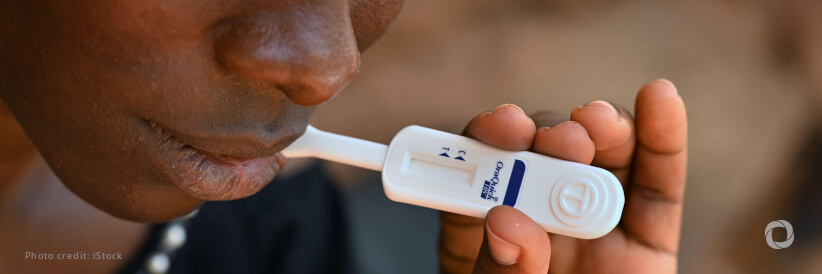
Before the conflict erupted, 11,000 people living with HIV in Sudan were on HIV treatment, 4000 of whom were lost to follow-up when the war broke out. All HIV prevention and testing services were suspended.
“We are adapting the HIV response in Sudan to the situation in the country. Our priority has been to get anti-retroviral treatment to those who need it, in whatever way we can,” said Elsheikh Ali, UNAIDS Country Director for Sudan.
Despite these challenges, some unsung heroes are working tirelessly to ensure that the HIV response continues uninterrupted.
Amidst the active war, the displacement of critical partners in the HIV response, poor internet connectivity and communications, sporadic electricity, and growing food insecurity, the HIV national response team, with UNAIDS’ support, was able to reconsider, plan, and raise resources for this new, national context of the HIV response in the country. The team was able to submit a funding application to the Global Fund to Fight AIDS, TB, and Malaria (Global Fund) and to finalize the Global Fund Grant Making process. This secured critical financial support to HIV, TB, and Malaria for the next three years. The funds received from previous Global Fund cycles have been used to replace stocks of antiretroviral treatment (ARVs) as well as to establish new HIV treatment storage facilities in safer regions.
During the COVID pandemic, Sudan established a ‘Search and Rescue’ system to track people living with HIV who had their treatment interrupted. Once the conflict in the country escalated, the HIV national response team was able to draw on the ‘Search and Rescue’ system to locate most of the 4000 people living with HIV who were lost to follow-up because of the war and to re-enroll them again to receive HIV treatment services.
“We have heroes here in Sudan, including networks of people living with HIV, who are working in very difficult circumstances, traveling tens of kilometers and risking their safety, to personally deliver ARVs to the people who need it,” said Elsheikh Ali, UNAIDS Country Director, Sudan. “These are the people we should be applauding; they are the ones keeping the HIV response going in the middle of a war and famine.”
The Ministry of Health, whose infrastructure has been significantly disrupted, is trying to provide critical HIV services including treatment and PEP (emergency medicine for HIV taken to prevent the virus in case of potential exposure to the virus) in regions of the country where there is active warfare. In more stable areas, more comprehensive HIV services are now being offered to those who need them.
In the face of the escalating humanitarian crisis in Sudan, some dedicated people remain steadfast in their commitment and work selflessly to mitigate the impact of the conflict on the HIV response.
“The HIV national response team exemplify the resilience of the AIDS response,” said Anne Githuku-Shongwe, UNAIDS Regional Director Eastern and Southern Africa. “In the face of adversity – war, displacement, famine – and against all odds, they have found a way to continue collaborating to uphold the HIV response.” She adds, “They have completed a successful Global Fund grant in the middle of an active war. They have made sure that people living with HIV across Sudan are not being left behind, that they are found, there is treatment available for them and that they receive it. That is resilience, commitment and leadership.”