
Add us as your preferred source on Google to see more of our content in Search.
 Add to Preferred Sources
The evidence that educating girls creates healthier, wealthier, fairer, and more stable communities is overwhelming—so why isn’t every girl getting a quality education? The barriers, particularly for girls in the poorest countries, are wide-ranging and complex but these are some of the most challenging
Cost
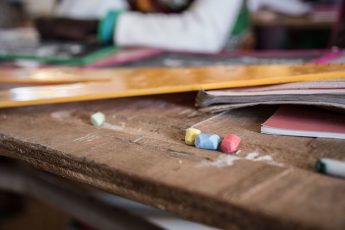
Even in areas where school fees are non-existent, there’s still a price to pay. Students are often required to buy uniforms, transportation, and supplies, like textbooks, pens, and notebooks, not to mention the indirect costs such as loss of potential income from missed labour opportunities or contributions around the home.
Violence and Security
In some regions, parents don’t allow their daughters to attend school, but it isn’t necessarily because they don’t want them to be educated. Sometimes parents keep their children home because the commute to and from school is unsafe and the risk of attacks on girls’ schools is a serious concern.
Conflict and Emergency Situations
In conflict-affected countries, education is not always accessible. As a result, girls in these countries are almost 2.5 times more likely to be out of school than girls living in countries not affected by conflict.
Teaching and School Climate
The perpetuation of traditional gender norms can result in girls being excluded from learning important subjects like science, technology, engineering and math (STEM). Teaching must be inclusive and enable girls to learn the same lessons as their male counterparts.
Access to Resources
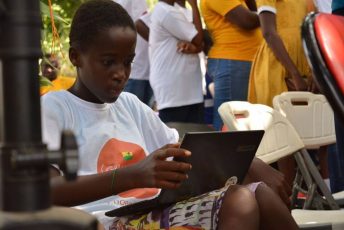
Where resources don’t address girls’ needs, it can limit their learning. Providing a wide range of resources that do address girls’ needs—such as textbooks, teaching guides, and the internet—all help ensure girls are both in school and learning.
Cultural Norms and Expectations
Household duties, the care of family members, early marriage, and early childbirth are all factors that contribute to girls missing out on an education. In cultures where these expectations are the norm, girls’ education may be lower on a family’s list of priorities.
Poor Infrastructure
Overcrowded classrooms and rundown schools provide students with a less-than-quality learning environment. Schools that don’t provide students with access to separate toilets, washing areas, and sanitary products can discourage girls who are menstruating from attending classes.
Source: ONE. Read full article here.
18 May, 2017