
Financing a natural rubber plantation in Indonesia, promoting sustainable development and green jobs
Add us as your preferred source on Google to see more of our content in Search.
 Add to Preferred Sources
The Tropical Landscapes Finance Facility (TLFF), a partnership between UN Environment, World Agroforestry Centre, ADM Capital and BNP Paribas, announced its inaugural transaction, a landmark US$ 95 million Sustainability Bond to help finance a sustainable natural rubber plantation on heavily degraded land in two provinces in Indonesia.
The project incorporates extensive social and environmental objectives and safeguards. Planted areas will serve as a buffer zone to protect a threatened national park from encroachment.
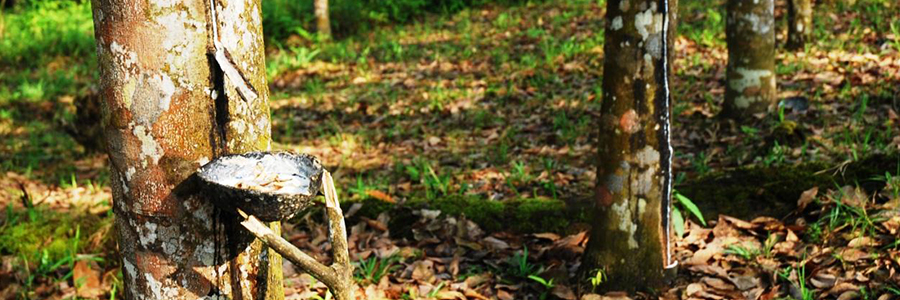
A multi-tranche Sustainability Bond arranged by BNP Paribas (BNPP) and issued by TLFF I Pte Ltd. will fund PT Royal Lestari Utama (RLU), an Indonesian joint venture between France’s Michelin and Indonesia’s Barito Pacific Group, for climate-smart, wildlife friendly, socially inclusive production of natural rubber in Jambi, Sumatra and East Kalimantan provinces.
The project involves collaboration with WWF, which has worked with Michelin and RLU to set aside remaining High Carbon Stock (HCS) and High Carbon Value (HCV) forest in the RLU concessions, as well as critical wildlife conservation and riparian areas. Out of a concession area of 88,000 hectares, roughly 45,000 hectares will be set aside for community livelihoods and conservation.
In Jambi Province, the two concession areas held by RLU and two WWF concessions form a contiguous buffer zone protecting the Bukit Tigapuluh National Park, which is one of the last places in Indonesia where elephants, tigers and orangutans co-exist. At maturity, the natural rubber plantation is expected to provide approximately 16,000 fair-wage jobs, providing a critical source of employment for local communities.
Welcoming the announcement, H.E. Siti Nurbaya Bakar, Hon’ble Minister of Environment and Forestry, Republic of Indonesia, said, “We highly support this positive drive from the private sector using an investment structure like the TLFF, which not only boosts economic development but also improves much-needed skills in the longer term.”
“We are honoured to take this important step alongside TLFF towards establishing an impactful partnership for the development of a more sustainable rubber industry,” said David Sulaiman, President Director of RLU. “This demonstrates our commitment to a thriving, sustainable rubber market for the country and our unwavering support for local communities.”
Dr Kuntoro Mangkusbroto, Chairperson of the TLFF welcomed the project’s alignment to achieving the Sustainable Development Goals through a holistic triple bottom-line approach that puts people and planet at the heart of all TLFF projects.
An initial 18,100 hectares of rubber were planted as of December 2017 and the TLFF bond issue will contribute to financing further development of the plantation. USAID has provided a partial credit guarantee on the transaction.
“It is the role of banks today to make sure we can enable sustainable and impactful projects everywhere. While not without its own challenges, this transaction is proof that financial institutions can generate socially beneficial outcomes when we really work hard” said Eric Raynaud, CEO, Asia Pacific and Member of Group Executive Committee at BNP Paribas. “This complex structuring arrangement also demonstrates that our institutional investor clients have the appetite to invest in projects and companies that combine commercial and financial performance with clear environmental and social purpose and impact.”
This transaction is the first corporate sustainability bond in Asia and the first sustainability bond in ASEAN. Vigeo Eiris, the Environmental, Social Governance (ESG) research agency, has confirmed that the Notes are ’Sustainability Notes’ with positive contribution to sustainable development, aligned with the ICMA Sustainability Bond Guidelines.
Original source: UNEP
Published on 26 February 2018