
IRC warns millions at risk from heavy rains in Pakistan, mobilizes emergency response to prevent humanitarian crisis
Add us as your preferred source on Google to see more of our content in Search.
 Add to Preferred Sources
The International Rescue Committee (IRC) is preparing to scale up its response in Pakistan, where looming rains pose a significant threat to the lives and livelihoods of millions.
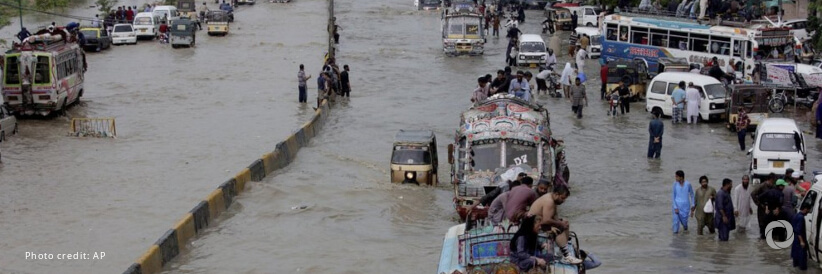
With many of the communities at risk in Sindh and Balochistan still trying to rebuild after the unprecedented floods of July 2022, significant preparation is required to ensure that the devastation caused by the 2022 floods is avoided.
Heavy monsoon rains in Pakistan could potentially impact the health, economy, and livelihoods of up to 3 million people, according to the National Disaster Management Authority.
The expected flooding could lead to waterborne diseases, disrupt agricultural activities, and displace families from their homes. In response to these threats, the IRC has mobilized its emergency response teams to provide immediate relief and support.
This will include health services, protection, cash assistance, water and sanitation support, and the delivery of emergency supplies to help communities address flooding. The response will focus on women and girls, people with disabilities, and minority groups, including Afghan refugees who have been affected by the floods and their host communities.
Shabnam Baloch, IRC Pakistan Director, said: “It is impossible to forget the widespread destruction caused by the flooding of 2022. To this day, families are continuing to struggle to rebuild their homes and make ends meet as their livelihoods were washed away by the rains. Two years on, IRC has seen a significant increase in communities turning to extreme measures of survival, including selling their daughters for marriage and sending their children to work. Our priority is to ensure that affected communities receive timely and adequate support to prevent this humanitarian crisis from deepening. In Pakistan, the IRC has established a robust response framework that includes setting up medical camps, distributing clean water, and providing cash assistance to help families rebuild. As the monsoon season approaches, the IRC continues to innovate and scale solutions based on rigorous research to aid those in crisis-prone areas”.
The monsoon season in Pakistan poses severe risks across multiple fronts. Heavy rains often lead to extensive flooding, displacing thousands and causing widespread damage to homes and critical infrastructure such as roads and bridges. The ensuing stagnant water becomes breeding grounds for waterborne diseases like cholera and dengue fever, placing immense strain on local healthcare systems. Furthermore, agricultural losses due to flooded fields exacerbate food insecurity in a country heavily reliant on farming. These challenges, coupled with the substantial resources required for relief efforts, overwhelm local capacities.
The IRC remains committed to working alongside local authorities and communities to mitigate the impact of natural disasters and build sustainable resilience in Pakistan – but this is only one part of the solution. The international community must increase its support for humanitarian efforts in Pakistan, recognizing the significant and long-lasting impact that a disaster can have on the generations to come.