
Add us as your preferred source on Google to see more of our content in Search.
 Add to Preferred Sources
In response to significant flooding across Myanmar, the International Federation of the Red Cross Red Crescent Societies (IFRC) has announced an allocation from its Disaster Response Emergency Fund (DREF), aiming to help 15,000 people over the next nine months.
Collaborating closely with the Myanmar Red Cross Society (MRCS), the National Red Cross Red Crescent Societies, and in coordination with the ICRC, the IFRC has provided support and allocated resources since the flooding began at the beginning of July. The CHF 825,215 DREF allocation will help scale up MRCS’s humanitarian assistance for communities in the most affected areas – Ayeyarwady and Bago region (East and West), Kayin and Mon states, Tanintharyi and Yangon regions.
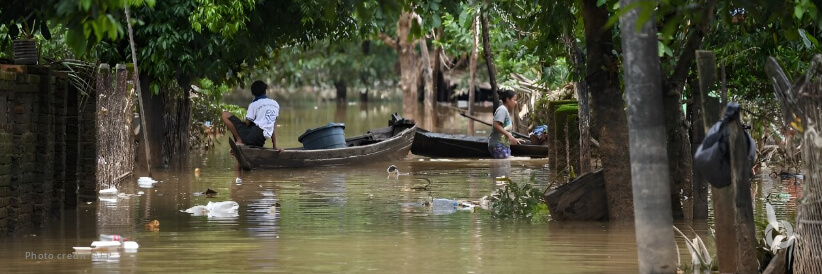
Heavy monsoon rains have caused multiple rivers and waterways to overflow, leading to severe flooding throughout the country of Myanmar since early July. This unprecedented flooding has claimed lives and affected more than 100,000 people in both rural and urban areas across the country.
Severely affected communities urgently need shelter support, cleaning materials for their homes, warm clothing, food, drinking water, cash for other immediate necessities, first aid and health support including hygiene items, and hygiene promotion to prevent waterborne diseases.
Since the onset of the floods, Myanmar Red Cross Society (MRCS) teams have been working tirelessly to ensure the safety of those affected. Over 236 MRCS volunteers have been providing search and rescue services, first aid, healthcare, food, safe drinking water, and psychological support to the affected population. Teams have been on the ground conducting hygiene promotion activities and helping people reconnect with their loved ones who have been separated due to the floods.
Moe Thida Win, Director of Myanmar Red Cross Society’s Disaster Management Department, said: “In the immediate term, we will prioritize the physical and mental well-being of the most vulnerable people, ensuring they have easy access to food, clean water and essential household items, and providing cleaning supplies, and health and hygiene promotion, not to mention disease prevention guidance.”
Christie Samosir, Operations Manager for IFRC Myanmar says: “Recovery from the floods is expected to take at least a year due to pre-existing challenges and other compounding factors. MRCS is focusing on community involvement and resilience-building, ensuring that affected populations are central to the recovery process.”
Through the DREF operation, the IFRC global network will support MRCS’s efforts over the next nine months, targeting 15,000 people. The primary focus will be on those whose houses were damaged or destroyed and who are in urgent need of assistance, including single-parent families with children under five, the elderly, and people with disabilities.