
Add us as your preferred source on Google to see more of our content in Search.
 Add to Preferred Sources
As world leaders gather at the 29th session of the Conference of the Parties (COP29), the International Organization for Migration (IOM) is calling for more concrete and sustainable solutions for the communities most affected by climate change’s impact.
Climate adaptation and resilience measures are needed for people who want to remain in their home, ensuring their livelihoods can sustain and recover from the impacts of climate change.
“We must develop better ways to help people and communities become more resilient to climate change’s impacts, to ensure that people who are especially vulnerable have the chance to adapt and thrive,” said IOM Director General Amy Pope.
DG Pope noted that climate migration is not just a concern for the future; it is the present reality for millions globally. Last year alone, disasters caused more than 26 million internal displacements (GRID 2024, IDMC).
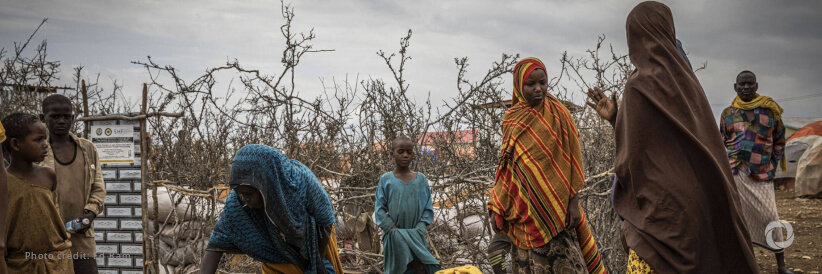
In the Horn of Africa, for instance, recurrent droughts and flash floods have pushed entire communities, especially pastoralists and smallholder farmers, to relocate in search of water and grazing land. In Bangladesh, rising sea levels and frequent cyclones have led to the displacement of coastal populations, forcing families to migrate to urban areas in search of stability. Meanwhile, parts of Central America have experienced severe droughts that have decimated agricultural livelihoods, compelling thousands to move in search of work and resources. These examples demonstrate that climate migration is a pressing issue today, affecting diverse populations across continents.
Around the world, climate change is influencing how and why people move. It prompts some to move for job opportunities as its impacts change livelihoods. In extreme cases, communities dealing with the extreme impact of climate change and are no longer able to adapt are compelled to relocate to safer areas. There must be solutions in place that protect and support those who want to stay, those on the move, and those needing or wanting to move.
Migration should also be integrated into climate solutions, and plans should include consulting with migrants, DG Pope added.
“Their innovative ideas and diverse perspectives contribute to building a sustainable economy that is fair and inclusive for all,” she said.
At COP29, IOM is committed to amplify underrepresented voices. At the IOM Climate Change and Human Mobility pavilion, all attendees will have the opportunity to hear stories of resilience from climate migrants, learn about youth-led solutions to climate migration from twenty-four youth delegates, and engage in discussions with experts on the impacts of climate change on human mobility.