

Add us as your preferred source on Google to see more of our content in Search.
 Add to Preferred Sources
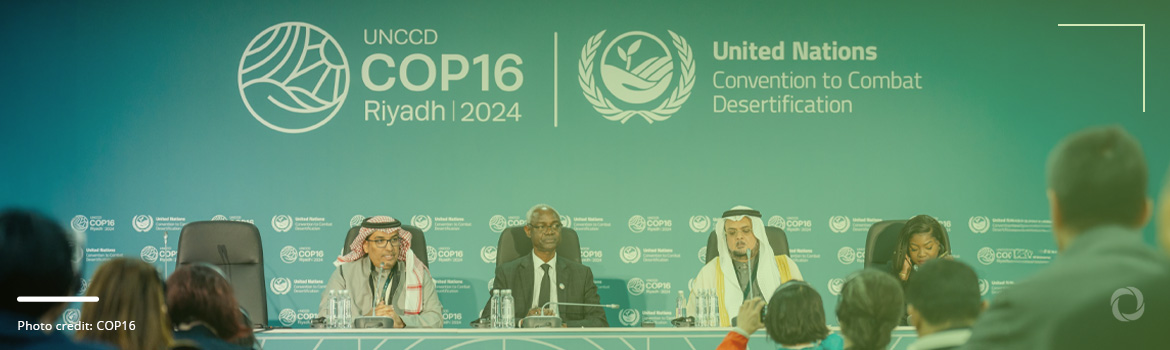
Three in four people will be affected by drought by 2050 and 6 billion hectares of land are likely to be degraded by then if the world fails to take the necessary action. These statistics were announced at the 16th session of the Conference of the Parties (COP16) organized by the United Nations Convention to Combat Desertification (UNCCD) in Saudi Arabia in December 2024.
Despite these compelling numbers, the participants, over 20,000 people from almost 200 countries, failed to come to an agreement on the actions needed to address drought.
Gloomy forecasts
Addressing the delegates, Amina J. Mohammed, the United Nations Deputy Secretary General, highlighted:
“Never before have so many people been affected by land degradation and drought. 40% of fertile land is now degraded. And the results are dire: rising inequalities, people hungry, people displaced. Livelihoods and businesses threatened, environments destroyed, and the foundation of peace, stability and security rocked. On the basis of current trends, by 2050, three in four people will be affected by drought worldwide.”
Ibrahim Thiaw, UNCCD’s Executive Secretary, warned that droughts are expanding to new territories and no country is immune. In the past three years 30 countries, including India and China and first world countries such as the US and Canada plus Spain, Indonesia, Uruguay, and Southern Africa have experienced drought emergencies.
According to UNCCD data, at least 100 million hectares of healthy and productive land are degraded every year and it is estimated that if no restorative actions are urgently taken, 6 billion hectares of land could be degraded by 2050 which is almost the size of South America. Droughts currently affect the global livelihoods of 1.8 billion people and annually cost US$300 billion. They are also threatening key sectors such as agriculture, water, and energy and pushing vulnerable communities to the brink.
Real-life stories behind statistics
Salimata, a 33-year-old mother of two from Mbororo, an indigenous community in Chad, has experienced the effects of drought with her family. Speaking to German broadcaster Deutsche Welle at COP16, she explained how drought caused them to migrate from their tiny village in search of better living conditions.
“When the rains stopped, we tried to stay. We dug deeper wells, reduced our meals, sold our livestock. But nothing was enough.”
At the Lake Chad basin, which she called home, there is serious land and environmental degradation together with droughts which have resulted in about 6.4 million people requiring ongoing humanitarian aid due to food shortages and malnutrition, according to a 2024 Red Cross report. Lake Chad, which provides fresh water, lost 90% of its surface area between 1963 and 1990 due to a human-caused climate crisis, and overuse from a growing population that relied on it to grow food and for fishing. Chad shares the lake with Niger, Cameroon and Nigeria which has resulted in armed conflicts across the four countries that have led to the displacement of millions of people.
“This lake is nearly dried up, with less than 9% remaining. This illustrates the land degradation we are talking about. If you visit, you will see that the ecosystem has been completely disrupted. This is a major problem in northern Nigeria, where desertification has caused unrest,” Balarabe Abbas Lawal, Nigeria’s Minister of Environment, told COP16.
Insufficient funds pledged
To counter the effects of drought and land degradation, COP16 launched the Riyadh Global Drought Resilience Partnership and by the conclusion of COP16, US$12.15 billion had been pledged to it with US$10 billion coming from the Arab Coordination Group. The funds will be channeled to aid 80 of the world’s most susceptible countries such as Chad by helping them to build drought resilience capacity.
“To protect lives and livelihoods, we must significantly increase investments in land restoration. Every dollar invested in healthy land is a dollar invested in biodiversity, climate, and food security. The good news is that the world could save billions annually and earn trillions more by restoring land back to health and building resilience to drought”, Thiaw announced at COP16.
However, the funds pledged at COP16 are negligible compared to the amount needed to deal with the prevailing problems of drought, desertification and land degradation. According to UNCCD data, the world will require US$1 billion every day to address these issues from 2025 to 2030 and at least US$2.6 trillion will be needed by 2030 to revitalize over a billion hectares of degraded land and improve drought resilience.
No legal commitments assumed
Industrialized nations attending COP16, including the US, were reluctant to sign a legally binding protocol to address drought that was tied to financial commitments. This stance disappointed participants from African nations and indigenous people who bear much of the brunt of the effects of land degradation, drought and desertification. Nevertheless, a Caucus for Indigenous Peoples and a Caucus for Local Communities were created to ensure their perspectives and challenges are heard.
Although no legally binding protocol was signed, a statement issued by a spokesman for the United Nations Secretary General, António Guterres, stated, that the COP16 talks had “made significant progress in laying the groundwork for a future global drought regime, which they intend to complete at COP17 which will take place in Mongolia in 2026”.