
Add us as your preferred source on Google to see more of our content in Search.
 Add to Preferred Sources
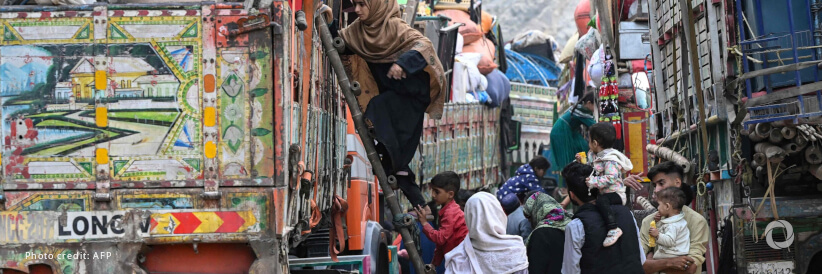
After decades of seeking refuge in Pakistan, up to a million Afghans could face a return to Afghanistan following a directive by the government of Pakistan that would require all Afghans without valid visas to leave the country by 31 March 2025.
In response, the International Federation of Red Cross and Red Crescent Societies (IFRC) is supporting the Afghan Red Crescent Society (ARCS) to address the immediate and longer-term needs of 50,000 people. The IFRC has allocated an initial 750,000 Swiss Francs from its Disaster Response Emergency Fund (DREF) to enable the Afghan Red Crescent Society (ARCS) to provide shelter, emergency health services, food, and water, all of which are in desperately short supply for Afghans returning from Pakistan.
The humanitarian needs of people returning to Afghanistan are high. Many have abandoned their livelihoods and personal belongings in Pakistan. Children, many of whom are already malnourished, need specialized care. Many families have been separated during the journey and need support to restore family links. Longer-term support will also be needed to help people to re-establish their lives in Afghanistan.
This latest development comes on top of already high numbers of people returning to Afghanistan. Since September 2023, almost 850,000 people have already returned from Pakistan in addition to significant numbers of Afghans also returning from Iran, according to UN data.
Mawlawi Sheikh Shahabuddin Delawar, the Acting President of the Afghan Red Crescent Society (ARCS), emphasized the urgent need for action.
“People returning are facing numerous challenges that they cannot navigate alone. Women and children represent a significant portion of those returning, and ensuring their safety and well-being must be our top priority. As a local organization with a presence across the country, we aim to provide immediate relief and long-term support to help people rebuild their lives safely and with dignity.”
Ahmed Suliman, the interim Head of Delegation for the International Federation of Red Cross and Red Crescent Societies (IFRC) in Afghanistan, expressed concern about the potential scale of the crisis:
“This dynamic situation will impact millions of people. Addressing immediate needs – such as food, healthcare, and shelter – is our top priority, while also planning to support people in the longer term. The IFRC and National Societies are working alongside ARCS to tackle these challenges and provide tailored support to people most in need.”
Currently, conditions in Afghanistan are not conducive for sustainable return and reintegration of large numbers of people, amid high levels of malnutrition and a struggling economy. There are also millions of internally displaced people in the country. Existing humanitarian support is insufficient to meet current needs and will only come under more pressure as higher numbers of people return.
In Afghanistan, support for people returning is part of a broader humanitarian response, addressing the needs of both returnees and communities in places of return. The Afghan Red Crescent Society, as a local humanitarian organization, is well placed to understand the evolving needs and priorities of returnees at various points along the return process.
IFRC emphasizes that all returns must be voluntary, safe, and dignified. IFRC also calls on the international community to provide adequate support to meet the growing humanitarian needs of people returning to Afghanistan.