
Add us as your preferred source on Google to see more of our content in Search.
 Add to Preferred Sources
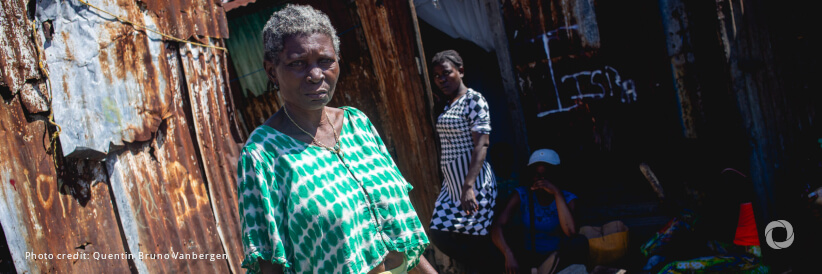
The intensification of armed violence in the Port-au-Prince metropolitan area (ZMPAP) has been accompanied by an upsurge in gender-based violence, targeting mainly women.
In response to this emergency, PAHO/WHO is supporting the Ministry of Public Health and Population (MSPP), in collaboration with local partners, to meet the growing needs of survivors.
“What keeps me alive, what prevents me from giving up, are my children. Sometimes I want to hurt myself… to end my life”, confides R., 35 years old. Like many survivors, she is one of the internally displaced persons (IDPs), victims of rape and sexual assault, often perpetrated by members of armed gangs.
According to data from the Ministry for the Status of Women and Women’s Rights (MCFDF), nearly 6,500 cases of gender-based violence were reported in 2024, and already 1,250 in January and February 2025 alone. These figures are largely underestimated, according to humanitarian actors, due to fear, stigmatization, and difficulties in accessing services. Over 60% of these cases involve sexual violence, often linked to forced displacement.
To respond to this emergency, PAHO/WHO and its partners are supporting the MSPP in setting up a reinforced medical and psychosocial response, with financial support from the United Nations Central Emergency Response Fund (CERF) and the European Commission‘s Directorate-General for Civil Protection and Humanitarian Aid Operations (ECHO).
Psychosocial support at the heart of the response
In sites hosting internally displaced persons (IDPs), 11 psychologists and as many social workers have been trained and deployed to offer direct support to women and girls identified as survivors of sexual violence. Under the coordination of the Direction Sanitaire de l’Ouest (DSO), these teams provide psychosocial support, counseling sessions, and referrals to available health care structures. This human presence is crucial in a context where women’s voices are still too often stifled by fear and stigmatization.
“I was the victim of something several people did to me that I didn’t consent to,” explains F., 34, modestly. “I thought about suicide because I didn’t want what I experienced to become a disgrace for me or my children”.
Three local women’s organizations – Kay Fanm, SOFA, and Fondation TOYA – have been mobilized to further strengthen this grassroots action. Their role is essential: as actors rooted in the communities, they create a space of trust, facilitate the identification of cases, and accompany survivors like F. through an often long and complex care process.
“Suicidal thoughts never left me. But by going to TOYA, I was able to access real support. Thanks to their support, I’ve regained a glimmer of hope.
Through this integrated response, PAHO/WHO and its partners aim to break the silence surrounding sexual violence and put women’s dignity back at the heart of the humanitarian response.
Strengthening GBV medical care in health institutions
Nine health facilities in the worst-affected areas have been re-equipped with specialized equipment to deal with cases of sexual violence, including gynecological examination tables, rape kits, sterile instruments and essential medicines. Fifty health professionals have also been trained or retrained to improve the quality of clinical and psychosocial care, according to gender-sensitive protocols.
Through this integrated approach, PAHO/WHO and its partners aim to break the silence surrounding sexual violence and restore the dignity of women and girls in a context of extreme vulnerability.
“We cannot turn a blind eye to this crisis,” says Dr Oscar Barreneche, PAHO/WHO Representative in Haiti. “It is our collective duty to support survivors, build the capacity of health institutions, and ensure that every woman and girl victim of violence has access to quality care, with respect and dignity.”