
Add us as your preferred source on Google to see more of our content in Search.
 Add to Preferred Sources
Farmers increase their production and save money through climate-friendly biogas technology in a project supported by the Nordic Development Fund in Nicaragua.
The Nordic Development Fund (NDF) is on a supervision mission to Central America and together with the NGO SNV, they visited four different biogas systems. One of these systems is found on cattle farmer Adolfo Matus’ farm where he uses biogas to generate electricity for automatic milking of his cows.
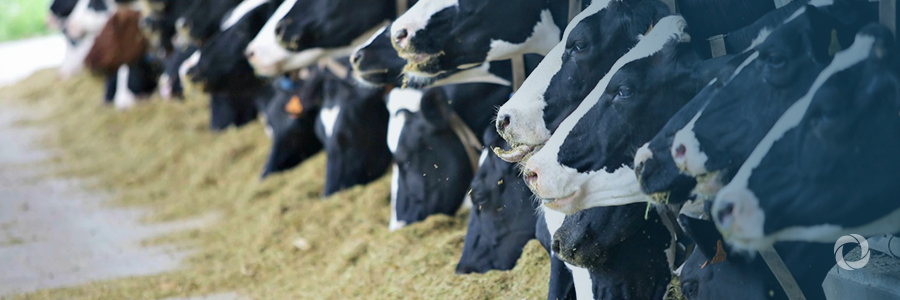
This process helps increase milk production and saves him more than USD 4,000 annually. The 27m3 biogas system was installed in 2017 and provides energy to illuminate the farm, household cooking, and the milking machine. The farm has almost 100 cows that are milked twice daily producing about 1,000 litres of milk.
Mr. Matus used to spend USD 11 daily on gasoline to the generator that provides electricity to the automatic milking machine. Today he not only saves on his energy bill but also has plenty of organic fertilizer that is used to increase fodder production. The pay-back period for his investment will be about two years. Mr. Matus is one of 1,200 farmers that have adopted the biogas energy technology. The energy is used for activities such as pumping water, cooling, illumination, automatic milking, and cooking.
The Biogas Market Development Program in Nicaragua is financed by NDF and the Multilateral Investment Fund (MIF) that is part of the Inter-American Development Bank (IDB). The implementation is done by the international NGOs SNV and HIVOS in close collaboration with farmer associations, milk companies, equipment suppliers, finance institutions and research organizations. The program has successfully trained farmers across Nicaragua and developed national biogas standards together with the Ministry of Development, Industry, and Trade.
The program is the first example of a comprehensive biogas market development program in Latin America and the Caribbean. The technology has been successfully proven at household and semi-industrial levels. Another outcome is a model to stabilize the agricultural frontier through improved natural resource management and better income for farmers.
The program saves an estimated 8,900 tonnes of firewood and reduces carbon emissions by 12,225 tonnes annually. The program will be completed later in 2018.
Original source: NDF
Published on 20 March 2018