
Add us as your preferred source on Google to see more of our content in Search.
 Add to Preferred Sources
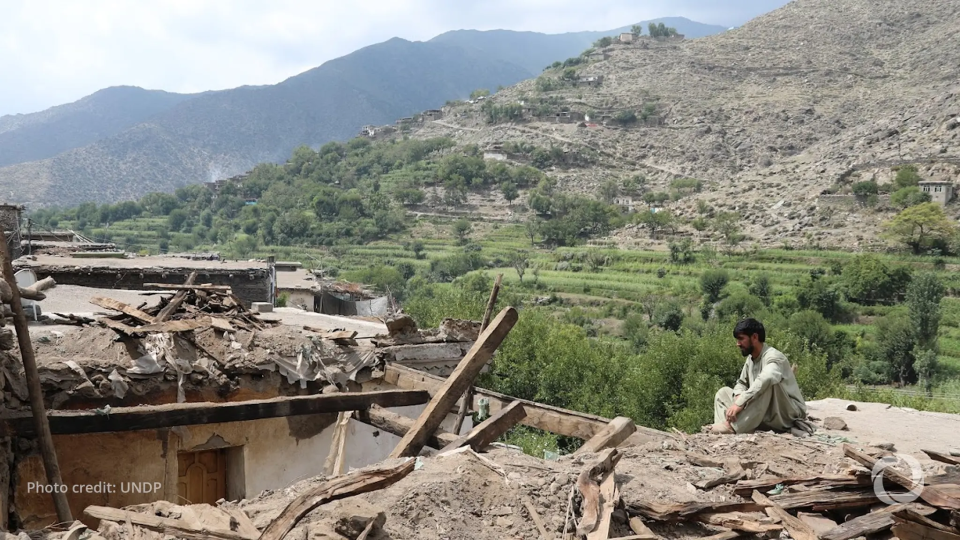
Satellite analysis reveals the devastating scale of destruction from Afghanistan’s August 31 earthquake, with over 649,000 tonnes of debris requiring clearance and at least 23,000 people forced from their homes, according to UNDP press-release. The debris equals 40,500 truckloads that must be safely removed from eastern provinces hit by violent ground shaking reaching Modified Mercalli Intensity level 9, where buildings collapsed and people could barely stand upright. The most severe damage struck Kunar, Nangarhar, and Laghman provinces, with tremors felt as far as Kabul and northwestern Pakistan.
About 1.4 million people experienced strong to violent shaking levels in a region already struggling with fragile infrastructure and limited emergency services. Communities urgently need shelter, medical care, and essential supplies as winter approaches. Infrastructure damage is extensive with 246,000 buildings including homes, schools, and clinics in high-impact zones, while 462 kilometers of electric grid lines face risk. AI-based modeling predicts between 23,000 and 31,000 internally displaced people requiring earthquake-resistant shelter plus access to food, water, and health services.
UNDP Resident Representative Stephen Rodriques described walking through village rubble as heartbreaking. “Entire communities have been upended. Families are sleeping in the open, and access to basic services is severely disrupted,” he said.
Satellite data proves especially valuable in mountainous remote regions where access is limited, helping identify priority areas for debris removal and infrastructure repair before winter hits.
Crisis expert Devanand Ramiah called it “a race against time” requiring coordinated response at scale. UNDP is working with partners to ensure relief reaches those most in need while building long-term resilience. The organization emphasizes community-driven recovery using local resources, drawing from proven practices during the 2023 Herat earthquake response.