

Add us as your preferred source on Google to see more of our content in Search.
 Add to Preferred Sources
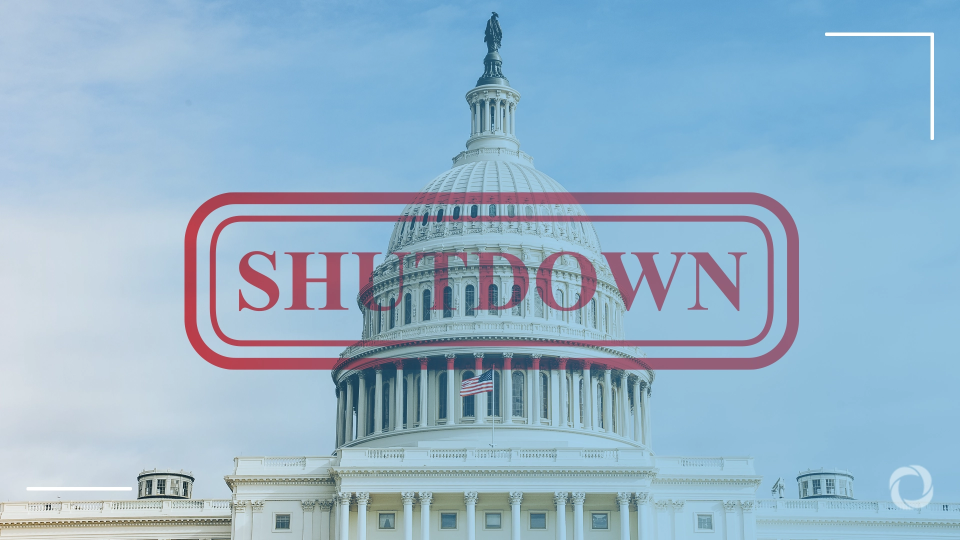
The United States is grappling with a familiar yet escalating crisis: the federal government shutdown that began on 1 October has now stretched into its 33rd day and is inching closer to the record 35-day closure in 2018-19.
The political impasse in Congress has left roughly 1.4 million federal employees either working without pay or being furloughed indefinitely, while vital services from food assistance to air traffic control are beginning to fray.
This phenomenon, a regular feature of American political brinkmanship, is virtually unheard of in other countries. DevelopmentAid explains the roots, ramifications, and peculiarity of the U.S. government shutdown.
What is a U.S. government shutdown?
A government shutdown is largely viewed as the failure of the U.S. political system to perform its most fundamental duty, that, to fund the government.
A shutdown occurs when Congress fails to approve, and the President fails to sign, the spending budgets that fund federal agencies. The U.S. fiscal year ends on 30 September, and by that date, lawmakers must pass appropriations from 12 sub-committees or instigate a short-term measure known as a continuing resolution.
When that does not happen, the Antideficiency Act kicks in which prohibits agencies from spending money without congressional approval.
The result is a sweeping shutdown of government operations. Essential workers, such as air traffic controllers, security personnel, and border agents, remain working without pay while non-essential employees are sent home until funding resumes.
Why did this shutdown start?
This latest impasse stems from clashes over federal spending priorities, the proposed cuts to foreign aid, and the renewal of health insurance subsidies.
Republicans control the House but need 60 votes in the Senate to overcome Democratic opposition under Senate rules. This supermajority is required to defeat a filibuster and advance most legislation. They have fallen short on 13 consecutive votes.
Where is the pain being felt?
What began as a Washington power struggle is now affecting millions of Americans.
🔸 Food aid exhausted. The Department of Agriculture warned that funds for the Supplemental Nutrition Assistance Program (SNAP), which supports 42 million low-income Americans, would run out by 1 November if the shutdown persists.
🔸 Federal workers are going unpaid. Around 1.4 million federal workers are going without pay, with half being furloughed indefinitely and the other half deemed to be essential and therefore required to work without pay. Air traffic controllers and airport security agents did not receive any pay in October.
🔸 Healthcare premiums are soaring. The shutdown coincides with the open enrollment for the Affordable Care Act that started on 1 November, and millions are already receiving notices of higher premiums for 2026.
🔸 Economic damage mounting. Analysts estimate the shutdown is shaving 0.1 to 0.2% off annualized growth each week, representing roughly US$15 billion in lost output every week. The 2018–19 shutdown caused a permanent US$3 billion dent in the US economy.
How common are shutdowns?
Government shutdowns are a relatively recent feature of American politics. They began in 1980 when Attorney General Benjamin Civiletti issued a legal opinion that interpreted the Antideficiency Act as meaning that agencies must cease operations during funding gaps.
Before then, agencies had typically remained operational even when budgets stalled. Since Civiletti’s ruling, the U.S. has experienced 11 shutdowns, including the current one. The most significant were:
🔸 1995–96 (21 days): A standoff between President Bill Clinton and a Republican-controlled Congress over spending and Medicare.
🔸 2013 (16 days): Republicans tried to delay or defund Barack Obama’s Affordable Care Act.
🔸 2018–19 (35 days): Donald Trump demanded funding for a wall along the U.S.–Mexico border.
🔸 2025 (ongoing): Disputes over spending levels, foreign aid cuts, and health insurance subsidies.
Civiletti, who died in 2022, told the Washington Post in 2019 that he was surprised by how his opinion had been weaponized:
“I couldn’t have ever imagined these shutdowns would last this long of a time and would be used as a political gambit.”
Why don’t other countries have shutdowns?
The government shutdown is a distinctly American problem that is rooted in the structure of the country’s political system.
Under the parliamentary systems used in most European nations, the executive must maintain the approval of the legislature to remain in power. If a budget fails to be passed, an election is typically triggered.
Even in Belgium, which had no elected government for 589 days in 2010-11, budgets were passed, government workers were paid, and services continued.
The US separation of power system means the two major parties can control different branches of government simultaneously, thus creating the potential for deadlock. Add the Senate’s filibuster rule, which effectively requires a supermajority for most legislation, and you have a recipe for paralysis that simply does not exist elsewhere. What was designed to encourage compromise has increasingly had the opposite effect.
How do shutdowns usually end?
Historically, shutdowns have ended when negotiators strike a deal on temporary funding, when political pressure forces one side to concede, or when the President and Congress reach a broader compromise.
Under US law, all furloughed employees must be paid retrospectively once the shutdown ends but that does not compensate for the economic loss or the stress endured by millions of workers who live from paycheck to paycheck.