

Add us as your preferred source on Google to see more of our content in Search.
 Add to Preferred Sources
Key reasons to read this article
- Discover why a key U.S. federal department is being dismantled more quickly than experts believe is safe.
- See why tens of billions in education programs are being shifted to agencies that say they are unprepared.
- Read about internal warnings that describe the transition as “dangerously disruptive”.
- Learn how the Trump administration is bypassing Congress to achieve its goals.
- Find out what this U-turn means for students, teachers, and federal protection nationwide.
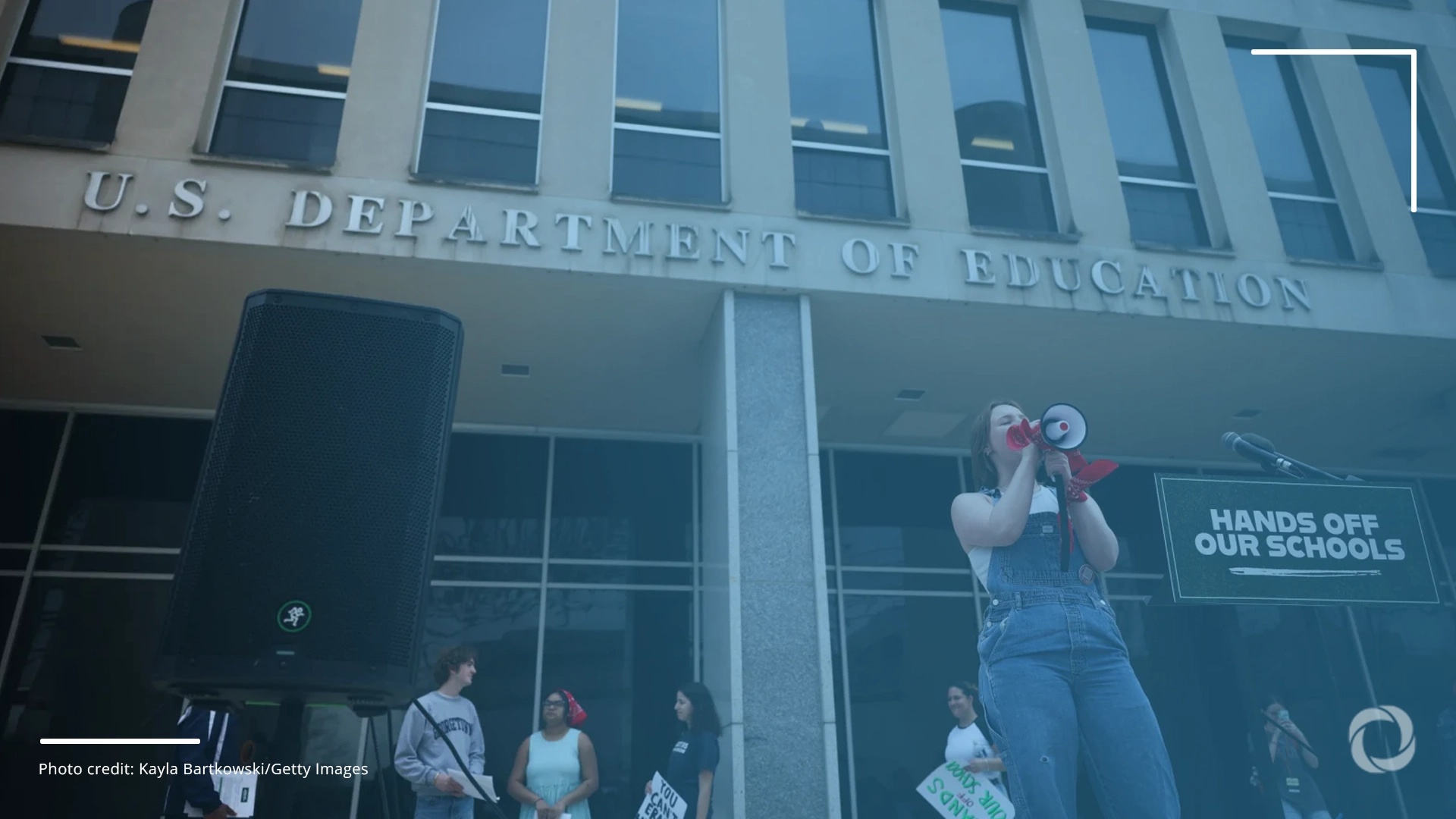
The Trump administration’s plan to dismantle the U.S. Department of Education is moving forward with unprecedented speed, but the agencies expected to take over its responsibilities are warning that they are overstretched, underprepared, and already facing internal disruption.
Six new interagency agreements that have been signed in recent weeks will move tens of billions of dollars for federal education programs to the Department of Labor, the Department of the Interior, the Department of Health and Human Services, and the Department of State. All four agencies already manage extensive mandates, and officials say they lack the staffing, expertise and systems required for such a massive transition.
According to internal staff and a lawsuit filed by education advocates, the transfer of responsibilities is “dangerously disruptive”, and the department’s restructuring has sparked widespread confusion and reports of “chaotic” communication. They have also warned the programs and protection that are vital for vulnerable students may be endangered.
What does the Department of Education do?
The Department of Education was established by Congress in 1979. With a budget of US$268.4 billion in 2024, it oversees national education policy and administers federal school aid.
Through its 4,000 employees, it handles federal aid distribution, data collection, and policy implementation, as well as enforcing laws against discrimination and implementing education legislation.
The agency administers student aid programs (grants, loans, work-study) in a system that is responsible for the education of almost 50 million pupils, and oversees special education, English-language acquisition, and disadvantaged student programs.
Major programs reassigned
Under the interagency agreements, significant parts of the Education Department’s work will move elsewhere in the government:
The U.S. Department of Labor (DOL) will take over key federal K-12 education programs, including Title I grants for disadvantaged students, Title II for educator training, and Title III for English-language learner support. DOL will also oversee most post-secondary education grants as part of a push to align educational achievements with workforce development.
The Department of the Interior will assume responsibility for federal Indian Education programs, higher education, career training, and vocational rehabilitation. This shift aims to streamline federal assistance for tribes and Native American students under a unified agency.
The Bureau of Educational and Cultural Affairs within the Department of State will take control of the Fulbright-Hays grant, linking foreign-language and study-abroad initiatives more closely to national security and foreign policy goals.
The Department of Health and Human Services will manage the Child Care Access Means Parents in Schools program and foreign medical accreditation functions such as childcare for low-income student-parents.
Although an official total has not been revealed by the administration, independent reporting and department statements make it clear that no less than US$31 billion for federal education programs is being shifted out of the Department of Education, and this figure is likely to rise.
Dismantling goes ahead without Congress approval
The reorganization is part of President Trump’s pledge to eliminate the Department of Education and return funding to individual states. “We’re going to shut it down,” Trump confirmed.
See also: US Aid Freeze: Immediate Effects of the Executive Order | DevelopmentAid Dialogues
Shortly after Trump signed the executive order last March calling for the dismantling of the department, the administration began to cut jobs and shift authority to states and local communities. The transition continues despite the fact that it requires the approval of Congress.
To justify the dismantling, the administration is invoking the Economy Act, which is typically used for temporary interagency support. Legal experts and several members of Congress argue that this Act was not designed for the dismantling of a federal agency and that any abolition of the department will require explicit congressional approval.
Lawsuits and warnings
The rapid handover has sparked widespread criticism from education and civil society groups, and politicians, some of whom describe the move as unlawful. A lawsuit filed by a coalition of educators and advocacy groups argues that the ongoing handover exceeds legal authority. “The Department’s information and actions have been unpredictable, chaotic, and unprofessional,” the lawsuit claims. “This experience is unprecedented in administration changes.”
High-ranking politicians have issued similar warnings. Congressman Brian Fitzpatrick explained that the plan risks harming vulnerable students, particularly those who rely on federal support. Senator Patty Murray accused the administration of a lack of transparency: “There’s a difference between reform and sabotage, and right now we are seeing sabotage… they make a big announcement, they don’t work with all of us, there’s no transparency, they are just doing it behind the scenes .”
A union that represents Department of Education employees has stated that the reorganization threatens decades of accumulated experience. “The national mission suffers when core functions are scattered across agencies lacking the Educational Department staff’s expertise and support capabilities,” commented Rachel Gittleman, President of the American Federation of Government Employees Local 252.
Trump’s education shift: states take control
President Trump has long argued that education should be controlled by states rather than Washington, stating the department’s closure “would provide children and their families the opportunity to escape a system that is failing them”.
Education Secretary Linda McMahon cited the department’s shortcomings, including poor student outcomes and a bloated bureaucracy, to justify its elimination. She highlighted declining math and reading scores, especially post-pandemic, as evidence of its ineffectiveness.
Officials say the Department of Education will continue to set the budgets for and the priorities of the transferred programs, while partner agencies will handle day-to-day operations. They argue this model will reduce duplication and accelerate the delivery of services.
Uncertain future
The changes do not address several of the department’s largest responsibilities, including special education, student civil rights enforcement, and the administration of federal student loans. It remains unclear whether these programs will be moved or retained.
Any full abolition of the department will require congressional approval, which is a significant challenge given cross-party support for many of its core responsibilities.
For the time being, schools, states and regional governments are preparing for a complex transition. With agencies signaling limited readiness and legal disputes underway, the future of federal education oversight remains uncertain.