
Add us as your preferred source on Google to see more of our content in Search.
 Add to Preferred Sources
At least 15 women a week in Gaza are giving birth outside any health facility, often without a trained midwife, pain relief, or basic medical supplies, United Nations (UN) reported. Some deliver alone. Others rely on neighbors with no medical training. For many, childbirth has become a matter of survival.
Before the fragile ceasefire took hold in October, ️United Nations Population Fund (UNFPA) estimated that 55,000 pregnant women were caught in “a spiral of displacement, bombardment and acute hunger” with no reliable access to care. The toll has been brutal: premature births have spiked, along with miscarriages and stillbirths linked to severe malnutrition, exhaustion, and constant fear. Around 130 babies are born each day across Gaza. More than a quarter are delivered by caesarean section. One in five is born too early or underweight, often with complications that would normally require specialized care.
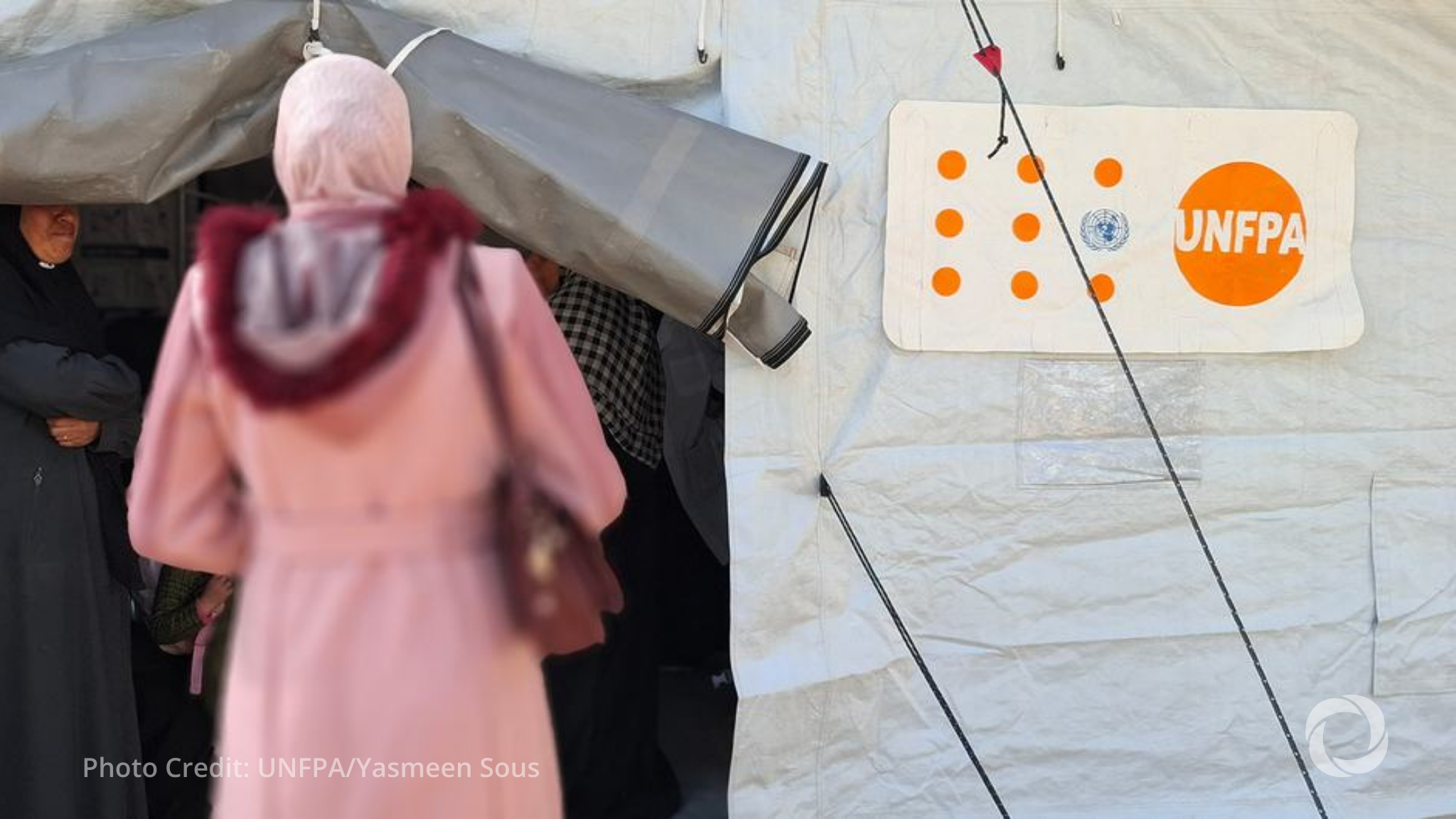
UNFPA now supports 22 health facilities, including five hospitals, and has deployed 175 midwives across the Strip. Nestor Owomuhangi, UNFPA’s representative in Palestine, told UN News the support has made a difference. Visiting Al-Shifa Hospital—once Gaza’s largest maternity facility, now largely in ruins—he said its continued operation was “nothing short of extraordinary.” One of the midwives, Sahar, described delivering a friend’s premature baby in the besieged Zeitoun neighborhood with nothing but a kitchen knife heated over a fire. “I had no gloves, no tools,” she said. “I used the knife to cut the umbilical cord and wet wipes as bandages.”
She recounted another attempt to reach a woman in labor while drones circled overhead. “They were shooting at anything that moved. I had to shout instructions from a distance,” Sahar said. By the time she reached the woman, the baby had already emerged, blue and struggling to breathe. “He needed an incubator, but there was none.” Owomuhangi said UNFPA is helping ensure 98 percent of births still happen in facilities but warned that 18 births a day are taking place beyond hospital gates, often with tragic consequences.
Sahar described one case where a woman hemorrhaged after delivery. “There was no blood, no transport, no doctor. We couldn’t stop the bleeding,” she said. The mother died, leaving behind her newborn. UNFPA continues bringing medicines, dignity kits, and reproductive health supplies through Egypt whenever possible. The agency also provides cash assistance to vulnerable women, a helpline for women and young people, and hygiene items and clothing for displaced families.
“We will keep bringing supplies from around the world,” Owomuhangi said, “until every birth in Gaza can happen safely.”