
Add us as your preferred source on Google to see more of our content in Search.
 Add to Preferred Sources
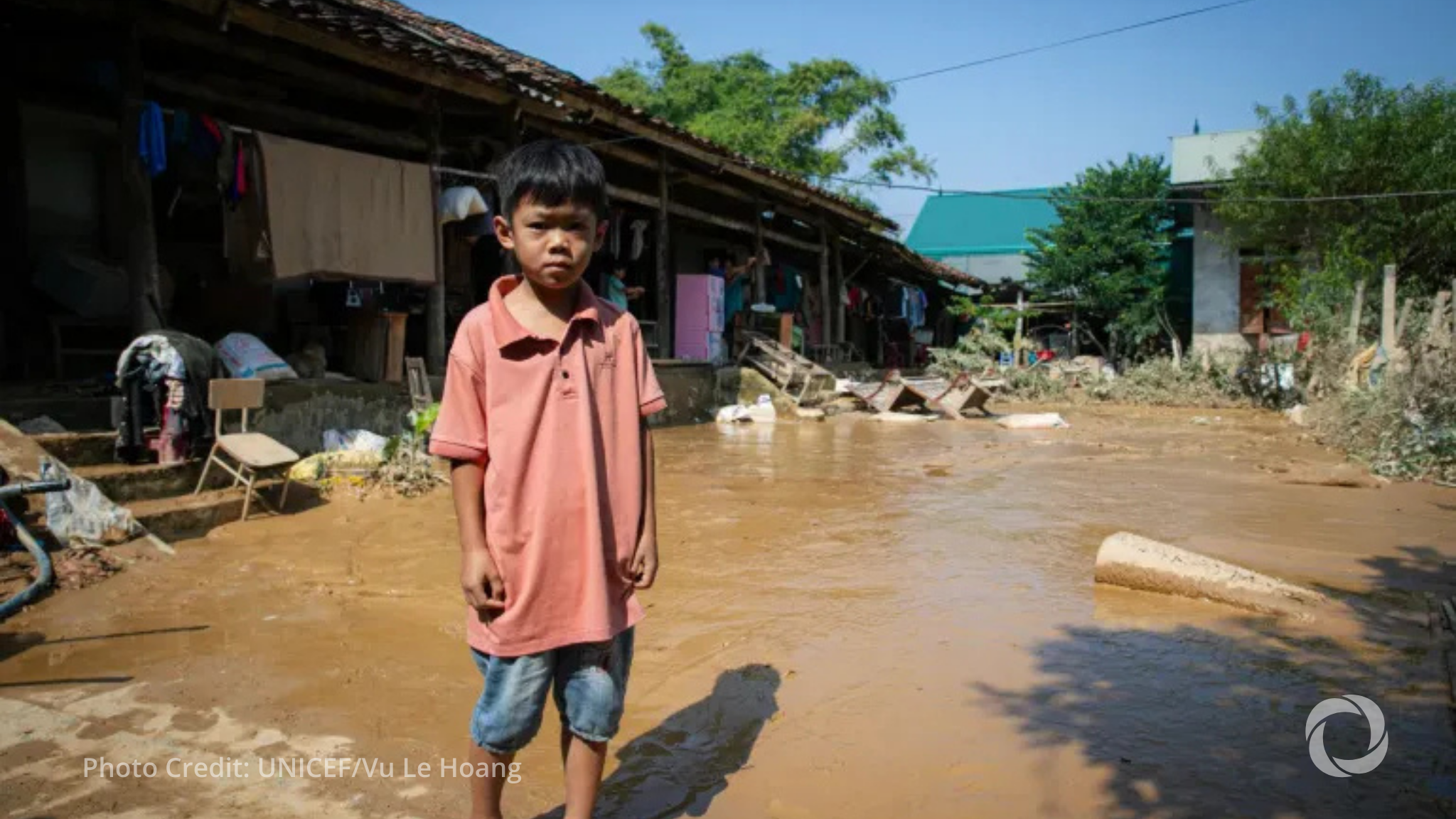
More than 4.1 million children across Southeast Asia have had their education disrupted since late November by relentless climate-related disasters, United Nations Children’s Fund (UNICEF) said in a statement. Kids in Indonesia, Viet Nam, Thailand, the Philippines, and Malaysia are waking up in evacuation shelters, drinking unsafe water, and watching their parents struggle to rebuild homes and livelihoods that have been destroyed.
The breakdown shows the scale of disruption: In Viet Nam, 3 million students have had their education interrupted by recent typhoons, floods, and storms. In the Philippines, 919,000 children were affected by flooding and winds last month and couldn’t attend school. In Indonesia, over 180,700 students are currently out of class, with more than 2,000 education facilities affected by recent flooding. In Thailand, nearly 90,500 students are out of their classrooms due to flooding, and in Malaysia, more than 5,000 students have seen their education disrupted since the start of the monsoon season.
For many of these students, this isn’t even their first interruption this year—it’s their second, third, or fourth time they’ve watched floodwaters consume their classroom. Globally, UNICEF said at least 242 million students in 85 countries had their schooling disrupted by extreme climate events in 2024. Each represents a child whose learning has been disrupted, whose routine has been shattered, whose path to a better future has been shaken.
Being a child in the impacted countries means they might not have clean water to drink. In Indonesia, water supply systems have been submerged and damaged, increasing the risk of disease outbreaks among the most vulnerable children. In Viet Nam, 480,000 people currently lack safe water. It means health services are disrupted precisely when disease risks are highest and facilities are damaged or overwhelmed. In the Philippines, nutrition supply stockouts and diarrhea outbreaks are becoming more common. And it means living in overcrowded shelters where protection risks escalate and children face increased dangers of violence, neglect, separation from families, and exploitation.
Beyond these immediate dangers, UNICEF warned that these children are being robbed of their futures. Each flood, each typhoon, compounds existing vulnerabilities. Psychological trauma accumulates as family resources get depleted, and the capacity to recover diminishes with each successive disaster. East Asia and the Pacific is one of the most disaster-prone regions in the world, and children are sitting at the frontline of the climate crisis, experiencing firsthand what it means when extreme weather becomes more frequent, more intense, and less predictable. UNICEF continues to support local governments in their response, providing safe water, health and nutrition services, and emergency cash assistance—but stressed that humanitarian response alone is not enough. The world must invest in climate adaptation, disaster risk reduction, resilient water systems, stronger schools and health facilities, and early warning systems that protect children before disasters strike.