
Add us as your preferred source on Google to see more of our content in Search.
 Add to Preferred Sources
Nearly 100,000 people have fled their homes in northern Mozambique over the past two weeks as violence spreads into previously safe areas, the United Nations High Commissioner for Refugees (UNHCR) said. Armed groups are storming villages—often at night—burning homes, attacking civilians, and forcing families to run with nothing. People reaching safety describe chaotic escapes, with parents losing sight of children and older relatives left behind in the panic. For many, this is the second or third time they’ve been displaced this year as attacks follow them into new areas.
The violence, which started in Cabo Delgado in 2017, has already displaced over 1.3 million people. But 2025 has seen a dangerous shift: attacks are now happening at the same time and spreading beyond Cabo Delgado into Nampula Province, threatening communities that had previously hosted displaced families. Civilians have almost no warning. Many arrive at makeshift sites—schools and open spaces—in Nampula Province after walking for days in extreme fear, without any civil documents or access to essential services.
The lack of safe routes and basic support leaves families, especially women and girls, at heightened risk of exploitation and abuse. Protection partners have reactivated and strengthened some management and referral structures to provide affected women and girls with confidential reporting and safer access to medical, psychosocial, and legal help. But even after reaching safer areas, protection risks remain acute. The sudden influx is putting huge pressure on already fragile host communities who also face insecurity.
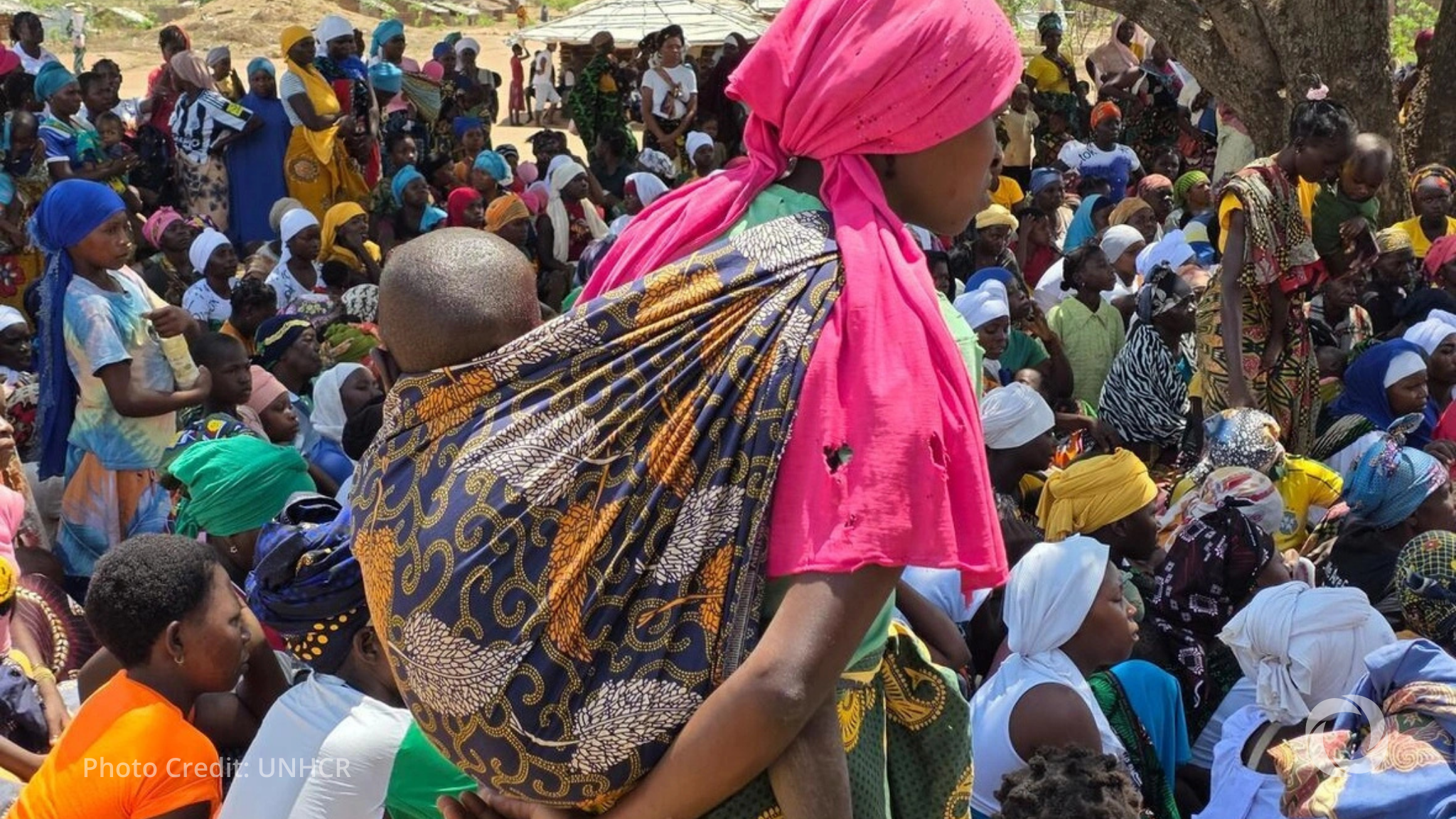
Schools, churches, and open spaces are crowded with newly arrived families, many sleeping in the open. Lack of lighting and privacy in these communal shelters exposes women and girls to new risks of sexual and gender violence, while older people and those with disabilities struggle in sites that aren’t accessible or equipped for their needs. Children arrive exhausted, traumatized, and weakened after days of walking—some malnourished and with swollen feet. Many are unaccompanied or separated from their families, alone in unfamiliar surroundings, facing fear and uncertainty.
Humanitarian teams on the ground are identifying people at greatest risk, helping families reunite, and conducting community outreach to share information and strengthen safety for new arrivals. Help desks have been set up to provide counseling and mental health support, distribute dignity kits and mobility devices for people with disabilities, and assist families in replacing lost civil documents in coordination with local authorities. But the humanitarian response is running out of resources as needs grow by the day, leaving thousands of families in limbo.
With displacement rising rapidly and very little funding left for the final month of the year, critical services—including protection, shelter, food, water, and sanitation—are under severe strain. UNHCR is calling for urgent international support to protect people forced to flee, reinforce overstretched host communities, and prevent further deterioration of the crisis. UNHCR will require $38.2 million in 2026 to meet rising needs across northern Mozambique. This comes at a deeply concerning time, with 2025 funding standing at only 50 percent of the $42.7 million required.