
Asia lifts 2.7 billion people out of extreme water stress, but climate and funding gaps threaten gains
Add us as your preferred source on Google to see more of our content in Search.
 Add to Preferred Sources
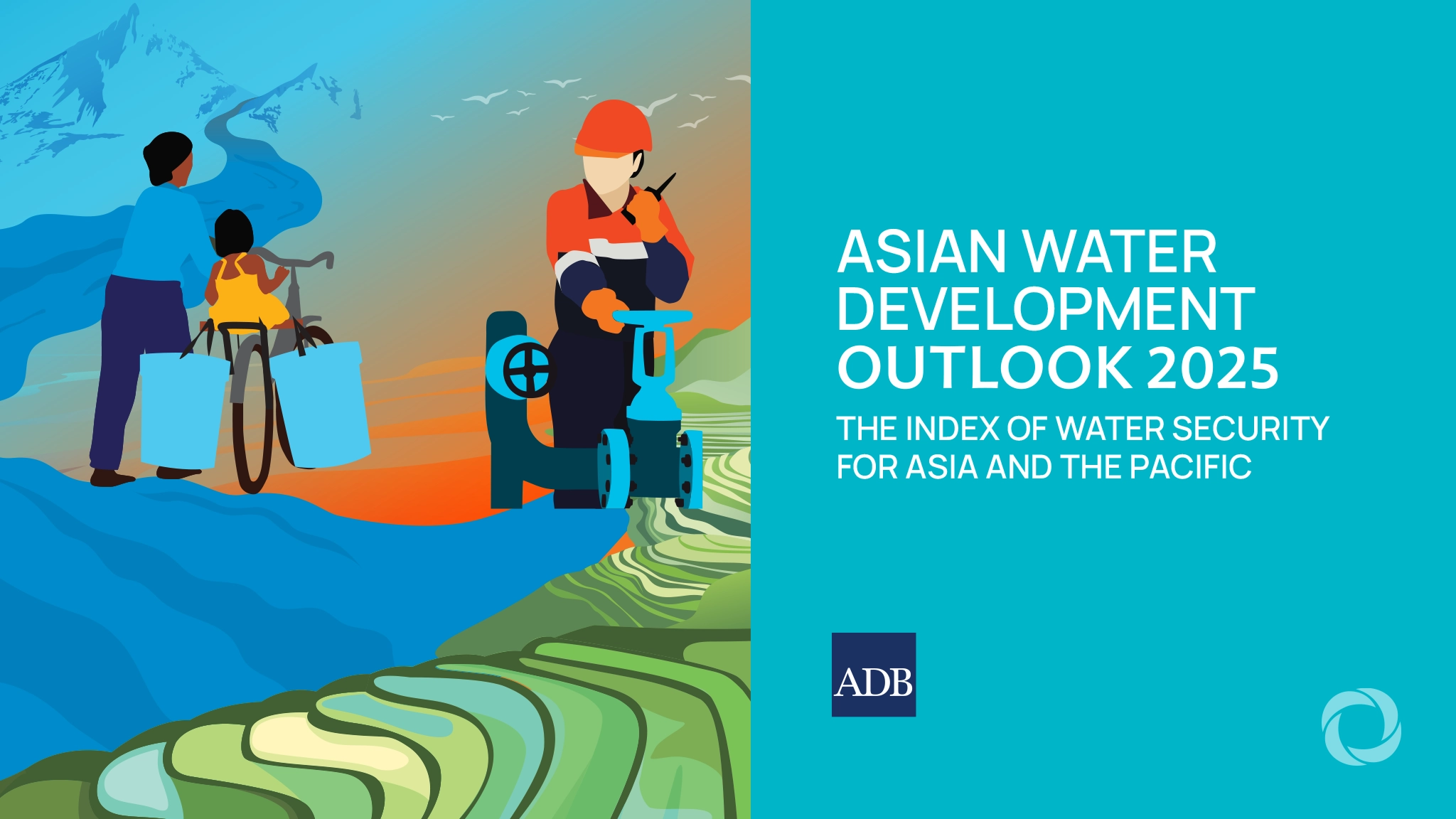
More than 2.7 billion people in Asia and the Pacific have moved out of extreme water insecurity in the past 12 years, but those gains are now at risk, the Asian Development Bank (ADB) warned in a new report. The Asian Water Development Outlook (AWDO) 2025 says stronger political will, targeted spending, and better water governance since 2013 have driven major progress. Yet rapid ecosystem decline, climate shocks, and a huge financing gap threaten to push millions back into crisis.
The report tracks water security across five areas: access to safe water and sanitation in rural and urban communities; water for key sectors like agriculture; the health of rivers, wetlands, and aquifers; and protection from droughts, floods, and other water‑related disasters. The improvements are striking in places like rural India, where around 840 million people now have better water, sanitation, and hygiene (WASH) services, mainly through government programs. In China, investment in flood control, radar systems, and emergency response has boosted resilience. Cambodia and Lao PDR have cut exposure to unsafe drinking water, while projects in Tajikistan, backed by initiatives like Early Warnings for All, have reduced drought risk and strengthened flood and storm management.
But ADB says the foundations of long‑term water security are eroding. Wetlands, rivers, forests, and aquifers are deteriorating fast, even as the region already accounts for 41% of the world’s floods. Recent weeks have seen devastating flooding across parts of South and Southeast Asia, underlining how changing rainfall, storm surges, sea‑level rise, and saltwater intrusion are reshaping risk. “Asia’s water story is a tale of two realities,” said ADB Senior Director for Water and Urban Development Norio Saito. “Without water security, there is no development… we need to act urgently to restore ecosystem health, strengthen resilience, improve water governance, and deploy innovative finance.”
Meeting WASH needs alone will require about 4 trillion dollars by 2040—roughly 250 billion dollars a year. Current spending covers less than 40% of that, leaving an annual shortfall of more than 150 billion dollars. The report argues that closing the gap will mean using money more smartly, including blended finance that brings public and private funds together to lower project risk and attract investors. Making water utilities more efficient and financially sound can also draw in private capital.
AWDO stresses that progress will only last if nature is built into water planning through river‑health monitoring, tougher pollution control, and better watershed protection. It calls for stronger, more preventive governance and more power and resources for local authorities to manage systems on the ground. It also says women and young people need to be actively involved if investments are to stick. Produced with universities and water institutes including Oxford, the International Water Management Institute, and partners in Australia and Europe, this fifth edition of AWDO is backed by trust funds from Japan, the Netherlands, and the United Kingdom and offers a regional baseline for anyone working on water, climate, and development.