

Add us as your preferred source on Google to see more of our content in Search.
 Add to Preferred Sources
The phrase ‘the right to have rights’ might sound tautological but, for many people worldwide, it reflects one battle after another in an effort to secure their basic human rights.
Despite decades of programs, projects, and initiatives, human rights are generally in decline around the world. Numerous reports and studies over the last few years have indicated a worsening state of political rights, civil liberties, press freedom and the freedom of gatherings. In this context, World Human Rights Day, marked on December 10, serves as a reminder of the universal right to human dignity and equality.
In this Experts’ Opinions piece, we asked international development professionals to share their thoughts about those human rights that are at risk, ways to help refugees and displaced people to benefit from their rights, and the role of AI in leveraging the effort to promote equality.
Key Takeaways:
- Human Rights Day is marked each year on 10 December, the date when the United Nations General Assembly adopted the Universal Declaration of Human Rights in 1948.
- According to experts, the human rights most at risk in 2025 were the right to life, a safe working environment, access to education, digitalization, decent housing, a healthy environment, healthcare, and personal dignity.
- In terms of the rights of refugees and internally displaced persons, governments and development partners must build long-term protection systems rather than just relying on emergency responses.
- The emergence of AI and digital tools can increase access to information and help to identify vulnerable communities more quickly but could also reproduce existing inequalities when algorithms are built on biased data or when digital services require connectivity that not everyone has.
- Experts suggest that small everyday gaps in human rights grow into long-term development risks.
DevelopmentAid: Which essential everyday rights were most at risk in 2025, and how does this impact long-term development outcomes?
“In 2025, the most vulnerable everyday rights were access to safe work, education, digital connectivity, and protection from discrimination. Through my experience in humanitarian, development, and urban poverty settings, I have seen how young women, people with disabilities, and low-income youth face daily barriers, such as a lack of devices, unsafe workplaces, limited mobility, or exclusion from skills training. These small everyday gaps grow into long-term development risks. When young people cannot learn or work safely, they lose income, confidence, and resilience. Families remain stuck in cycles of poverty, and communities become more fragile during shocks. These inequalities also limit women’s participation in the workforce and reduce social cohesion. Protecting everyday rights such as access to skills, safety, decent work, information and opportunities is essential. Without these, the foundations of development weaken, and progress becomes uneven and unsustainable.”
“I consider that in 2025 some of the most essential everyday rights at risk were access to quality education, decent housing and equal opportunities for people in vulnerable conditions, referring specifically to migrants, women and low-income communities worldwide. Nowadays, these are daily life rights and unfortunately, many individuals still face structural barriers that prevent them from fully exercising them in most countries. Moreover, when such gaps persist, they slow down long-term development in many ways. For example, it is well-known that limited access to education reduces future employment opportunities and deepens increasing cycles of poverty. On the other hand, insecure housing affects physical and mental well-being, making it harder for people to study, work or participate in society like everyone else living in normal circumstances. And when discrimination continues to undermine equal opportunities, entire groups often seem excluded from bringing social and economic progress to our society. Hence, these situations create even more inequalities that become harder to reverse over time and that is why trying to strengthen them is not only a matter of justice but also a vital requirement for the building of more resilient societies.”
“Although there are various threats to human rights depending on the region analysed, in a global context marked by profound inequalities, in 2025, I believe it is essential to focus on one fundamental right: the right to life and personal integrity. Its violation is particularly evident in Gaza, where the military offensive that began in October 2023 has left at least 70,000 Palestinians dead and more than 170,000 wounded, according to data from the Ministry of Health in Gaza compiled by the United Nations. Closely linked to this is the right to mobility and the protection of migrants and asylum seekers, which was also seriously threatened by the tightening of migration policies in different regions. In the United States, expedited deportations and punitive measures against those crossing the border were expanded, while in the Mediterranean, deaths resulting from pushbacks continued. In Europe, Amnesty International warned in 2025 that Greece’s new proposals to restrict asylum and accelerate returns violate the right to seek protection and penalizes those seeking refuge. These dynamics have profound impacts on long-term development: they normalize violence, weaken institutions and erode public trust in those administrations responsible for guaranteeing rights. Moreover, the prolongation of humanitarian crises and restrictive migration measures leaves populations trapped in unsafe contexts and deprived of education, healthcare and opportunities thereby limiting their capacity for development.”

“In 2025, the most critical and endangered rights are the right to a safe, healthy environment, economic inclusion, and gender equality. These form an interconnected crisis where the failure of one directly hinders the others. Climate injustice is the key driver, displacing communities and destroying livelihoods. This disproportionately impacts the most vulnerable, pushing them deeper into poverty and violating their economic rights. Women and girls bear a heightened burden, facing disrupted education and increased vulnerability, which systematically decreases gender equality. This creates serious impacts on long-term development. These interconnected threats result in intergenerational poverty, widen systemic inequality, and fuel social instability. A population deprived of a healthy environment, economic dignity, and equal opportunity cannot be the foundation of a resilient society. Ultimately, safeguarding these rights is not a secondary goal but an essential prerequisite for achieving sustainable economic growth, social progress, and a stable future for all.”
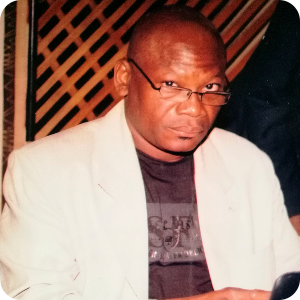
“In 2025, the most vulnerable rights in Benin remain equal access to education, healthcare, and digital services. Protecting refugees and IDPs requires stronger registration, social services, and integration. The rise of AI and remembrance of the Holocaust highlight the need for data protection, inclusion, and the prevention of extremism.”
DevelopmentAid: How can governments and development partners ensure that refugees and internally displaced persons maintain continuous access to their basic everyday rights?
“Throughout my work in humanitarian response, development planning, and peacebuilding, I have observed that displaced people retain their everyday rights when services are designed to remain accessible even during their displacement. In livelihood and youth skills projects, refugees and IDPs succeeded when training, documentation support, and income opportunities were flexible and portable. Governments can ensure continuity by providing portable identity systems, local help desks, and simplified procedures. Development partners can strengthen this by offering digital learning, market-driven skills training, financial inclusion, and private-sector job pathways that can be accessed from any location. Peacebuilding actions such as community dialogue and social cohesion activities help to reduce tensions between host communities and displaced groups, ensuring safer access to services. Together, this triple-nexus approach protects rights not temporarily, but consistently, allowing displaced people to rebuild dignity and stability.”
“First and most important is to create and enforce laws that protect those seeking refuge, rather than treating migration as a security issue. This must be complemented by education and awareness campaigns, both for the general public and for those who provide direct support. In many countries, rights are formally recognised and resources exist, yet those responsible for implementing these may discriminate or engage in institutional violence, preventing real access for those who seek protection. Secondly, governments and development partners must exert strong political pressure in the face of rights violations, ensuring not only that humanitarian responses provide continuous, safe and unhindered assistance to displaced and refugee populations, but also that there is accountability, reparation and guarantees of non-repetition. Protection cannot depend solely on immediate assistance; it must be accompanied by mechanisms that are capable of transforming the root causes. Finally, it is essential to integrate refugees into the development strategies of the host country. This involves facilitating the recognition of studies, training and skills in order to dismantle the barriers that limit access to decent employment, as well as promoting equitable access to basic services. Only then will refugees be able to rebuild their lives and contribute fully to the society that welcomes them.”
“From my perspective, governments and development partners need to build long-term protection systems instead of relying only on emergency responses, because people in vulnerable conditions need safe registration processes, access to education and healthcare and dignified housing from the moment that displacement occurs. The world needs to realize that collaboration is essential. To contribute, governments should work closely with local authorities, NGOs and international organizations to create flexible programs that truly adapt to the changing needs of displaced communities, reducing administrative barriers and guaranteeing that humanitarian aid is connected to long-term development. However, I would like to mention the work of NGOs who play a key role as they are often the first to identify gaps on the ground, providing direct services to people who may otherwise be invisible to institutions. Indeed, in spite of budget cuts they do what they can to continue to help people to access their basic everyday rights around the world.”
“In Benin, ensuring continuous rights for refugees and IDPs requires reliable registration and access to basic social services. Authorities must improve information access, support local media, and protect against intimidation. Strengthening civic education and community mediation helps to prevent tensions and enhance citizen participation.”
DevelopmentAid: AI and digital systems are increasingly embedded in development and humanitarian programs. How do these affect people’s essential everyday rights?
“From leading digital learning initiatives, blended training models, and employment platforms, I’ve seen AI improve access to education and work, especially for youth who previously had limited opportunities. In crisis settings, digital tools allowed learning and communication to continue, supporting the continuity of humanitarian development. But there are also risks. People without devices, accessible platforms, or digital literacy are left behind, deepening inequality. Women and people with disabilities face additional challenges when AI systems reflect bias or fail to include accessibility features. This directly affects the right to information, education, and equal opportunities. To protect everyday rights, development programs must ensure AI tools are inclusive, transparent, ethical, and co-designed with communities and youth. When built responsibly, AI can reduce exclusion. Without safeguards, it can reinforce it.”
“AI is rapidly transforming our daily lives and therefore requires responsible use both within and beyond humanitarian and development programs. Alongside its potential, it is essential to recognise its high consumption of energy and environmental resources, an aspect we often overlook, yet one that directly affects essential rights such as health, food and a healthy environment. Even so, AI has become a valuable tool for the social sector: it streamlines project drafting, enables predictive models that enhance logistics, and strengthens crisis and disaster preparedness, contributing to faster responses for people in vulnerable situations. However, these benefits coexist with significant risks. Digital exclusion leaves behind those without connectivity or technological literacy; algorithmic biases can reproduce discrimination and restrict access to aid for minorities; and inadequate data protection can compromise the privacy of populations that are already at risk. In short, AI should not provoke fear, but it should come with conscious and ethical use. For its benefits to be realised, strong citizen responsibility and robust accountability mechanisms are required across all stakeholders, including requiring technology companies to ensure their models and algorithms are fully auditable.”
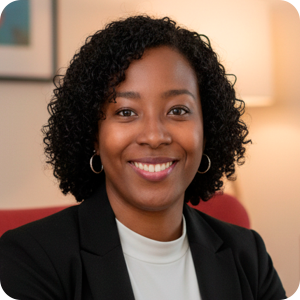
“As AI and digital systems become increasingly embedded in development and humanitarian programs, we must admit that we still do not have enough real-world evidence to fully understand how they affect people’s essential everyday rights. Much of what is currently discussed comes from high-income environments, which do not reflect the complex realities of fragile or unequal contexts. Instead of assuming that AI will create benefits or harms, development actors should focus on monitoring and evaluating AI as part of program risk assessments. This helps us to understand how these tools influence access to services, community participation, and the ways people interact with institutions. In many settings, economic, educational, and digital inequalities are already significant. Introducing AI without adequate attention to equity may unintentionally increase disparities. If only a small group can meaningfully use new technologies, development programs risk reinforcing exclusion rather than expanding opportunity. Ensuring that all groups, particularly those traditionally underserved, can access and benefit from AI-supported initiatives is essential. Programs should also be designed so that AI solutions are scalable and replicable at the national level. Ultimately, AI’s impact on everyday rights depends on how carefully, responsibly, and inclusively it is integrated, with decisions guided by continuous monitoring.”
“I think AI and digital systems could strengthen people’s essential everyday rights but they could also generate certain risks if not used responsibly. On the positive side, I believe digital tools can increase access to information and help to identify vulnerable communities more quickly, reaching people who need it most and serving as a bridge to education, healthcare and legal protection. However, these systems could also reproduce existing inequalities. When algorithms are built on biased data or when digital services require connectivity that not everyone has, especially migrants, rural populations or people with low income who are part of left behind groups, become more vulnerable because of this too.”
“Integrating AI and digital systems in development programs can improve service access but also enhance the risks: surveillance, algorithmic bias, and privacy breaches. Protecting human rights requires transparency, informed consent, independent regulation, and strengthening digital literacy so citizens can understand, challenge, and defend their rights.”
See also: Women have limited access to digital technologies. How can this change? | Experts’ Opinions
Every person has the right to work, i.e., the right to freely choose or accept employment, benefit from favorable conditions, and benefit from equal pay for equal work. Despite many job openings, candidates should carefully read the requirements and conditions before submitting an application. That said, it is much easier when if all the necessary information is in one place, rather than having to search on numerous websites. With DevelopmentAid’s Individual Professional Membership, experts can access over 4,500 job openings in international development. They can also choose from tenders and grants for individuals or contact the organisations or donors they want to work with directly. Another advantage is gaining access to salary trends and relevant news to remain informed about the latest events, reports, and editorials. DevelopmentAid undertakes all efforts to make the job search much more effortless.