
Add us as your preferred source on Google to see more of our content in Search.
 Add to Preferred Sources
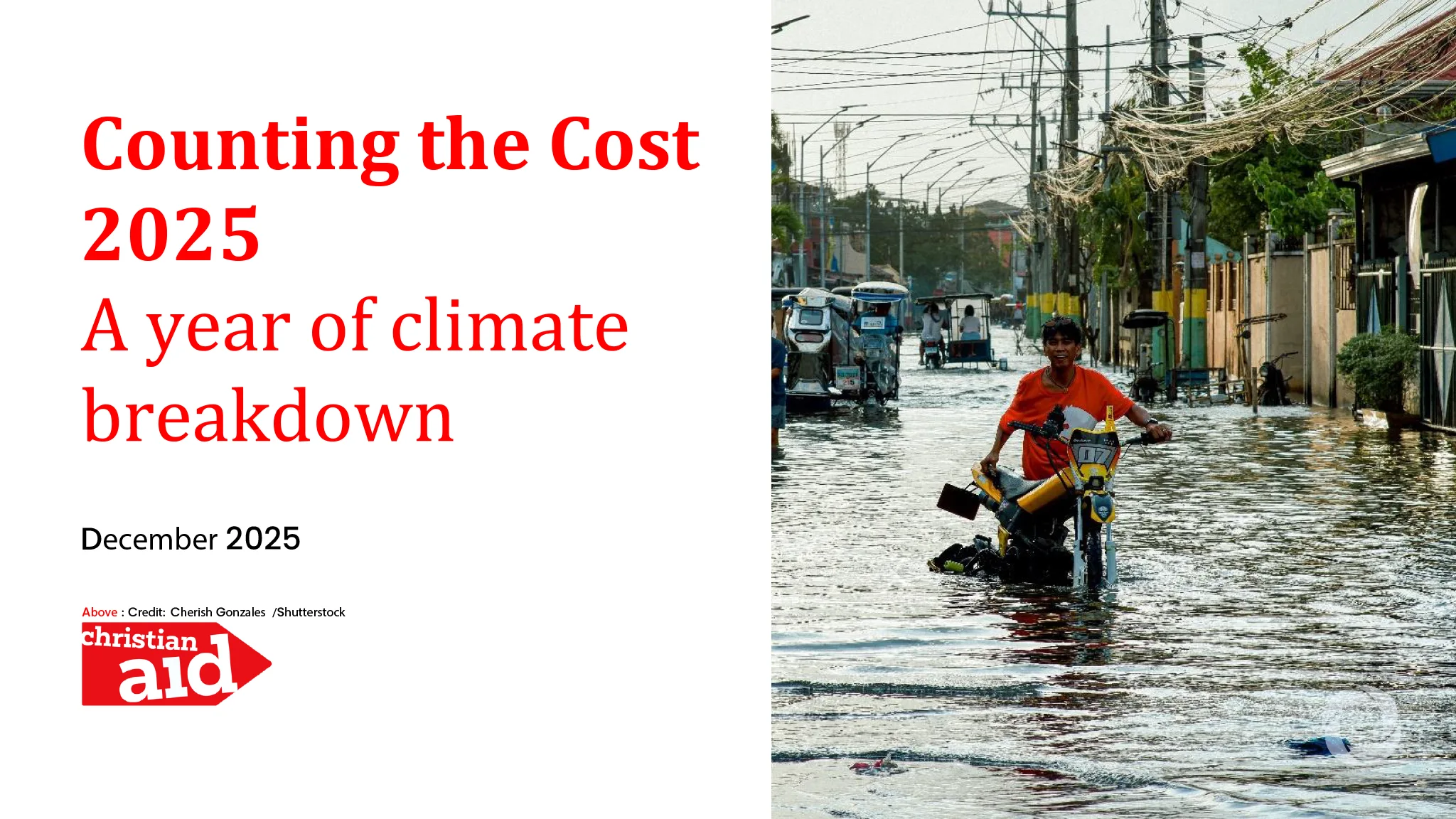
Heatwaves, wildfires, droughts, and storms cost the world more than $120 billion in 2025, with fossil fuel companies playing a central role in driving the crisis, according to a new Christian Aid report released today. The “Counting the Cost 2025: A year of climate breakdown” report identifies the year’s 10 costliest extreme events influenced by climate change, each causing over $1 billion in damage. Among these, the Palisades and Eaton wildfires in California alone cost more than $60 billion and killed over 400 people.
The report examines 20 significant extreme weather events, including 10 that caused massive human and environmental damage in the world’s poorest countries. No continent was spared, with devastating events in Brazil, Australia, Spain, Portugal, and Scotland, where record-breaking heatwaves sparked wildfires across 47,000 hectares. Asia accounted for four of the top six costliest disasters, with flooding in India and Pakistan killing more than 1,860 people and affecting over 7 million in Pakistan alone.
The 10 most financially costly events combined topped more than $122 billion in damage. Most estimates are based only on insured losses, meaning the true financial costs are likely even higher, while the human costs are often uncounted. The second were the cyclones and floods that struck Southeast Asia in November, causing $25 billion in damage and killing more than 1,750 people across five countries.
While wealthier nations faced higher financial costs due to property values and insurance, some of the most devastating events hit poorer nations. Flooding in Nigeria and the Democratic Republic of Congo affected thousands, with up to 700 deaths in Nigeria alone. The ongoing drought in Iran and West Asia threatens 10 million people in Tehran with possible evacuation.
Christian Aid CEO Patrick Watt said: “These climate disasters are a warning of what lies ahead if we do not accelerate the transition away from fossil fuels. In 2026, world leaders must act—supporting communities already adapting at a local level and providing the resources urgently needed to protect lives, land, and livelihoods.”