
Add us as your preferred source on Google to see more of our content in Search.
 Add to Preferred Sources
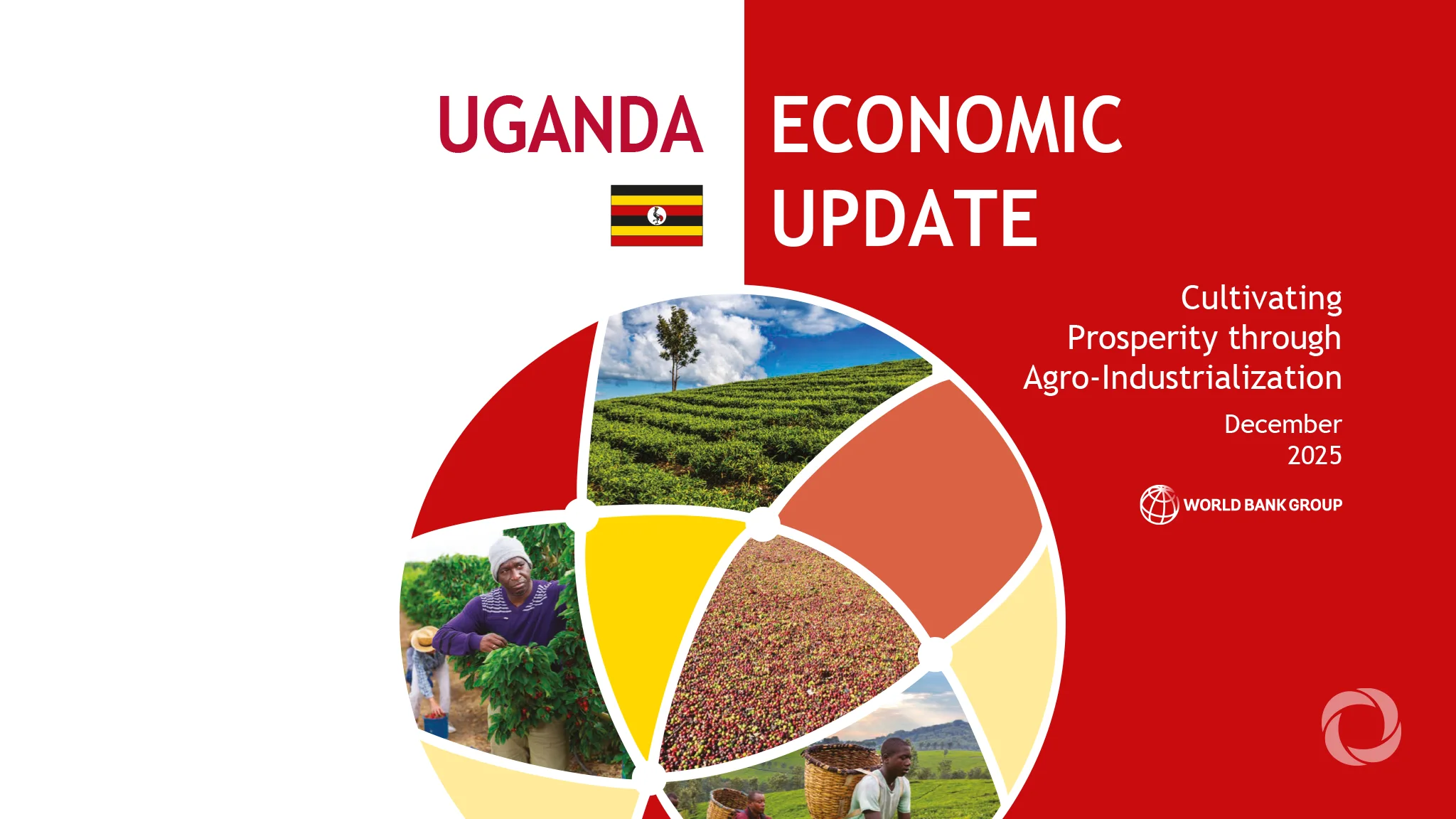
Uganda’s economic growth remains strong, with real gross domestic product (GDP) rising to 6.3% in FY2024/2025, up from 6.1% the previous year, according to a new World Bank report. The 26th edition of the Uganda Economic Update attributes this performance to recovery in household consumption, faster government spending and continued investment growth. The report notes broad-based growth across agriculture, industry and services, and as a result, poverty is projected to have declined in FY2024/2025.
Tight monetary policy helped keep inflation at 3.5%, below the central bank’s medium-term target of 5%. However, fiscal pressures have increased, with a widening deficit and higher debt levels and servicing costs, pointing to the need to return to fiscal consolidation as signaled in the country’s FY2025/2026 budget.
The report projects a positive medium-term outlook, backed by moderating spending growth after the general elections, oil revenues expected to start in 2027, continued export strength and sustained foreign investment. Inflation is expected to remain low, anchored by prudent monetary policy and stable commodity prices. Poverty is expected to fall further in 2026 and 2027. Risks include possible fiscal slippages, delays in oil sector development, cuts in overseas development assistance and heightened global uncertainty. Climate shocks and lower than expected rainfall could also increase poverty because most of the poor depend on rain-fed agriculture.
“Uganda’s growth remains strong, however economic activity is currently concentrated in low-productivity and climate-vulnerable agriculture and informal jobs, which offer limited opportunities for income growth and upward mobility,” said Francisca Ayodeji Akala, World Bank Country Manager for Uganda.
“Transformation of the economy to higher value-added activities is needed to deliver on the country’s Ten-Fold Growth Strategy. Agro-industrialization can be a key cornerstone of this transformation, leveraging agriculture as a platform for industrial growth and job-creation.”
This edition of the Uganda Economic Update looks at identifying and addressing constraints to agro-industrialization, which has enormous potential for job creation, value addition and inclusive growth.
The report makes three key recommendations: strengthen foundations and infrastructure, including developing and spreading climate-smart agriculture technologies to increase productivity; improve the policy and enabling environment by reforming policies, strengthening institutions, supporting farmer cooperatives and enabling competition among private sector players; and mobilize private capital and market linkages by scaling up innovative financing, using digital platforms and boosting trade competitiveness.