

Add us as your preferred source on Google to see more of our content in Search.
 Add to Preferred Sources
Why this story matters
- The crop that is eaten by half the planet is quietly becoming a major climate threat.
- Flooded rice fields are emitting a highly powerful greenhouse gas, but the scale of this problem has gone largely unnoticed.
- Some of the world’s most fertile regions are running out of water, and rice is at the center of the crisis.
- From shrinking wetlands to vanishing wildlife, the environmental damage extends far beyond farms.
- Solutions do exist, but whether they will be put in place quickly enough remains to be seen.
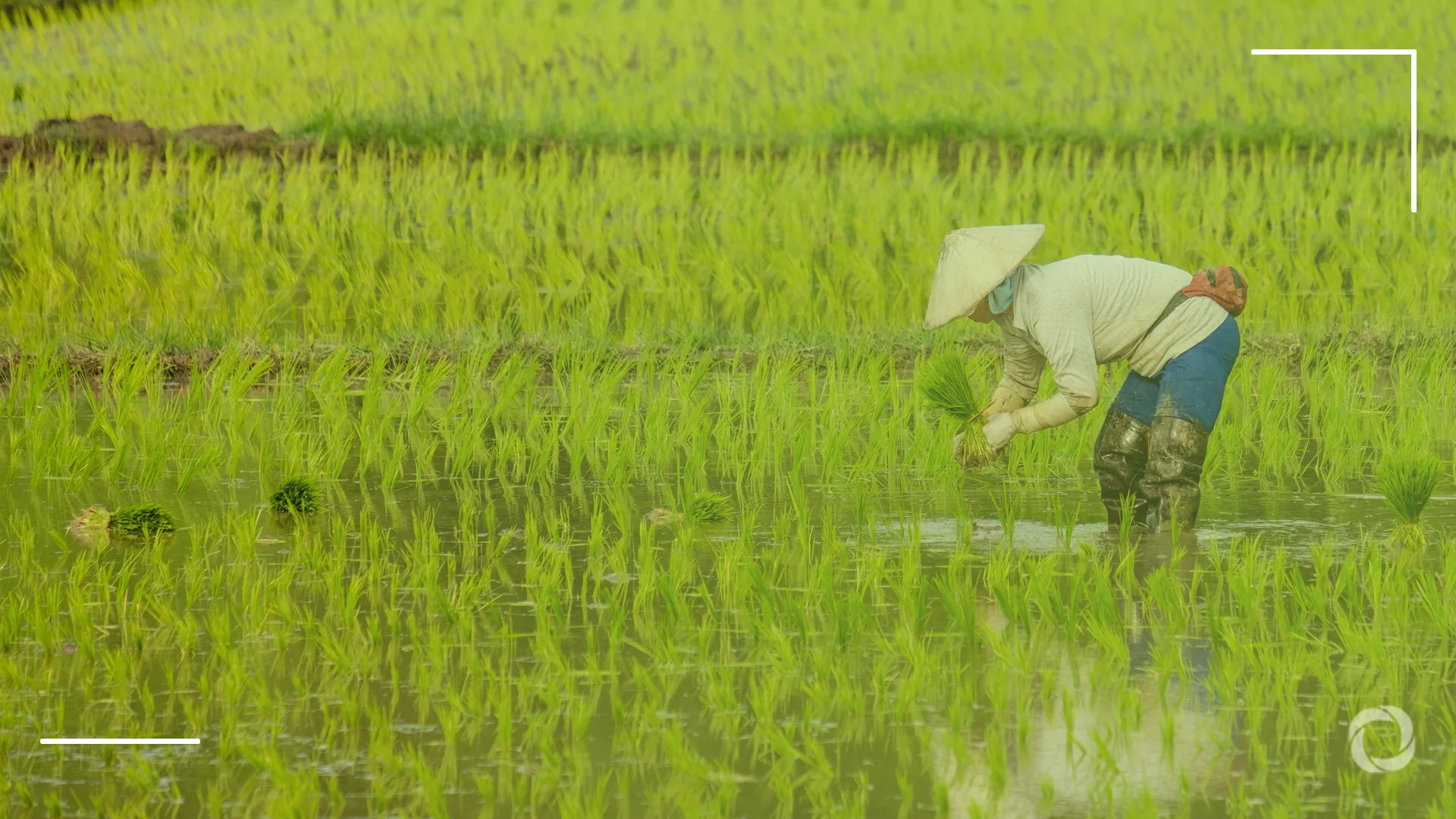
In Vietnam’s Mekong Delta, 62-year-old Do Thi Hai has farmed rice on her family’s land for generations. Rice has paid for school fees, weddings, and medical care. Like millions of smallholder farmers across Asia and Africa, her livelihood depends on this grain.
Globally, around 150 million smallholder households grow rice, and about 3.5 billion people eat it every day. However, its cultivation comes at a high environmental cost because, for every kilogram of rice produced, about 2,500 liters of water are consumed. Flooded rice fields also emit high levels of methane, a greenhouse gas that is far more potent than carbon dioxide.
As climate change brings longer and more intense droughts and floods, experts warn that the futures of rice and the billions of people who depend on it are increasingly uncertain.
Who produces the world’s rice?
Rice production is heavily concentrated in Asia, with 90% of the world’s rice grown here. India and China, the largest producers, together account for more than half of global output.
- India: 150 million tons (28% of global production)
- China: 145 million tons (27%)
- Bangladesh: 36 million tons
- Indonesia: 34 million tons
- Vietnam: 27 million tons
Other major producers include Thailand and Myanmar. How these countries adapt their rice systems will determine whether the sector can reduce its emissions and water use at scale.
What makes rice farming so polluting?
Methane from flooded fields
The main climate impact of rice farming comes from methane (CH₄) emissions. Rice is traditionally grown on continuously flooded fields, but when the soil is submerged for long periods, it runs out of oxygen. Microbes then break down the organic matter and release methane.
This greenhouse gas is 25 times more effective at trapping heat than carbon dioxide. Researchers estimate that rice paddies generate roughly 22% of all agricultural methane emissions.
On average, growing one kilogram of rice releases 0.1 kg of methane. In practical terms, the emissions from a single flooded field can be comparable to the annual emissions of a car for every ton of rice harvested.
Most of these emissions emanate from Asia. The Intergovernmental Panel on Climate Change notes that paddy-rice methane emissions are concentrated almost entirely on this continent, although rice farming in Africa also contributes to rising global levels.
Water overuse and groundwater decline
Rice growing is notoriously water-intensive. Flooding suppresses weeds but demands enormous amounts of water. Globally, rice irrigation is estimated to account for about 40% of all the freshwater used for farming. Producing one kilogram of milled rice may require 3,000–5,000 liters of water.
In key regions such as the Indo-Gangetic Plains and Vietnam’s Mekong Delta, intensive irrigation has led to sharp declines in groundwater levels. In some areas, aquifers are falling by meters each decade.
Falling groundwater levels and rising seas contribute to the salinization of coastal deltas. Vietnam officials state that increasing salinity is unavoidable and must be planned for.
Climate change is expected to worsen the problem, with longer dry seasons and more variable rainfall.
Soil pollution and biodiversity loss
Intensive rice monoculture has also degraded land and polluted ecosystems. Continuous cropping, combined with chemical fertilizer and pesticide use, has harmed soil health in many areas. Analysts are linking the heavy use of synthetic nitrogen and agrochemicals in flooded rice fields to negative impacts on soil fertility and the health of ecosystems.
Rice farming has also replaced large areas of natural wetlands. About 15% of the world’s wetlands are used for flooded rice cultivation which erodes wildlife habitats and reduces the genetic diversity of traditional rice varieties.
Pesticides and agrochemicals used in rice fields have been shown to harm the frogs, fish, and birds that once thrived in wetland ecosystems.
Can rice be grown more sustainably?
Researchers and farmers are testing climate-smart rice production practices that aim to reduce emissions and water use without reducing yields.
Alternate Wetting and Drying (AWD) is one success story. It allows rice fields to dry out periodically. Studies suggest AWD can cut water use by 15–25% and reduce methane emissions by 30%, all without affecting yields. Narsimhulu, a farmer in India’s Nellikondi village, reduced the number of irrigation processes on his rice field from 52 to 39 in a single season after adopting AWD.
The System of Rice Intensification (SRI) uses young seedlings, wide spacing, and controlled watering. Meta-analyses report 10–114% higher yields, water savings of 40–74%, and up to 70% lower methane emissions compared with conventional methods.
Stress-Tolerant Rice Varieties: The International Rice Research Institute has developed flood-resilient rice varieties. Newer Sub1A+ lines can survive three weeks underwater with minimal damage.
Nutrient and straw management. Precision fertilizer application reduces nitrous oxide and runoff. Rice straw can be composted, turned into biochar, or used for construction and energy instead of being burnt thus creating income opportunities while also restoring soil carbon.
A narrow window for change
Experts comment that the technology to reduce rice’s environmental footprint already exists, but its adoption remains uneven. Scaling up improved practices across Asia and Africa would require investment. Using satellites, field data, and farming records will be essential to track progress and reward results.
Dr Yvonne Pinto, Director General of the International Rice Research Institute, explained that the challenge is to ensure rice systems can “nourish people, protect the planet, and empower farmer communities”. With billions of people dependent on rice, the stakes are high. How the world chooses to grow one of its most important staples in the coming decades could shape both food security and the global climate.