
Add us as your preferred source on Google to see more of our content in Search.
 Add to Preferred Sources
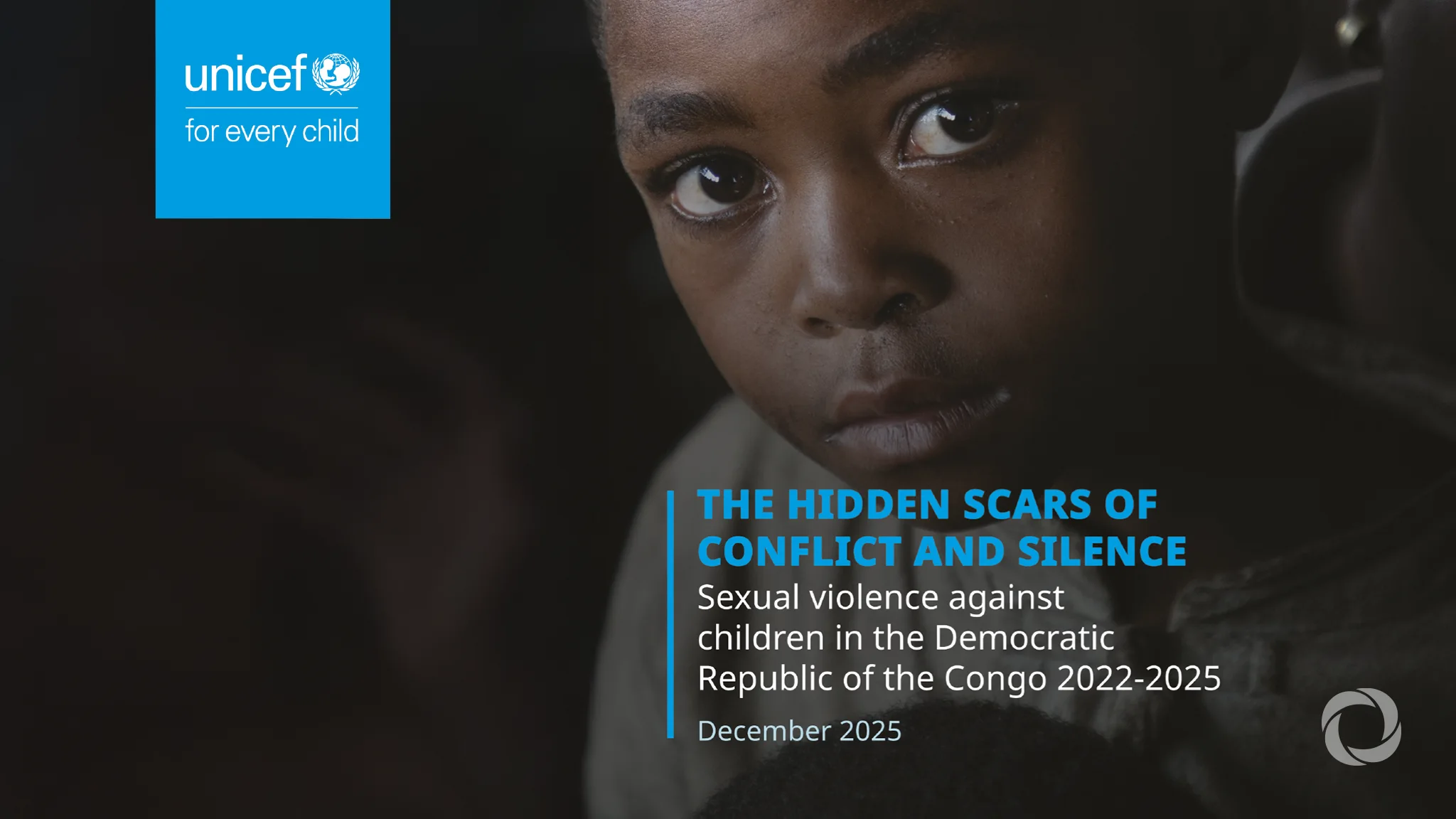
Sexual violence against children is endemic, systemic and worsening across the Democratic Republic of the Congo (DRC), according to a new United Nations Children’s Fund (UNICEF) report released today. While conflict remains a major driver, the report shows cases documented in communities across every province and rising sharply since 2022. Nationwide data compiled by protection and gender-based violence service providers indicate that more than 35,000 cases of sexual violence against children were recorded in the first nine months of 2025, pointing to a crisis that continues to grow. In 2024, nearly 45,000 cases against children were recorded, accounting for almost 40 percent of all reported sexual violence cases – three times higher than in 2022.
These figures point to sustained and widespread harm, with the true toll likely far higher due to under-reporting. Fear, stigma, insecurity and limited access to services prevent many survivors from ever reporting or seeking help.
“Case workers describe mothers walking for hours to reach clinics with daughters who can no longer walk after being assaulted. Families say that fear of stigma and retaliation often keeps them from reporting the abuse,” said UNICEF Executive Director Catherine Russell. “Stories like these are repeated across provinces, exposing an entrenched crisis driven by insecurity, inequality, and weak support systems.”
Distinct patterns are emerging across provinces. Most cases are concentrated in North Kivu, South Kivu and Ituri, where conflict, displacement and weakened protection systems drive extreme risk. But large numbers are also documented in Kinshasa and the Kasai, where poverty, food insecurity and school dropout heighten girls’ vulnerability to exploitation and early marriage. Adolescent girls remain the most affected nationwide, accounting for the largest and growing share of survivors. Boys are also subjected to sexual violence but remain significantly under-represented in reported cases. Children with disabilities face heightened risks, with physical, social and communication barriers both increasing vulnerability and restricting access to care and justice.
Survivors often face severe physical injuries, unwanted pregnancies, heightened risks of HIV and other sexually transmitted infections, as well as deep emotional harm, including fear, anxiety, depression and social rejection. Yet access to lifesaving support remains limited. UNICEF, along with the government and partners, is working to reach children through survivor-centered services, including clinical care, psychosocial support, safe spaces and case management. Between 2022 and 2024, the number of child survivors assisted by UNICEF rose by 143 percent, reaching more than 24,200 children across the most affected provinces in 2024. However, insecurity and global funding cuts have forced many UNICEF-supported safe spaces, mobile clinics and community-based protection programs to scale back or close. By mid-2025, only 23 percent of gender-based violence interventions were funded—down from 48 percent in 2022—putting hundreds of thousands of children at risk of losing access to life-saving support.
UNICEF urges the government, all parties to the conflict, civil society and international partners to end and prevent all forms of sexual violence against children; scale up gender-based violence response services equipped to meet the specific needs of child survivors; strengthen accountability by supporting investigations and prosecuting perpetrators; and increase and sustain investment in expanding protection services and community-based prevention efforts.
“Addressing this crisis of sexual violence requires an immediate response and adherence to international law in conflict settings,” Russell added. “Perpetrators must be held accountable, and women and children must have access to protection and support.”