
The end of development as we knew it: How global banks are betting on strategic resilience over poverty reduction

Add us as your preferred source on Google to see more of our content in Search.
 Add to Preferred Sources
5 reasons to read this article
- Discover how development banks are quietly transforming from being poverty fighters into geopolitical shock absorbers.
- Follow the money to see where trillions designed for sustainable development are actually being channeled.
- Learn how global financial giants are redefining climate finance as economic and national security rather than environmental aid.
- Find out how the African Development Bank is doing away with donor dependence.
- Understand who will pay the price now that development seems to be turning into resilience and geopolitics.
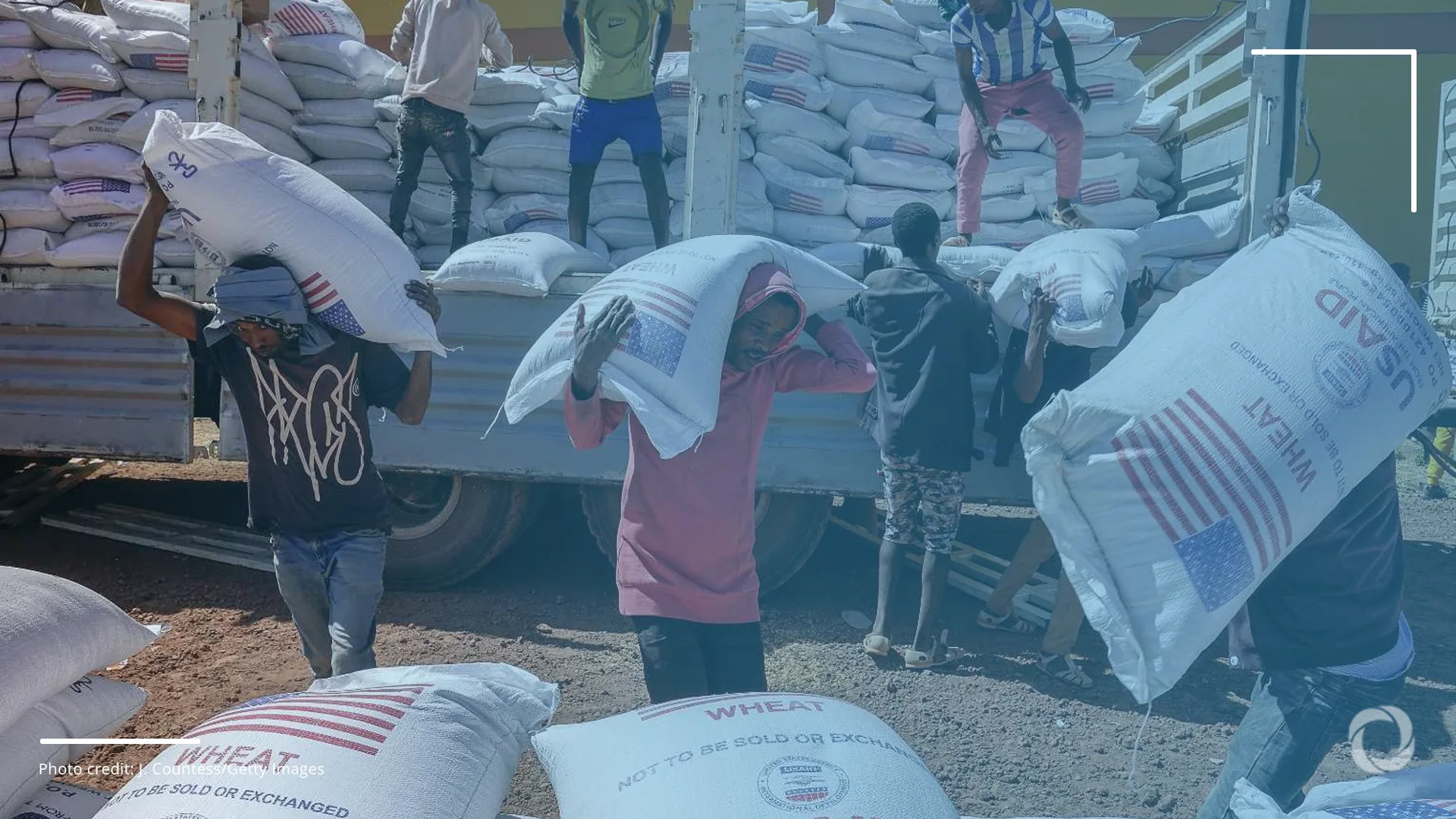
Caught between shrinking aid budgets and escalating geopolitical tensions, the world’s major development finance institutions are fundamentally rethinking their roles.
Russia’s invasion of Ukraine, renewed US trade tariffs, and a growing preference for defense spending over aid have injected volatility into the global financial system that is already strained by record debt levels and intensifying climate shocks.
The World Bank, the International Monetary Fund (IMF), and regional development banks are responding by prioritizing climate finance, expanding guarantees to mobilize private capital, and shielding countries against the effects of war.
These institutions are not merely passive reactors to geopolitics but are navigating a tense balancing act between security, climate action, and human development while facing pressure from shareholder governments that have varying strategic priorities
Where and how did major institutions respond and invest money in 2025?
The World Bank: climate as economic security
The World Bank’s 2025 results quantify this strategic pivot with total commitments reaching a record US$118.5 billion, a 20% increase since 2021.
Nearly half, 48%, or US$56.8 billion, is now dedicated to projects that have climate co-benefits with 43% of this amount being used to target climate adaptation, up from roughly one-third just two years ago.
Facing shrinking concessional aid, the bank has leaned heavily into mobilizing private capital. In FY2025, it mobilized US$69 billion from private investors by using public funds to de-risk projects, up from roughly US$47 billion recorded two years earlier.
Geographically, sub-Saharan Africa received the largest share of World Bank financing at US$34 billion which focused on energy access, climate adaptation, food security, and job creation. Europe and Central Asia followed with US$25 billion with much of this acting as a financial cushion for those countries affected by the war in Ukraine.
The International Monetary Fund: firewall against fragmentation
IMF lending in 2025 reflected a clear hierarchy of global stress that spanned chronic economic dysfunction, active conflict, and reform-driven stabilization.
Argentina remained the Fund’s largest borrower, with SDR41.79 billion (equivalent to US$57.25 billion) outstanding which represents nearly one-third of all IMF credit worldwide, a reflection of persistent inflation, fiscal deficits, and currency instability that have made IMF support a long-term anchor rather than a temporary fix.
Ukraine, the second-largest borrower at US$14.23 billion, received a new US$8.1 billion, 48-month Extended Fund Facility in November 2025 to sustain macroeconomic stability amid the pressures of the ongoing war and reconstruction efforts.
Egypt, with US$6.89 billion outstanding, continues to rely on IMF financing to manage external imbalances and implement macroeconomic reforms, including subsidy cuts and exchange-rate adjustments.
Ecuador and Pakistan also secured IMF disbursements under existing programs.
Collectively, these programs position the IMF as a financial firewall, with total lending capacity remaining near US$1 trillion despite mounting global fragmentation. However, concerns persist regarding debt sustainability and prolonged dependency.
African Development Bank: strategic autonomy
As western development aid retreats, the African Development Bank (AfDB) is shifting away from donor dependence towards strategic autonomy and investment-led growth.
The African Development Fund secured US$11 billion under its latest replenishment in 2021, up from the previous US$8.9 billion, although still far short of its US$25 billion target as donors redirect resources toward domestic rearmament.
More significant is the shift in ownership. A total of US$182.7 million was pledged by African countries, with 19 countries contributing for the first time. This represents a five-fold increase that repositions the continent as a co-investor rather than simply being a passive beneficiary.
The Fund is leveraging its balance sheet through hybrid capital and market borrowing to crowd in private investment, supporting 37 low-income and fragile states, with a focus on energy access, food security, and resilient infrastructure.
With Western aid decreasing, the AfDB has also strengthened non-Western partnerships, securing up to US$2 billion from the OPEC Fund and up to US$800 million from the Arab Bank for Economic Development in Africa.
Regional priorities include the Sahel and the Africa Economic Corridor, where energy and agriculture investments are intended to prevent conflict-driven poverty.
European Bank for Reconstruction and Development: war economics
The EBRD’s 2025 budget illustrated how war crowds out traditional development. Following Russia’s invasion of Ukraine, governments, especially in Europe, pulled back from development aid and diverted resources toward military build-ups.
Global defense spending reached US$2.69 trillion in 2024, while Official Development Assistance was projected to fall by 9% in 2025.
Before 2022, roughly 76% of EBRD financing supported private-sector growth and green transition. After the outbreak of the war, the bank shifted sharply toward war-related priorities.
Since the invasion, the EBRD had channeled €7.6 billion into Ukraine as of 2025, equivalent to roughly two-thirds of its pre-war annual portfolio of €10.4 billion, including €400 million that was announced in July 2025 alone, and it plans to continue investing €1.5–2 billion annually.
Asian Development Bank: climate as national security
The Asian Development Bank’s Energy Transition Mechanism uses dedicated funds to buy and retire coal-fired power plants across Southeast Asia, replacing these with clean energy to secure regional energy independence.
Operationally, the ADB has shifted from infrastructure for growth to infrastructure for survival, with 65% of operations now being focused on climate mitigation and resilience which will rise to 75% by 2030.
Meanwhile, the Bank is implementing a Capital Utilization Plan that will allow its annual financing to grow from about US$24 billion in 2024 to more than US$36 billion by 2034.
While the full impact will unfold over the next decade, 2025 already witnessed major country-level commitments, including US$4.26 billion to India for renewable energy, urban infrastructure, and skills development, and US$400 million to the Philippines to support business environment reforms.
The Inter-American Development Bank: financing climate and connectivity
In 2025, the Inter-American Development Bank (IDB) prioritized economic support, climate finance, and digital connectivity across Latin America.
The bank reaffirmed its goal to scale climate finance to at least US$11 billion, while IDB Invest launched a Thematic Climate Adaptation Insurance Program that mobilized US$500 million in private capital for resilience projects.
Argentina received a US$10 billion support package through 2028, including a US$700 million loan for sustainable urban development and digital health initiatives.
To strengthen regional connectivity, the IDB co-financed US$324 million Amazon fiber-optic cables reaching 15 million people and backed a US$250 million bioeconomy package thus positioning digital infrastructure and sustainable resource management as core pillars for integration and long-term resilience in the region.
The end of development as usual?
Together, these shifts signal a redefinition of development itself, from poverty reduction toward resilience, security, and geopolitical stability. While climate and conflict now dominate balance sheets, the quiet sidelining of health and education raises questions about who will bear the long-term cost of this strategic pivot.
See also: Development aid at a crossroads: Global reductions and emerging dynamics
In 2025, development banks are no longer simply responding to crises; they are being reshaped by them.