
Add us as your preferred source on Google to see more of our content in Search.
 Add to Preferred Sources
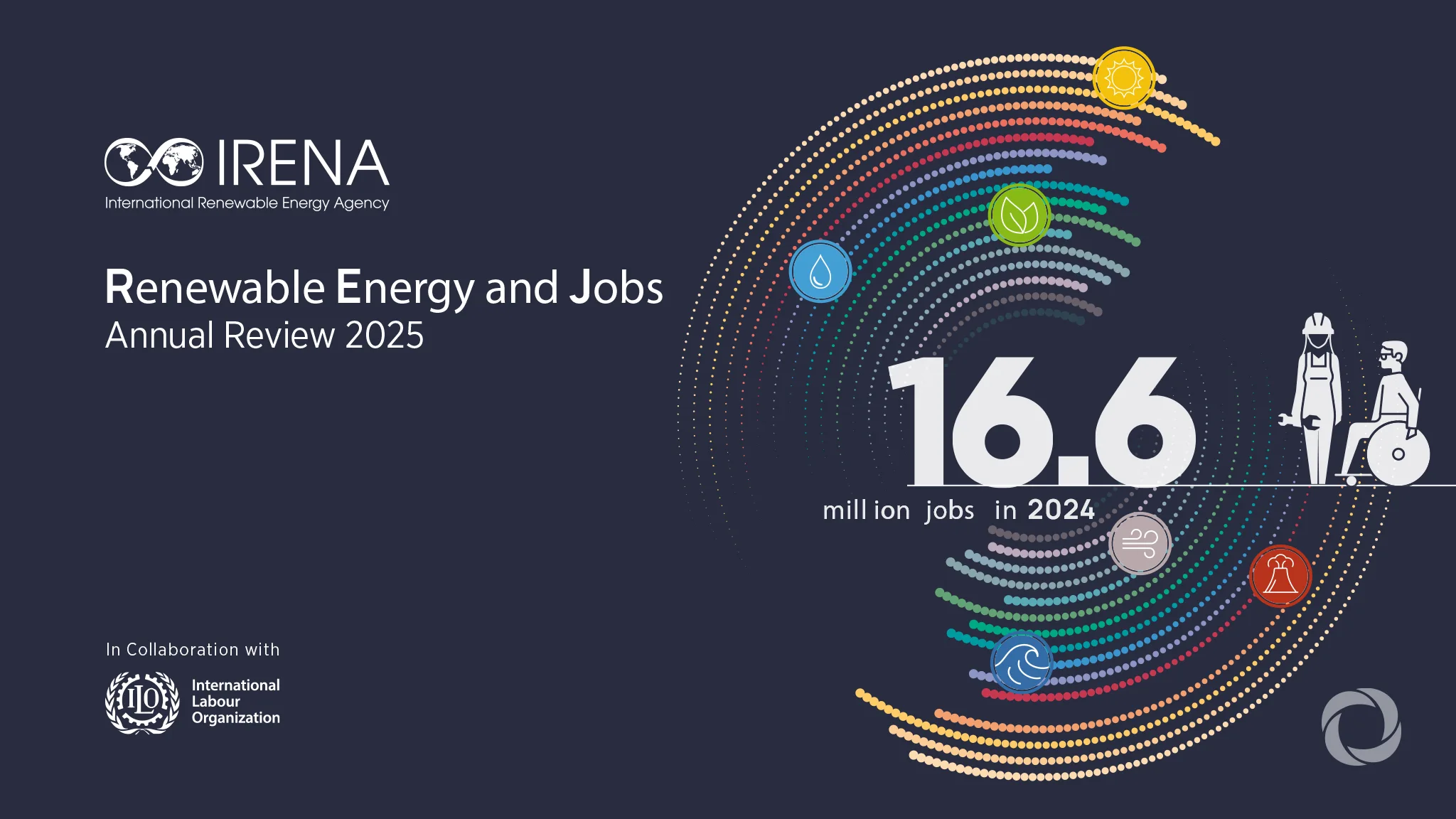
Renewable energy installations hit a record high last year, but jobs in the sector barely grew. Employment increased just 2.3 percent from 2023, reaching 16.6 million in 2024, according to the annual Renewable Energy and Jobs review by the International Renewable Energy Agency (IRENA) and the International Labour Organization (ILO). Geopolitical tensions, trade frictions, and growing automation are slowing workforce expansion even as clean energy booms.
China dominates both in building renewable capacity and making equipment. The country created an estimated 7.3 million renewable energy jobs in 2024—44 percent of the global total. Its integrated, large-scale supply chains deliver equipment at prices no one else can match. The EU stayed flat at 1.8 million jobs. Brazil has 1.4 million, while India and the United States barely moved from around 1 million to 1.3 million and 1.1 million respectively.
“Renewable energy deployment is booming, but the human side of the story is as important as the technological side,” said Francesco La Camera, IRENA’s Director-General. He stressed that governments need trade and industrial policies that drive investment, build domestic capacity, and develop skilled workers along the supply chain. The geographical imbalance shows the need for better international cooperation, especially to support countries lagging in the energy transition.
Solar photovoltaics lead employment by technology with 7.3 million jobs, thanks to rapid expansion of installations and manufacturing plants. Asian countries host 75 percent of the world’s solar jobs, with China holding 4.2 million. Liquid biofuels come next with 2.6 million jobs, followed by hydropower at 2.3 million and wind at 1.9 million.
The report stresses that a just transition means leaving no one behind—particularly women and people with disabilities, whose potential remains underused. “A just transition to a renewables-based future must be grounded in inclusion, dignity, and equal opportunity,” said ILO Director-General Gilbert Houngbo. He noted that people with disabilities face barriers despite their skills and experience. Building accessibility into every stage of policy design requires inclusive training, fair hiring practices, and workplaces that accommodate diverse needs. Getting this right isn’t just about justice—it’s essential for resilient labor markets and sustainable development.