
Add us as your preferred source on Google to see more of our content in Search.
 Add to Preferred Sources
Reaching children caught in the conflict in Sudan’s Darfur region has become a race against time, marked by danger, negotiation, and immense logistical barriers, United Nations Children’s Fund (UNICEF) warned. Each delivery of food, medicine, or water, the agency said, is “hard-won and fragile,” as the war between rival militaries continues to devastate civilians and displace millions.
Speaking to journalists in Geneva after returning from a 10-day mission, Eva Hinds, UNICEF’s Chief of Communications in Sudan, described the scale of need as overwhelming.
“Reaching even a single child can take days of negotiation, security clearances, and travel across sand roads that cut through shifting frontlines,” she said. “Nothing about this crisis is simple — every movement is hard-won, every delivery fragile.”
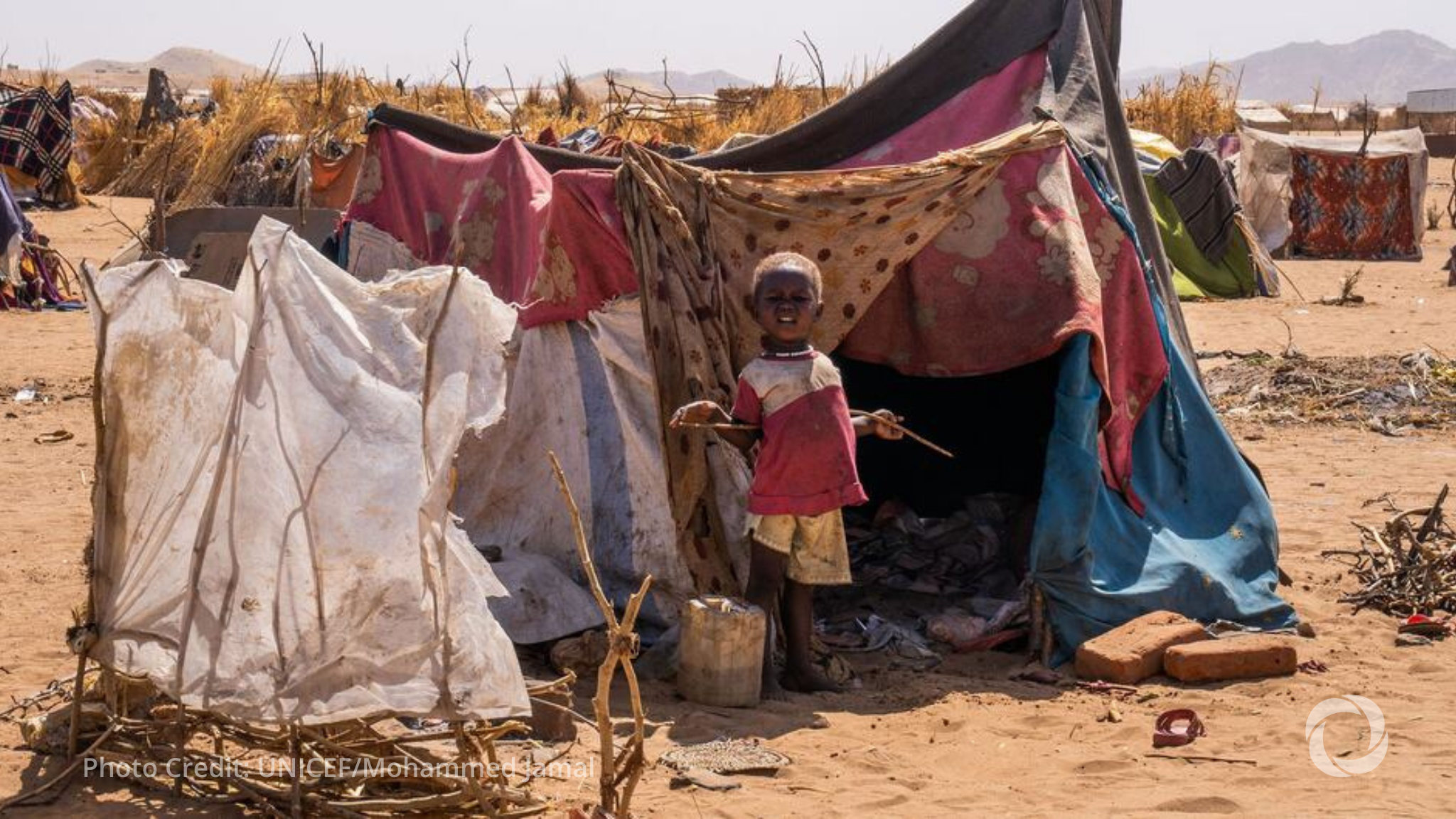
In Tawila, North Darfur, Ms. Hinds witnessed a vast expanse of makeshift shelters stretching across the desert — home to over half a million displaced people driven from their homes by relentless violence. “It felt like an entire city rebuilt out of necessity and fear,” she said. Despite the instability, UNICEF and its partners continue to deliver lifesaving support — one convoy, one clinic, one classroom at a time.
In the past two weeks alone, 140,000 children have been vaccinated, thousands treated for malnutrition and disease, and safe water systems restored for tens of thousands of people. Temporary schools have reopened so some children can resume learning, however briefly.
“For children in Darfur, these efforts mark the thin line between being abandoned and being reached,” she said.
Ms. Hinds shared the story of Doha, a teenager who fled from Al Fasher and dreams of becoming an English teacher. Another mother in a displacement camp told her simply: “The children are freezing. We have nothing to cover them with.” Such encounters, Hinds said, reflect only a fraction of a larger catastrophe.
“Sudan is now the world’s largest humanitarian emergency, yet one of the least visible,” she warned. “Without urgent international attention and decisive action, the suffering of Sudan’s children will only deepen.”