
Add us as your preferred source on Google to see more of our content in Search.
 Add to Preferred Sources
The Rafah crossing in southern Gaza reopened on Monday after more than a year of closure, a move greeted with both hope and deep anxiety among Palestinians, as United Nations Relief and Works Agency (UNRWA) announced in a statement. The sole border point with Egypt serves as a vital lifeline for thousands of severely ill or injured Palestinians who need medical treatment outside the enclave, where last October’s fragile ceasefire between Israel and Hamas continues to hold. However, the reopening follows reports of violence over the weekend, including the killing of civilians and Israeli airstrikes, raising serious concerns among UN agencies about the stability of the truce.
Sam Rose, Acting Director of UNRWA Affairs in Gaza, described the situation as one of “competing dynamics”—progress on reopening Rafah alongside continued violence that claimed 30 Palestinian lives in airstrikes during the ceasefire. “Palestinians in Gaza are feeling massive trepidation—hope that people will be able to get out, but real, real fear for the future,” he told the BBC. UNRWA remains on the ground delivering life-saving assistance, but access is limited, protection concerns persist, and humanitarian needs remain acute amid ongoing operational constraints.
For now, Israel will allow only 50 Palestinians to enter and exit Gaza each day—and only on foot—under coordination with Egypt and supervision by the European Union. Returns are permitted only for residents who left during the war after obtaining prior authorization from Israeli security services, undergoing checks by the EU at Rafah, and passing through a second identification process in a corridor managed by the Israeli army. The UN humanitarian affairs office (OCHA) welcomed the reopening but emphasized that “civilians must be allowed to leave and return voluntarily and safely, as international law requires.”
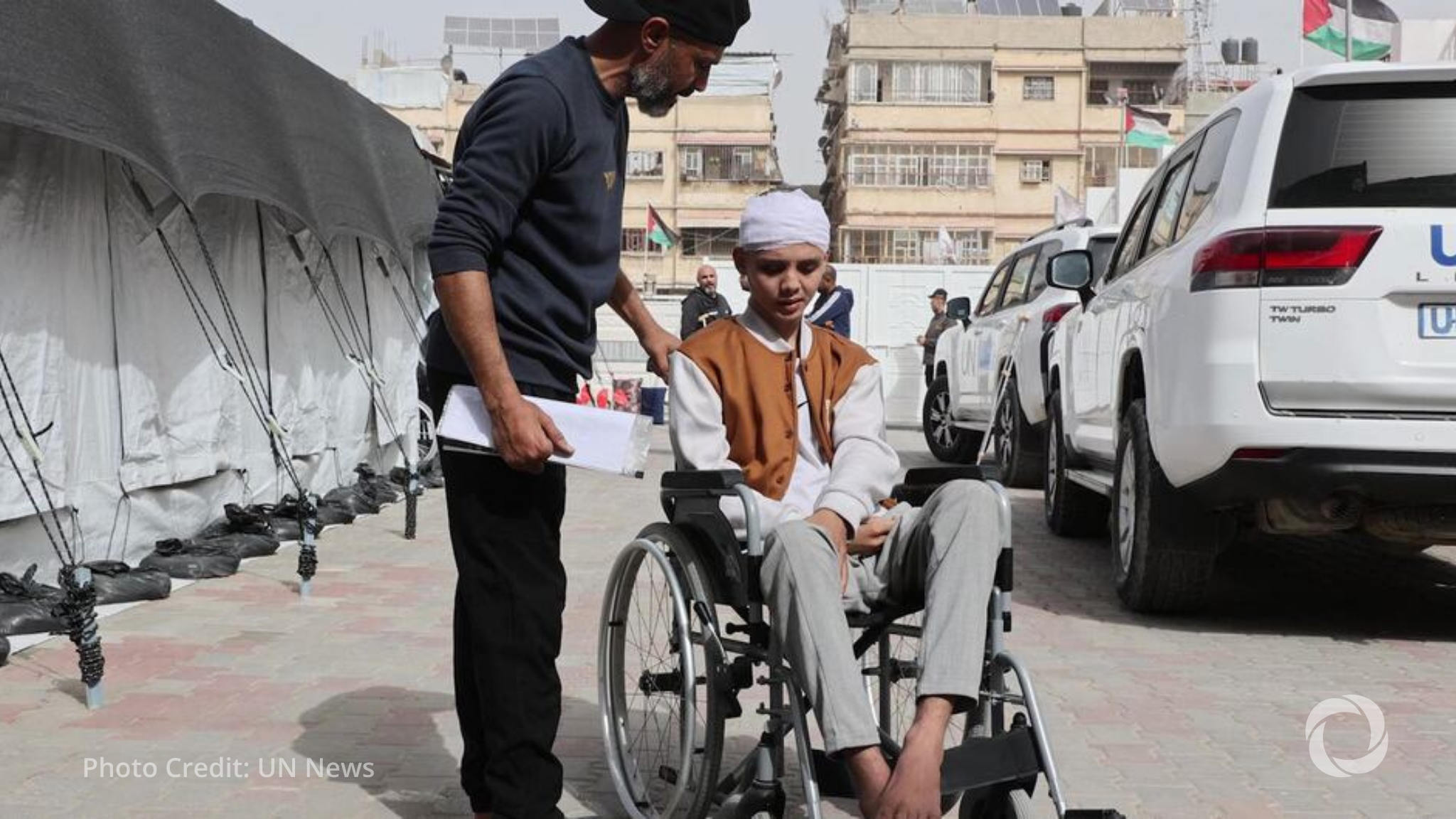
Monday also saw the World Health Organization (WHO) supporting medical evacuation efforts, though Israeli authorities approved travel for only five wounded patients from a list of 27 names submitted to both Egyptian and Israeli officials. Families gathered at Al-Amal Hospital in southern Gaza to say goodbye to loved ones heading to Egypt for treatment. A young boy named Youssef Awad, sitting in his wheelchair, expressed hope: “I hope to travel for treatment and return walking like other children.” Dozens of injured Palestinians staged a protest near the hospital, demanding an increase in the daily travel limit, which they say “should be in the hundreds” instead of 50. More than 18,500 patients in Gaza, including 4,000 children, are still waiting to access treatment abroad.
OCHA stressed that “essential humanitarian supplies must enter in sufficient quantities and with fewer restrictions through Rafah and other crossings.” Between 23-29 January, at least 13,800 pallets of humanitarian aid managed by the UN and its partners were unloaded at crossing points, nearly 60 percent of which contained food, along with shelter items, school supplies, health supplies, fuel, and nutritional kits. Since the ceasefire was announced on 10 October, at least 272,000 pallets of humanitarian goods have been unloaded and 270,000 pallets collected at various crossing points.