

Add us as your preferred source on Google to see more of our content in Search.
 Add to Preferred Sources
5 key reasons to read this article:
- Brazil holds 23% of the world’s rare earth reserves, but its extraction and processing industry is embryonic.
- China controls over 90% of global refining, shaping prices and access.
- The EU, the U.S. and China are quietly competing for Brazilian resources.
- Brazil faces a historic choice: raw material exporter or tech powerhouse.
- Experts warn it could take up to 20 years to build domestic refining capacity.
Brazil’s vast rare earth reserves are drawing intense interest from the U.S., Europe and China as competition for these high-tech critical resources accelerates at breakneck speed, turning the country into a geopolitical magnet in the race for technological supremacy. Officials in Brasilia now face a strategic choice – either remain a raw material exporter or build a high-value refining industry at home. One way or another, this reignites a debate over sovereignty, industrial policy and who controls the most strategic minerals of the 21st century.
Rare earths have become essential to energy transition and the digital economy, underpinning technologies from mobile phones to defense systems. Yet control of these resources is uneven, with the main players struggling to reduce their dependence on China.
Why rare earths matter
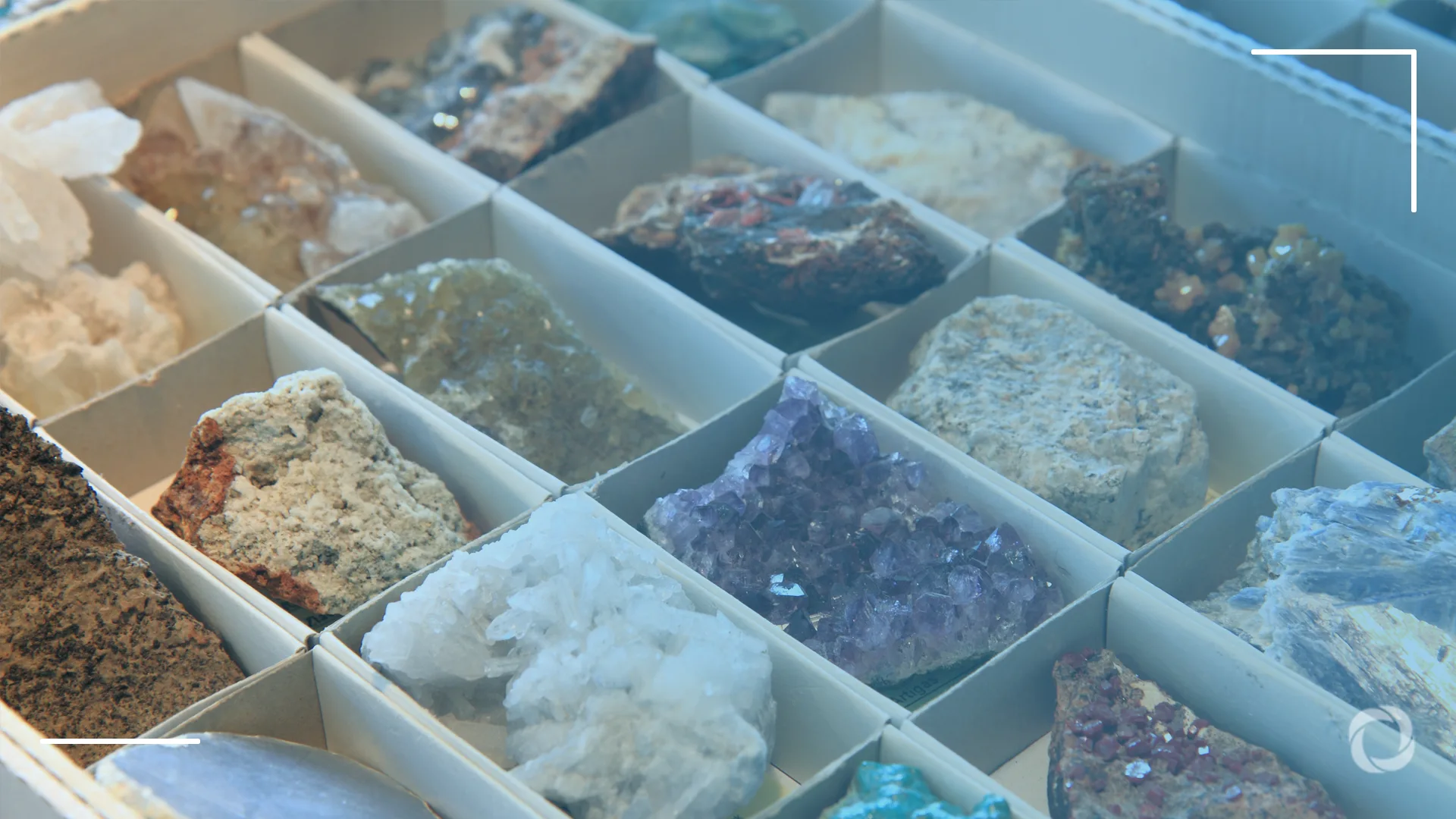
The 17 minerals known as rare earths are vital components for wind turbines, electric vehicles, semiconductors, medical devices, solar panels, and advanced military technology such as missiles and radar systems. They are also essential for the production of permanent magnets.
Source: TermoFisher Scientific
Although they are called rare earths, they are not actually rare in nature. What is rare is the industrial capacity required to separate and refine them. The process, which is the most sophisticated and valuable segment of the supply chain, is technologically complex, expensive, environmentally sensitive, and is largely controlled by one country – China, which means the U.S., the EU, and Japan are highly dependent on that country’s processing capacity.
China’s dominance
According to the U.S. Geological Survey, the largest known reserves of rare earths are located in China, Brazil, India, Australia and Russia. Yet, despite this geographic distribution, China dominates almost the entire industrial chain, from refining to the manufacture of high-value components.
Although roughly 60% of global mining occurs in China, the country’s dominance lies further down the supply chain. About 91% of global refining is undertaken by Chinese companies, which also produce 94% of the world’s permanent magnets, the most valuable industrial application of these minerals.
The International Energy Agency has described this concentration as a geopolitical risk warning that China’s position allows it to influence prices, restrict access for competitors and shape the pace of strategic technological development, from electric vehicles to semiconductors and energy storage.
Brazil’s paradox: abundance without industry
Brazil holds the world’s second-largest reserves of rare earths, about 23% of the global total, yet produces and refines very little, as the industry only began to operate in 2024. Serra Verde’s mine in Minaçu, Goiás, was the first to launch extractions, only to then ship the material to China for processing.
China is Brazil’s primary destination for rare earths exports and absorbed more than 60% of shipments in the first half of 2025. The two countries have entered into multi-billion-dollar agreements, covering the exploration and processing of rare earth minerals and lithium. Key ventures are also operating under decade-long processing contracts with China.
“The challenge is not just engineering or capital. It is technological dominance,” explained chemist, Gilberto Fernandes de Sá. “Neither Brazil nor the United States currently master rare earth separation technology. Only China does.”
According to the Brazilian Mining Institute, investment commitments in rare earth projects in Brazil could reach US$2.2 billion between 2025 and 2029, but there is still no dedicated regulatory framework and the industrial ecosystem remains embryonic.
Washington’s courtship
In early 2025, the U.S. government signed deals with Ukraine, Australia, and Japan to secure access to vital minerals and a similar agreement with Brazil is now being openly discussed.
Finance Minister Fernando Haddad has publicly acknowledged that rare earths could form part of negotiations with Washington, particularly in terms of reducing dependence on China and diversifying investment in the sector.
“U.S. production is small, so they seek agreements with friendly countries,” Emiliano Oliveira, a geochemistry scholar at the Federal University of São Paulo, told DevelopmentAid. “Japan and Australia are formal allies. Brazil, while not part of NATO, is seen as a commercially strategic partner, and unlike others, it actually has significant reserves.”
Europe enters the race
The European Union has intensified the competition through the EU-Mercosur agreement which was signed in January 2026 after 26 years of negotiations. The document is viewed not only as a trade deal but also as a geopolitical realignment. Driven by the energy transition, supply chain insecurity, and the race for strategic autonomy, Brussels has turned its attention toward Latin America’s mineral wealth.
At the signing ceremony, European Commission President Ursula von der Leyen confirmed that the EU is negotiating with Brazil on joint investment projects involving rare earths, lithium, and nickel.
“These are key to our clean and digital transition and to our strategic autonomy in a world where minerals are increasingly used as instruments of coercion,” she said, adding that the EU would prioritize transparency, environmental protection and local benefits.
Brazil’s Ministry of Mines and Energy has confirmed that European investors are expected to announce investments in at least five Brazilian mining projects by March with the focus being on rare earths, lithium, nickel and manganese.
A long technological road ahead
Despite the evolving scenario, even under optimistic scenarios, it would take Brazil between 15 and 20 years to develop domestic rare-earth refining capacity, according to industry engineers. The chemical complexity of separation processes, the country’s current technological gap, and chronic licensing delays mean that rapid industrialization is unlikely, they told DevelopmentAid.
However, expectations are rising as private investments are already surfacing. The Australian company Viridis Mining & Minerals has announced the construction of a rare earth research and processing center in Poços de Caldas, Minas Gerais, which is deliberately designed to operate without Chinese technology or components.
For Brazil, the strategic question now is no longer whether it has the resources, but whether geological wealth can be transformed into technological sovereignty or remain another chapter in the country’s history as a supplier of raw materials.