
Add us as your preferred source on Google to see more of our content in Search.
 Add to Preferred Sources
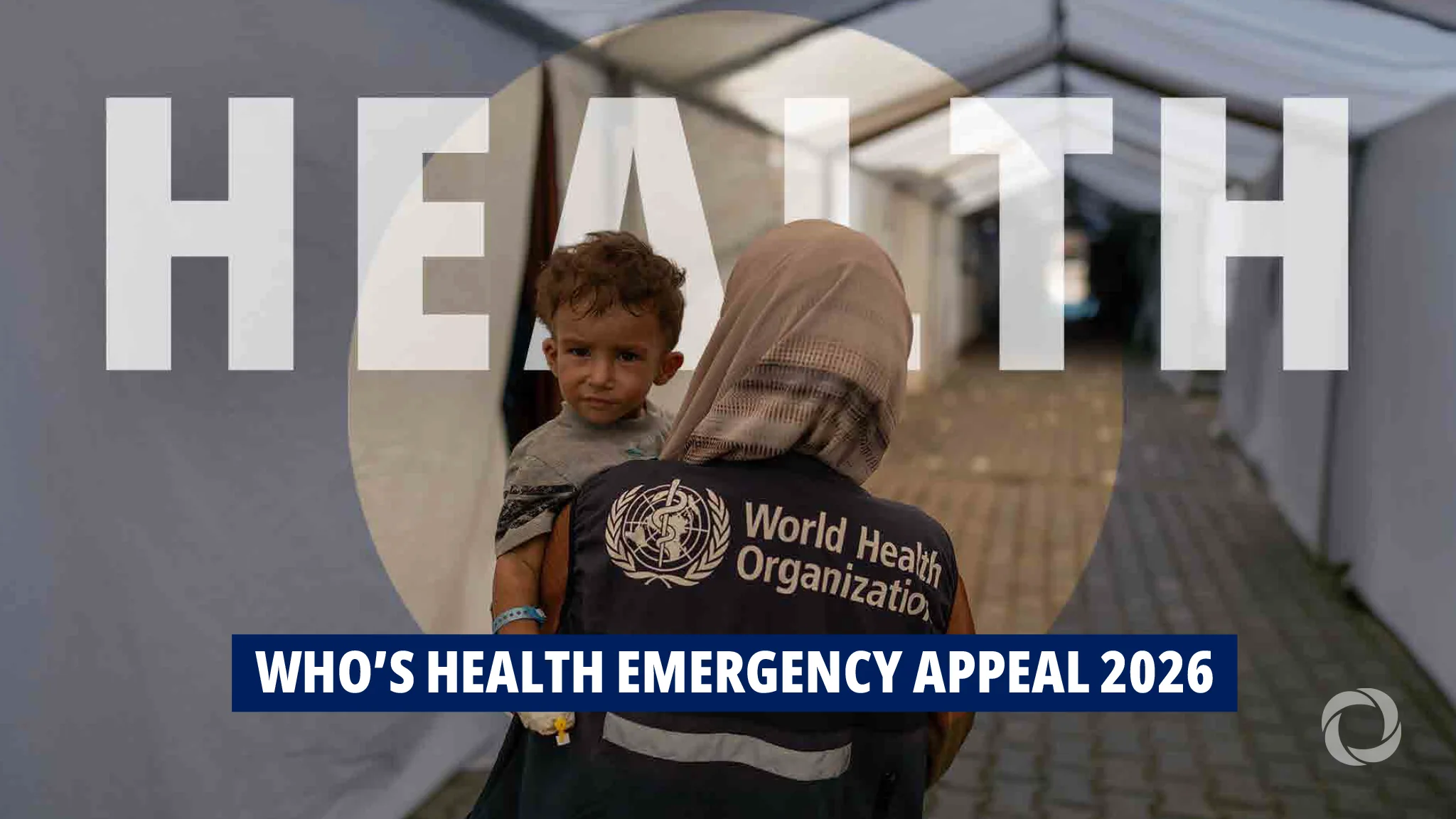
The World Health Organization (WHO) needs nearly $1 billion this year to keep healthcare running for millions of people caught in humanitarian crises and conflicts, the agency said in a statement. The 2026 appeal covers 36 emergencies worldwide, including 14 of the worst crises that demand the agency’s full response. Last year, WHO and partners helped 30 million people through the annual appeal—vaccinating 5.3 million children, running 53 million health consultations, keeping over 8,000 health facilities open, and deploying 1,370 mobile clinics.
“This appeal is a call to stand with people living through conflict, displacement, and disaster—to give them not just services, but the confidence that the world hasn’t turned its back on them,” said WHO Director-General Dr. Tedros Adhanom Ghebreyesus. “It’s not charity. It’s a strategic investment in health and security. Healthcare restores dignity, stabilizes communities, and offers a path toward recovery.”
The appeal comes as drawn-out conflicts, worsening climate impacts, and repeat disease outbreaks push up demand for health emergency support. Meanwhile, global humanitarian funding keeps dropping. In 2025, it fell below 2016 levels, leaving WHO and partners able to help only one-third of the 81 million people they’d planned to reach.
“We urgently need renewed commitments and solidarity to protect people in the most fragile settings,” WHO said.
WHO’s top priority areas in 2026 are Afghanistan, the Democratic Republic of the Congo, Haiti, Myanmar, the Occupied Palestinian Territory, Somalia, South Sudan, Sudan, Syria, Ukraine, and Yemen. The agency is also tackling ongoing cholera and mpox outbreaks. As the lead health agency in humanitarian crises, WHO works with more than 1,500 partners across 24 crisis zones, making sure national authorities and local groups stay at the center of emergency response.
WHO and partners keep essential health facilities running, deliver emergency medical supplies and trauma care, stop and respond to outbreaks, restore routine vaccines, and make sure people in fragile and war-torn areas can access reproductive, maternal, and child health services. Early, reliable funding lets WHO and partners jump in fast when crises hit—cutting deaths and disease, stopping outbreaks, and keeping health risks from spiraling into bigger crises that cost far more in lives and money. With the funding requested, WHO can keep lifesaving care going in the world’s worst emergencies while building a bridge toward peace.