

Add us as your preferred source on Google to see more of our content in Search.
 Add to Preferred Sources
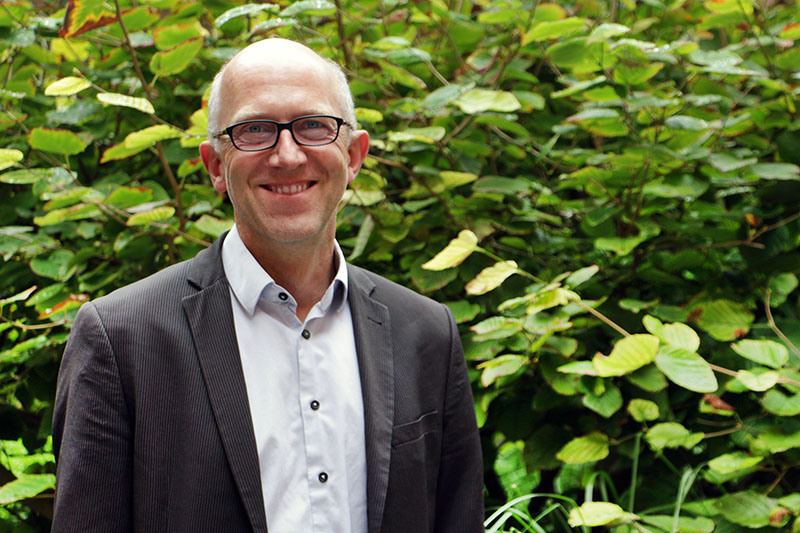
Five questions for Jean-Yves Saliez, Head of the Global Partnerships unit
The Belgian State is not the sole donor of the Belgian development agency anymore. Why this change?
More than five percent of our funds actually come from other donors, primarily the European Union, and this share should increase significantly in the future. We aim at a 35% third-party donor share by 2022. A similar evolution is noticed elsewhere too. As countries trim their development cooperation budgets, European and international instances take over. This implies we need to actively look for partnerships.
What is positive about this change?
I see three reasons why the current trend may prove positive. First, this new way of working will allow us to enhance the impact of our actions. Belgium is quite a small player. Availing us with outside financing may allow us to duplicate actions that have proved to have an impact on development or to upscale such actions. Next – and this is directly linked to the first point – we will be able to promote our expertise and make it available to all. Finally, that will allow us to enrich our practices: Rather than working solely under the fixed framework of our lead ministry, we can now work with many other donors, in accordance with their priorities, methods and good practices. That way we can gather more experience which we can use in Belgian Development Cooperation interventions.
Will such international financing lead to competition between development agencies?
I do not think so. The European development agencies work together and often share experiences, in particular through the Practitioners’ Network. Each of these agencies has a regional focus and also expertise in specific domains. So, we do not really compete with one another; instead, we even start working as a consortium. The European Commission – which on a global scale is the no. 1 donor – urges us to work together. The Commission actually promotes joint implementation. Also, certain European countries, like France, have large development agencies whereas other countries do not even have their own agency or a rather small one. The Czech development agency has a staff of twenty, whereas Enabel – a ‘small’ agency compared to France’s or Germany’s – employs 1500 persons. So, there is room enough for all of us. Also, these agencies are public agencies. So, the general interest – and not profit – drives us. This definitely affects how we ‘compete’ in a healthy way to achieve a greater impact.
Practically, how do you attract new projects?
In its search Enabel first and foremost targets delegated cooperation. Delegated cooperation assignments are mostly granted under a mutual agreement procedure, not through a competitive call for tenders. In the countries where we operate our local representatives are in touch with the EU Delegation and other donors. When they spot new opportunities for which Belgium can provide expertise, our unit is notified about the matter. We, for our part, regularly organize meetings with our experts to screen these opportunities and decide how to proceed. This may involve contacting other agencies to work together for certain interventions. This, I would call a ‘reactive’ approach: We respond to opportunities. At the same time, we have adopted a ‘pro-active’ approach, which consists in analyzing the large financing programmes of donors to identify where the Belgian Development Cooperation may be of added value by providing its expertise.
Right now, we are for instance following the European Development Fund: The eleventh European Development Fund covers the 2014–2020 period and the following Fund is being prepared. We also study the EU Trust Fund for Migration, which is an emergency programme put in place by the European Union to slow down irregular – or illegal and life-risking – migration flows and foster economic development and employment in countries where the migration flows originate.
Talking about specialisms, does Belgium have any specific assets it should showcase?
The Belgian Development Cooperation has achieved many successes, in particular in the areas of health, education, agriculture, infrastructure, governance and support to economic development. One of the positive aspects of the new situation is that we have become aware of the value of our experience in fragile situations. We intervene in countries where the political or economic situation is unstable.
That involves more risks and the development logic may be extremely complex, considering the population of these countries is often poorly educated, which makes local recruitment even harder. Also, security issues need to be taken into account, since they are doubtlessly bigger in these countries. We are so used to working in that kind of situations that we forgot it takes special skills, which not all agencies dispose of. Only by dealing with other agencies have we become aware of this unique aspect. So, that is an unexpected, but positive, consequence of the new operational context.
Original source: Enabel
Published on 29 March 2018