
Add us as your preferred source on Google to see more of our content in Search.
 Add to Preferred Sources
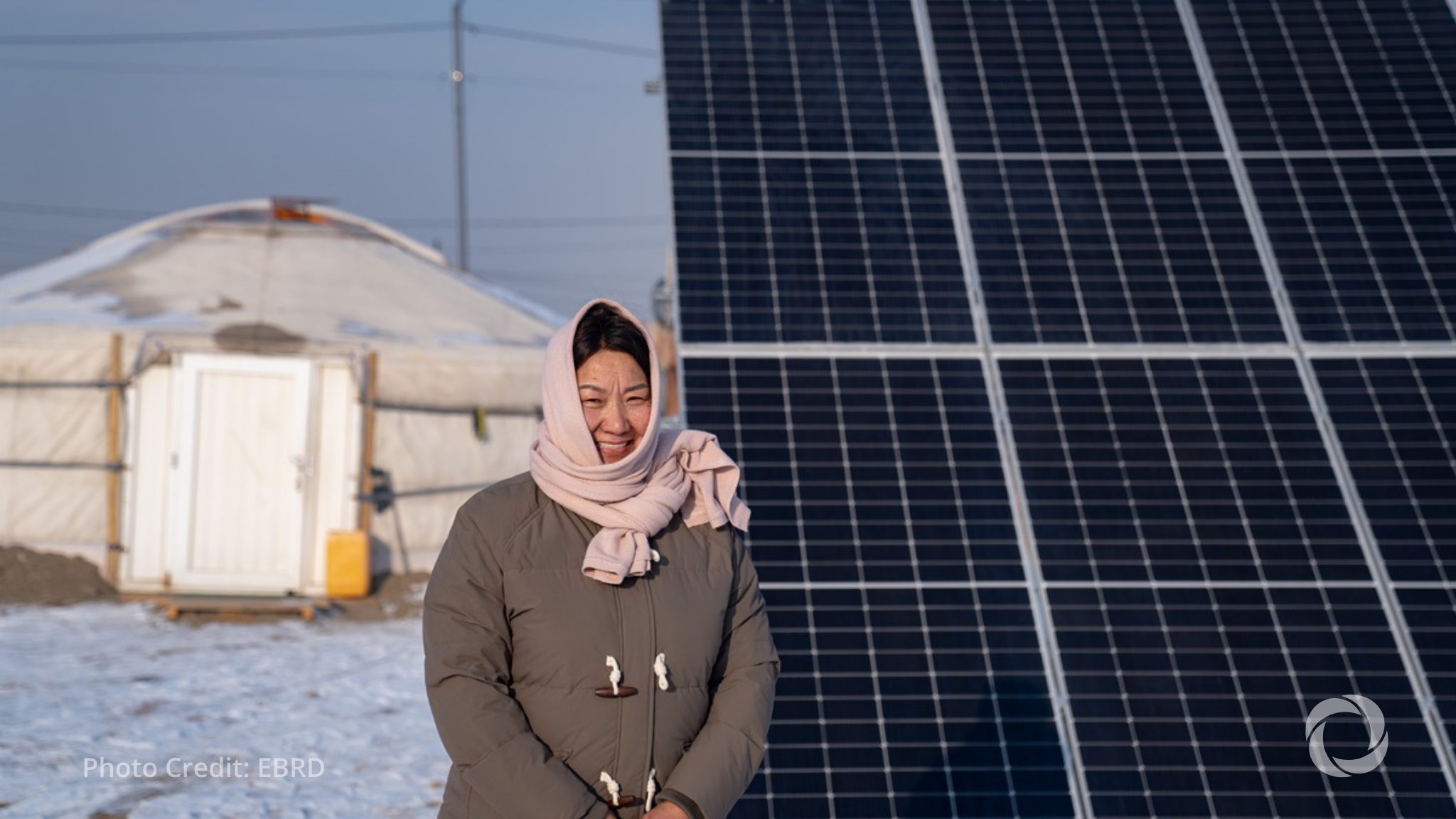
In Ulaanbaatar, Mongolia, families who live in gers—Mongolian yurts central to the nomadic way of life—wake throughout the night in winter to feed their stoves coal: at 1am, 3am, and again before dawn, just to survive freezing temperatures. The very fuel that keeps them warm also makes the city one of the most polluted capitals in the world, with each household on average responsible for 12 to 13 tonnes of carbon emissions, according to a statement by the European Bank for Reconstruction and Development (EBRD). URECA is a climate tech startup whose pilot Coal-to-Solar Initiative project pairs technology with carbon finance to direct capital into scalable, high-impact climate solutions while supporting low-income households to transition to clean energy and tackling severe air pollution.
Through two years of testing and piloting, URECA developed a plug-and-play system that enables coal-dependent households to switch to renewable energy while financing the transition. Their infrastructure combines solar panels, inverters, and electric heaters, all integrated with URECA’s verification, monitoring, and reporting technologies. These include IoT sensors, AI, and other tools that track energy use in real time once families switch to renewable energy. Emission reductions are automatically calculated, continuously verified, and monetized through URECA’s platform, enabling families to fund their transition to renewable energy with carbon credits they generate entirely on their own.
By the end of 2025, the team had almost 200 households using their technology. Their goal is to transition over 100,000 households by 2030. That would mean about 1.3 million tonnes of CO2 removed from the air per year, and Ulaanbaatar’s air pollution reduced by more than 70 percent. This would also represent the first truly just energy transition at global scale: bringing the lowest-income households into clean energy markets in one of the coldest capitals in the world.
With help from the EBRD’s Star Venture programme and the European Union, URECA received the Gold Standard certification for carbon credits, one of the leading standards in the voluntary carbon market and a seal of approval that will help attract global partners, enable carbon credit trading, and accelerate the adoption of clean energy solutions. Hundreds of households have now gone through two or even three winters without burning a single lump of coal, dramatically improving quality of life.
“If we are successful in securing large-scale carbon offtake volumes—which we believe we can—then the model relies on competitive market fundamentals rather than public budgets or philanthropy,” said Orchlon Enkhtsetseg, URECA co-founder.
Mongolia’s evolving bilateral carbon cooperation with countries like Singapore is creating practical pathways for governments and companies to access Mongolian carbon credits through trusted platforms, helping unlock financing for household clean energy transitions.