
Add us as your preferred source on Google to see more of our content in Search.
 Add to Preferred Sources
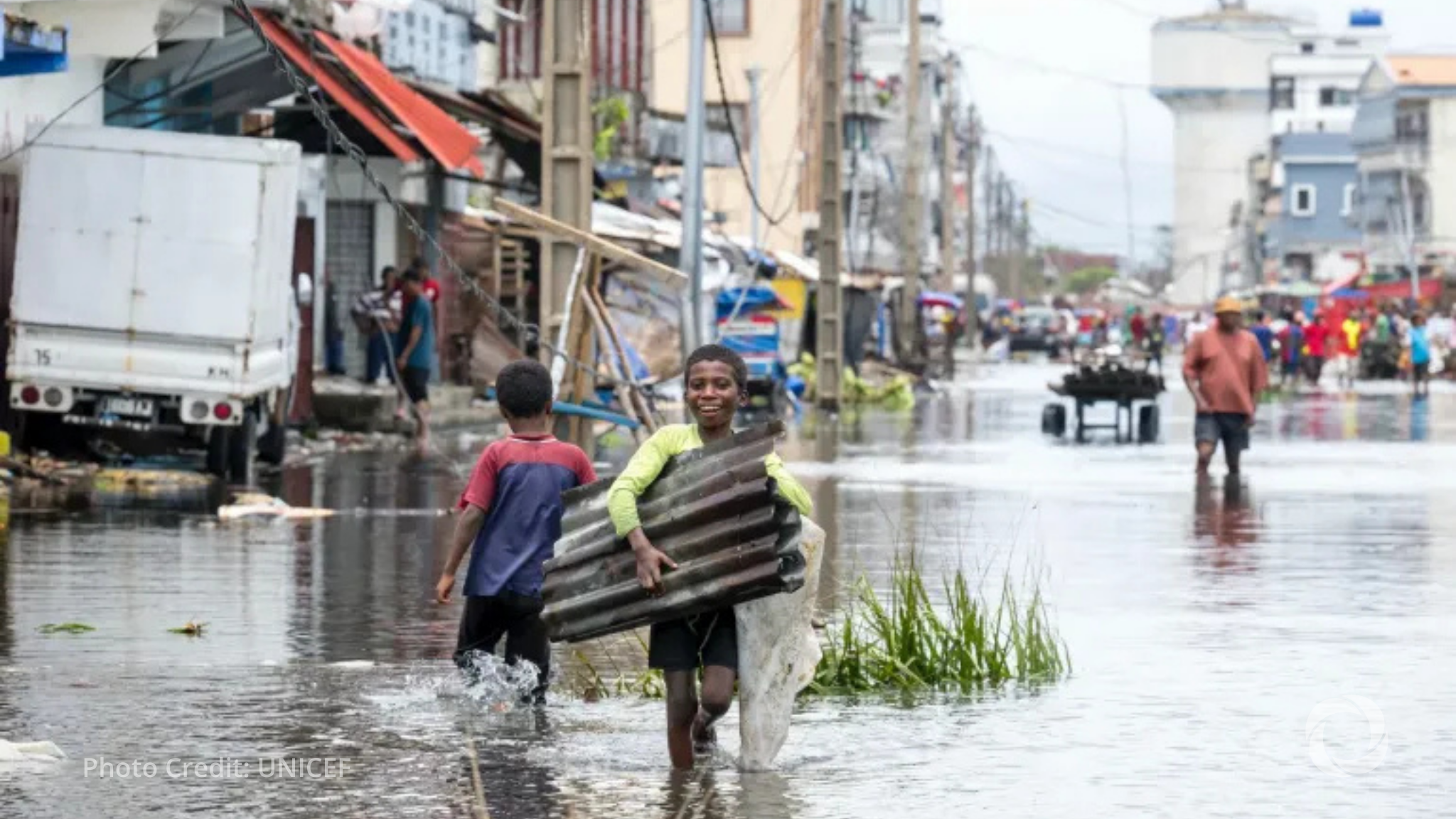
At least 6,000 children have been pushed from their homes and nearly 29,000 can’t go to school after Cyclone Gezani tore through eastern Madagascar on February 10 with winds over 200 kilometers per hour, the United Nations Children’s Fund (UNICEF) said in a statement. The storm is the second cyclone to hit the country in just two weeks. More than 270,000 people have been affected and over 16,000 displaced, according to early reports, with children making up a large share.
In the worst-hit Atsinanana region, especially in Toamasina—Madagascar’s second-largest city and main port—wrecked and flattened homes have pushed families into packed shelters. Thousands of children now face risks including family separation, violence, exploitation, and psychological trauma.
“Many families have lost their homes, which is deeply distressing for children. The cyclone has also disrupted essential services they depend on, including safe water, healthcare, protection, and schooling,” said Christine Jaulmes, UNICEF Representative in Madagascar.
Power outages have cut the city’s water supply, raising the risk of waterborne diseases. Both university hospitals were hit and 21 health centers damaged, including cold-chain disruptions at two facilities that store vaccines. The storms have kept children out of school after 35 schools were damaged, 563 classrooms lost their roofs, and 218 were destroyed.
UNICEF started emergency work before the cyclone made landfall and ramped up efforts afterward. Water purification supplies reached 2,400 people, WASH kits went to 178 households, and 2,000 mosquito nets to 1,000 households. Emergency health kits covering 60,000 people for a month were sent out, vaccines secured, and hospitals supported to keep running.
Cyclone Gezani comes as Madagascar is already dealing with Cyclone Fytia from earlier this month and an ongoing mpox outbreak in the northwest. UNICEF is asking for $8.4 million to scale up lifesaving help and support early recovery for children and their communities.