
Add us as your preferred source on Google to see more of our content in Search.
 Add to Preferred Sources
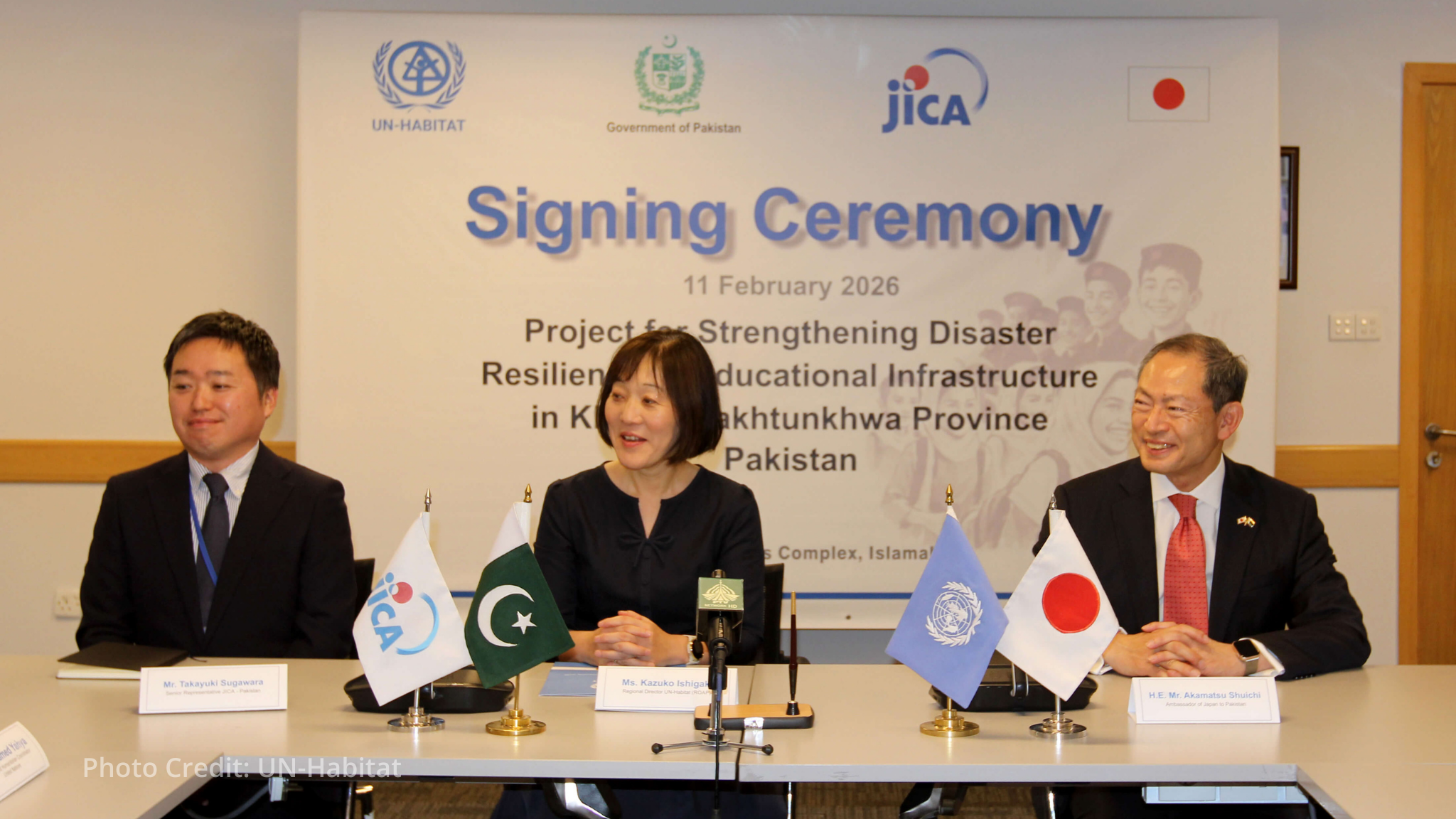
The United Nations Human Settlements Programme (UN-Habitat) is working with the Government of Japan and the Japan International Cooperation Agency (JICA) to make flood‑hit schools in Pakistan’s Khyber Pakhtunkhwa Province safer and more resilient, according to project partners. A grant of JPY 427 million (about USD 2.7 million) from Japan will fund the rehabilitation and retrofitting of schools damaged by 2025 cloudbursts and flash floods, especially in Swat and Buner, under an agreement signed on 11 February 2026.
Khyber Pakhtunkhwa is highly exposed to climate‑related disasters, and the 2025 floods damaged 437 schools, disrupting classes for thousands of children. The new project aims to restore safe, functional learning spaces by strengthening school structures and improving ventilation and lighting. It will also rebuild gender‑sensitive water, sanitation and hygiene (WASH) facilities to ensure privacy, dignity and accessibility for girls and children with disabilities.
Japan’s Ambassador to Pakistan, Akamatsu Shuichi, said investing in disaster‑resilient school infrastructure is essential to protect children and keep education going during climate shocks. UN‑Habitat Regional Director for Asia and the Pacific, Kazuko Ishigaki, stressed that the upgraded schools will offer structurally sound classrooms, better air flow and reliable WASH services so students can learn with greater safety and confidence. She added that positioning schools as hubs for preparedness and response will also benefit surrounding communities through first‑aid and disaster awareness.
JICA Senior Representative Sugawara Takayuki noted that the initiative reflects JICA’s “Build Back Better” approach, which focuses on rebuilding infrastructure in ways that cut future risk and avoid repeat damage. UN Resident and Humanitarian Coordinator in Pakistan, Mohamed Yahya, welcomed Japan’s continued support and said the project aligns with the UN Sustainable Development Cooperation Framework and Pakistan’s commitments under the Sendai Framework for Disaster Risk Reduction.
By combining resilient school construction with disaster‑risk training, the project aims to reduce loss of life, limit the number of people affected and curb economic losses in flood‑prone communities. Ultimately, officials say, strengthening school infrastructure and preparedness will boost human security and help children return to safer classrooms after future storms.