

Add us as your preferred source on Google to see more of our content in Search.
 Add to Preferred Sources
Key reasons to read this article
- Discover why the Philippines is ranked as the most disaster-prone nation in the world.
- Uncover the hidden scale of plastic and ocean pollution.
- Understand how environmental damage is directly tied to economic losses.
- Learn why forests, wildlife and marine ecosystems are disappearing faster than many realize.
- Explore the unexpected environmental cost of modern technology, including AI and data centers.
Typhoons, choking plastics, vanishing forests and polluted skies – the Philippines faces an environmental crisis like no other. Ranked as the world’s most disaster-prone nation in the 2024 World Risk Index, the country is facing a perfect storm of ecological threats. From extreme weather and waste management to mining conflicts and the growing footprint of AI, urgent action is needed to secure the nation’s future.
Extreme weather events
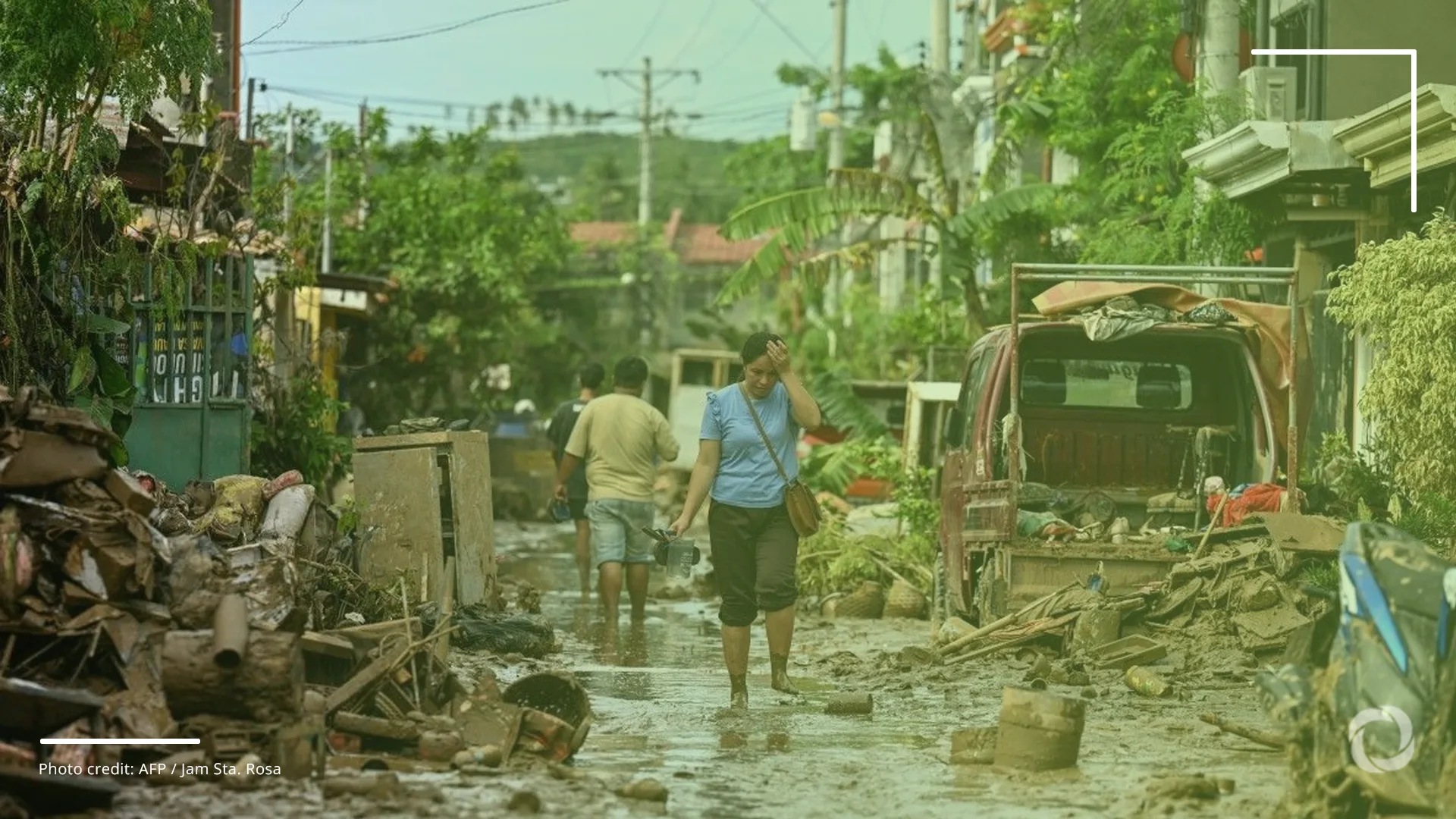
An average of 20 to 25 tropical cyclones develop every year around the Philippines, causing widespread destruction and loss of life. Of these, approximately five are considered to be destructive.
Climate-related disasters displaced almost 43 million Filipinos between 2014 and 2023. Currently, 9.7 million children are displaced nationwide, and 2.5 million more will be at risk over the next 30 years, earning the country its ranking as a global leader in storm and flood-related child displacements.
Experts estimate that climate inaction could cut Philippines’ Gross Domestic Product by 13% by 2040. Senator Loren Legarda cautioned that extreme heat alone could cost the country US$7.9 billion every year by 2030, purely from lost productivity.
Plastic pollution
Plastic pollution clogs city waterways, washes up on once-pristine beaches and threatens marine ecosystems.
Over 350,000 tons of plastic are carried from Philippine rivers into the ocean each year, making the country one of the world’s biggest sources of river-borne plastic pollution. The Pasig River, flowing through Metro Manila, is a major contributor, releasing around 63,000 tons of plastic into coastal waters annually.
Speaking during World Environment Day in 2025, Environment Secretary Maria Antonia Yulo-Loyzaga warned that plastic pollution is no longer simply an environmental issue, it is one that has far-reaching social and economic consequences.
“The growing problem of plastic pollution poses a significant threat to the environment, society, economy, and human health, hindering progress toward sustainable development,” she explained.
Public frustration over the issue appears to be growing, with 94% of Filipinos supporting a cap on plastic production and 88% demanding a ban on single-use packaging, according to a 2024 survey.
Hazardous and solid waste management
Waste generation outpaced waste management capacity in 2024, with 269,552 tons of toxic waste being produced, a 13% increase from 2023. Municipal solid waste totals 14.6 million tons every year, ranking the Philippines 27th out of 50 countries in the 2025 World Bank’s What a Waste Global Database.
A recent landslide at a landfill in Cebu killed four people and exposed systemic flaws in waste management, leading Marian Ledesma of Greenpeace Philippines to comment:
“Our dysfunctional system prioritizes profit over sustainability, letting communities down repeatedly.”
Hazardous waste consists mainly of 33% of oil, 51,770 tons of miscellaneous waste, and 39,440 tons of inorganic chemical waste.
Deforestation and forest degradation
The Philippines loses 47,000 hectares of forest every year which fuels soil erosion and biodiversity decline.
Once 90% forest-covered, the Philippines now retains only about 25% of that with logging, mining, agriculture, and urban expansion driving this trend. A study in Science of The Total Environment found that 15-23% of 1,294 species of land vertebrates are on the brink of extinction, with amphibians, mammals, birds, and reptiles being the hardest hit.
Krizler Tanalgo, lead author from the University of Southern Mindanao, warned:
“Species are teetering on the edge of extinction due to multiple threats, many of which remain understudied.”
Marine ecosystem degradation
The Philippines is the third-largest contributor to marine plastics globally, generating over 2 million tons of plastic waste annually. About 20% of this waste finds its way into the ocean annually, according to the World Bank. Marine ecosystems, especially in the West Philippine Sea, are under pressure from pollution as well as territorial tensions with China, scientists comment.
The Ellen MacArthur Foundation has warned that oceans could contain more plastic than fish by 2050, highlighting the urgent need for coordinated action to protect biodiversity.
Air pollution
Air pollution in the country is a serious “silent killer” and exceeds the safety guidelines set by the World Health Organization by over two times, leading to over 66,000 premature deaths in 2019, including 1,310 children. Vehicular emissions account for 56% to 80% of pollution in cities while, as in Metro Manila, static structures such as coal-fired power plants and factories also contribute. Rural areas face other challenges such as slash-and-burn farming and the open burning of waste, which exacerbate air quality problems.
Air pollution costs the Philippines US$44.8 billion every year in premature deaths, healthcare costs, and reduced labor productivity.
Mining
The country’s mining boom, driven by the demand for transition minerals such as nickel and copper, has destroyed over 230,000 hectares of forest since 2010, threatening both food security and livelihoods.
Indigenous communities are being disproportionately affected, with a quarter of mining zones being on their lands, leading them to face displacement and environmental damage. They are also paying a deadly price with a third of environmental defender deaths (2012-2023) being indigenous peoples, and in 2023, they accounted for almost half of the 17 who had been killed or disappeared.
Legal actions, including Supreme Court writs of kalikasan (environmental protection orders), have halted some destructive operations, but tensions between mining and environmental protection persist.
AI’s environmental impact
AI presents a dual-edged challenge. On one hand, it improves disaster resilience, waste management, and environmental monitoring while on the other, its high energy consumption and e-waste pose significant sustainability hazards.
The Rest of World 2025 report notes that the Philippines is one of 21 countries operating data centers in regions that have average temperatures above 27°C which exceeds the optimal range of 18°C to 27°C.
Given the massive energy demands of data centers, their environmental impact is a growing concern, although some argue that they drive green innovation.
Experts have warned that profit often trumps environmental concerns. With data centers on the rise, it is vital to monitor their impact on the country’s communities, especially given its struggles with electricity and water supply issues.