
Add us as your preferred source on Google to see more of our content in Search.
 Add to Preferred Sources
Ministers from across Latin America and the Caribbean gathered in Brasília on Wednesday to set priorities for the Food and Agriculture Organization of the United Nations (FAO) and its regional partners over the next two years, as outlined in an official statement published by the agency. The 39th Session of the FAO Regional Conference for Latin America and the Caribbean brought together senior officials to take stock of progress on hunger and poverty and decide what comes next. While the region has made real gains, deep inequalities and rising global pressures mean the work is far from done.
Latin America and the Caribbean has outpaced much of the world in cutting hunger in recent years, with more than 6 million fewer people going hungry in 2024 compared to 2020. Yet the progress has been uneven, and access to affordable, healthy diets remains a stubborn challenge for millions of families across the region.
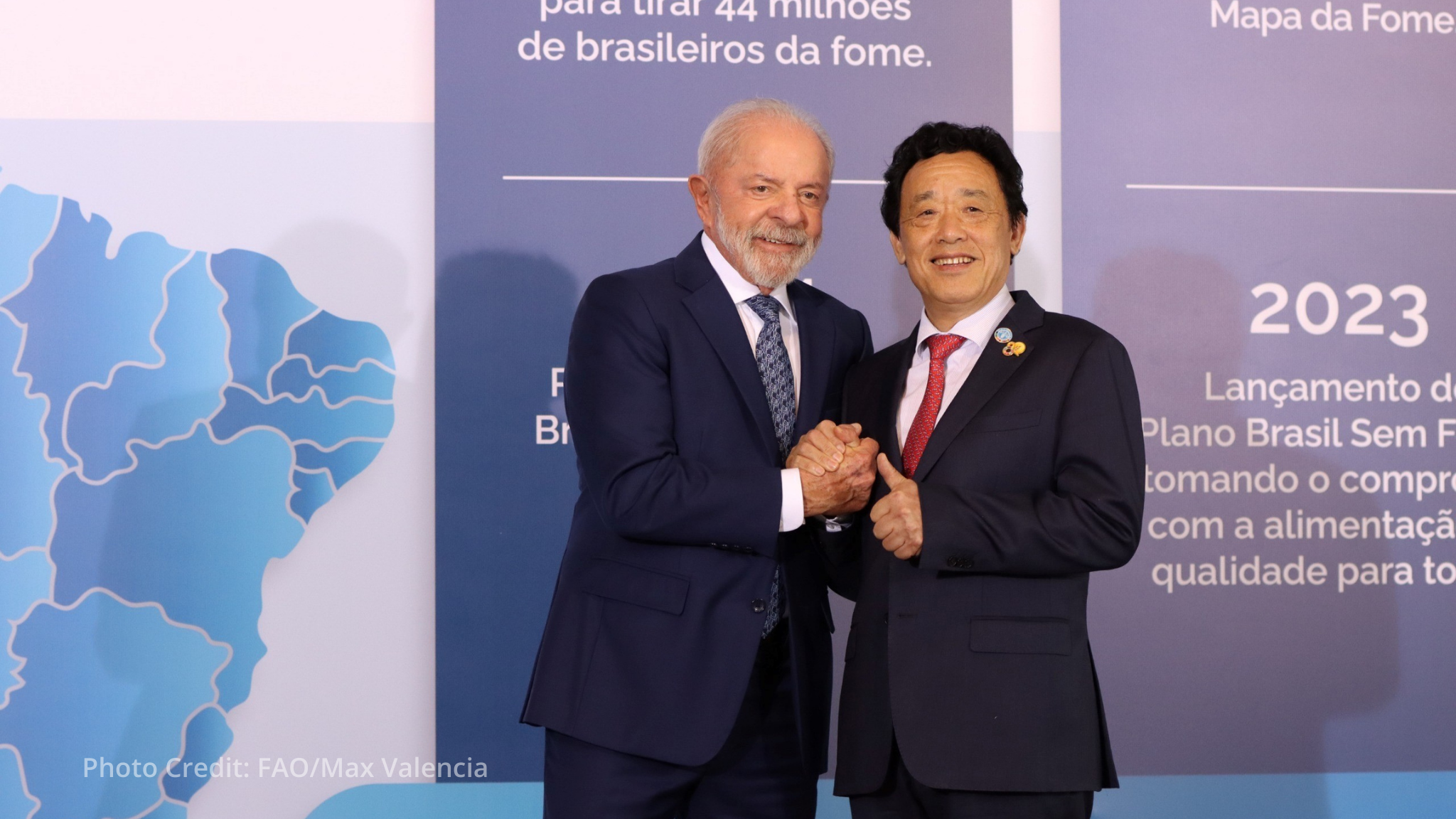
FAO Director-General Qu Dongyu opened the conference on an optimistic but clear-eyed note, crediting strong policy choices and cross-sector coordination for the measurable gains. “This region has the tools, the talent, and the tenacity to transform challenges into opportunities,” he said. He singled out Brazil’s President Luiz Inácio Lula da Silva for treating hunger eradication as a moral responsibility and for his global leadership on the issue. Qu also flagged that four countries — Brazil, Costa Rica, Guyana, and Uruguay — have already pushed undernourishment below 2.5% of their populations, while Chile, the Dominican Republic, and Mexico are on course to achieve zero hunger by 2030.
The three-day conference packed in a dense agenda, including ministerial roundtables on reversing the slowdown in agricultural productivity, transforming agrifood systems to counter deindustrialization, and building climate resilience in farming and forestry. A high-level session also spotlighted FAO’s Hand-in-Hand Initiative, which has structured nearly $3 billion in investable projects across the region as a model for scaling up inclusive and resilient development financing.
The gathering made clear that protecting hard-won gains will require as much political will as achieving them did. Rising food prices, shrinking development budgets, geopolitical tensions, and more frequent climate shocks are all pressing in on the region’s agrifood systems at once — and the answers, as Qu put it, need to be practical and grounded in what has already proven to work.